
Law students at The University of Fiji have drafted and submitted to the Prime Minister a 68-page proposed Constitution for Fiji, setting out the institutions, rights and safeguards they believe should help shape the future their generation will inherit.
The proposed Constitution was drafted collectively over just two weeks by the Constitutional Law 205 Class of 2026 at the Justice Devendra Pathik School of Law as part of an assignment that challenged students to move from studying constitutional law to designing an entire constitutional framework for the country.
The students have also decided to release their proposed Constitution for wider public discussion.
The students’ proposal comes as Fiji is undergoing a wider national constitutional review, with the Constitution Review Commission report scheduled to be tabled in Parliament at a special sitting on 22 September. The LAW 205 document is a separate academic initiative, developed independently by the students as part of their Constitutional Law studies.
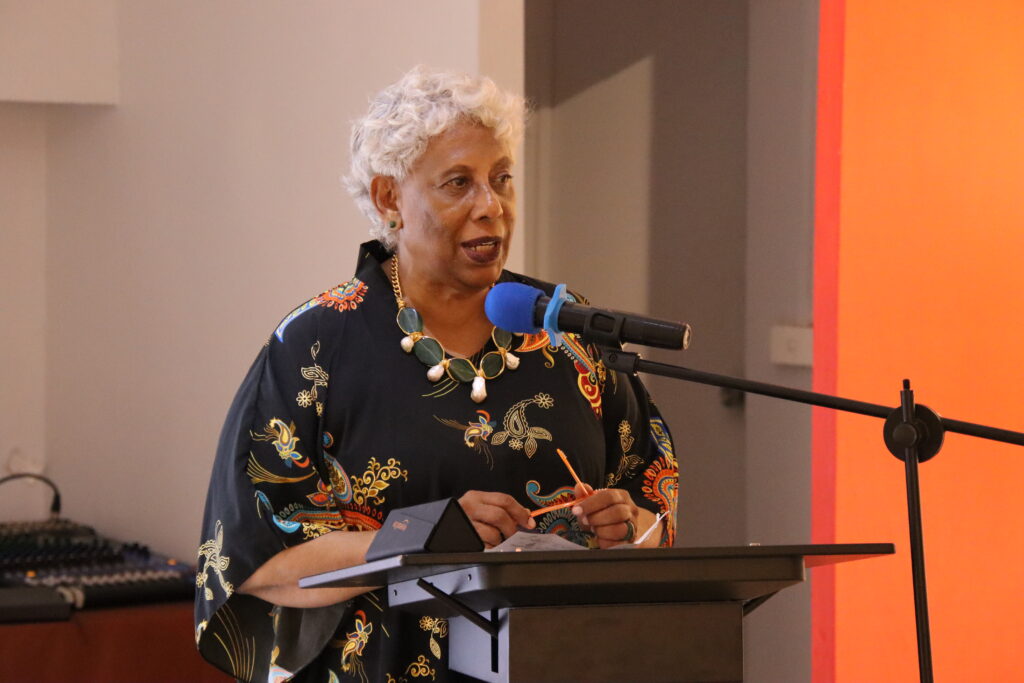
Vice-Chancellor Professor Shaista Shameem, lecturer in Constitutional Law 205, said the exercise required students to move beyond studying constitutional principles and engage directly with the difficult choices involved in constitution-making.
“I said to the students at the beginning of the semester that I had made submissions to the Constitutional Review Commission that we did not need a Constitution for Fiji because all our constitutions had brought nothing but instability. I then challenged the Law 205 students to draft a Constitution that would make me change my mind, and they did. They did this collectively through reference to all Fiji’s Constitutions since the 1860s to 2013. It’s a brilliant document and now they are seeking endorsement from the body politic to consider it seriously. I am very proud of them,” Professor Shameem said.
In their message accompanying the proposed Constitution to the Prime Minister, the students said their class represented a demographic that would play an important role in Fiji’s future and that the class itself reflected the broader national demographic.
They said this made it important for the perspectives and preferences of their generation to form part of discussions about Fiji’s constitutional future.
The students also expressed their willingness to have their proposals discussed publicly, leading to their decision to release the document for wider public consideration after respectfully presenting it to the Head of Government.
The proposed Constitution brings together the students’ ideas on how public power should be exercised, how institutions should be structured, how rights should be protected and how governments and public officials should remain accountable to the people.
The document describes itself as a complete proposed constitutional framework, guided by principles including popular sovereignty, democratic governance, constitutional supremacy, the rule of law, separation of powers, independent courts and institutions, accountable public administration, protection of rights and communities, and the peaceful transfer of political power.
Among the proposals is a bicameral Parliament comprising a House of Representatives and a Senate. The proposed House would consist of 71 members, combining geographical constituency representation with proportional representation, while the Senate would provide additional legislative scrutiny and representation for communities and groups that may otherwise be under-represented.
The proposed framework also places significant emphasis on accountability and on the principle that public power must be exercised for the benefit of the people. Its opening provisions state that sovereignty belongs to the people of Fiji and that public office is a public trust.
The students also addressed emerging issues that are increasingly becoming part of constitutional and governance discussions, including personal data protection, internet access, cybercrime, artificial intelligence and automated decision-making.
Under the proposed framework, a person whose important rights or interests are significantly affected by an automated decision could, where appropriate, know that artificial intelligence was materially used, receive an understandable explanation, request human review and challenge an unlawful or discriminatory decision.
The draft also recognises a right to reasonable and affordable access to the internet and calls for reliable and accessible internet services to be progressively promoted throughout Fiji, particularly for rural, maritime and underserved communities.
Environmental protection and the interests of future generations also feature prominently in the students’ work. The proposed Constitution provides for a right to a clean, healthy and sustainable environment and requires the State to take reasonable account of the long-term interests and rights of future generations when making decisions concerning the environment, natural resources, technology, artificial intelligence, public finance and national development.
The document covers constitutional principles, the Bill of Rights, Parliament, the Executive, Judiciary, State and disciplined services, finance and public expenditure, accountability, emergency powers, constitutional accountability, amendment procedures and transitional provisions.
One of the distinctive features of the student-drafted Constitution is its attempt to respond not only to Fiji’s constitutional experience, but also to issues that could increasingly shape governance in the decades ahead.
Alongside the traditional institutions and protections expected in a Constitution, the students have brought digital rights, artificial intelligence, cybersecurity, environmental sustainability and the interests of future generations directly into their proposed constitutional framework.
In doing so, the Constitutional Law 205 Class has produced more than an academic assignment. It is a collective statement by a new generation of law students about the institutions, protections and responsibilities they believe deserve consideration as Fiji thinks about its constitutional future.
The proposed Constitution remains an academic work developed by the Constitutional Law 205 Class of 2026 and is separate from any official Government constitutional drafting process.
To access the constitution, follow the link:
https://drive.google.com/drive/folders/1MpajNUqNuX7JzOPW0wCJxpS8R3jhaAtc?usp=sharing

