University of Fiji Deepens Fiji-China Partnership Through Nishan Book House Plaque Hand-Over

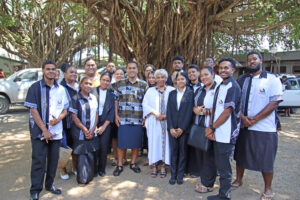
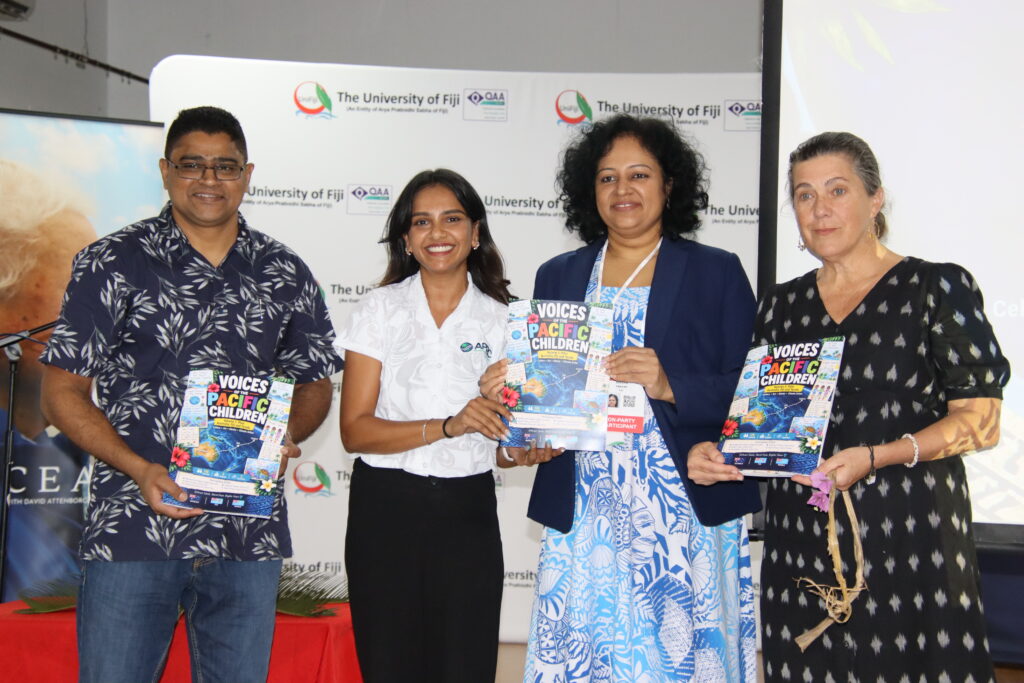
The University of Fiji today marked a significant milestone in its growing international engagement with China through the official plaque hand-over ceremony for the Nishan Book House and Beautiful China Series Project at the University’s Samabula Campus.

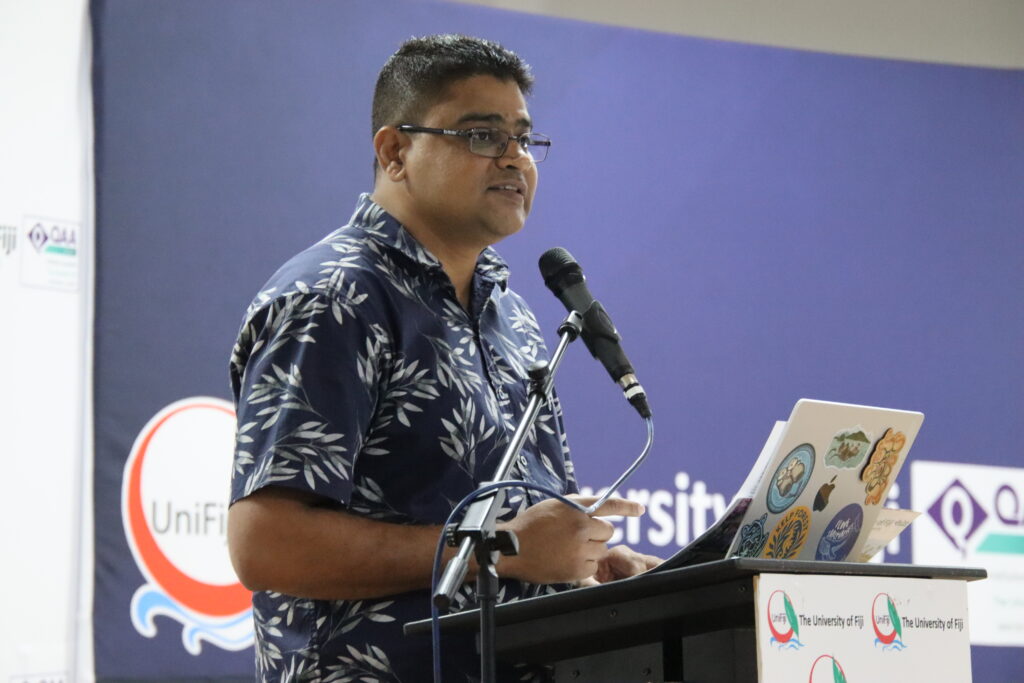
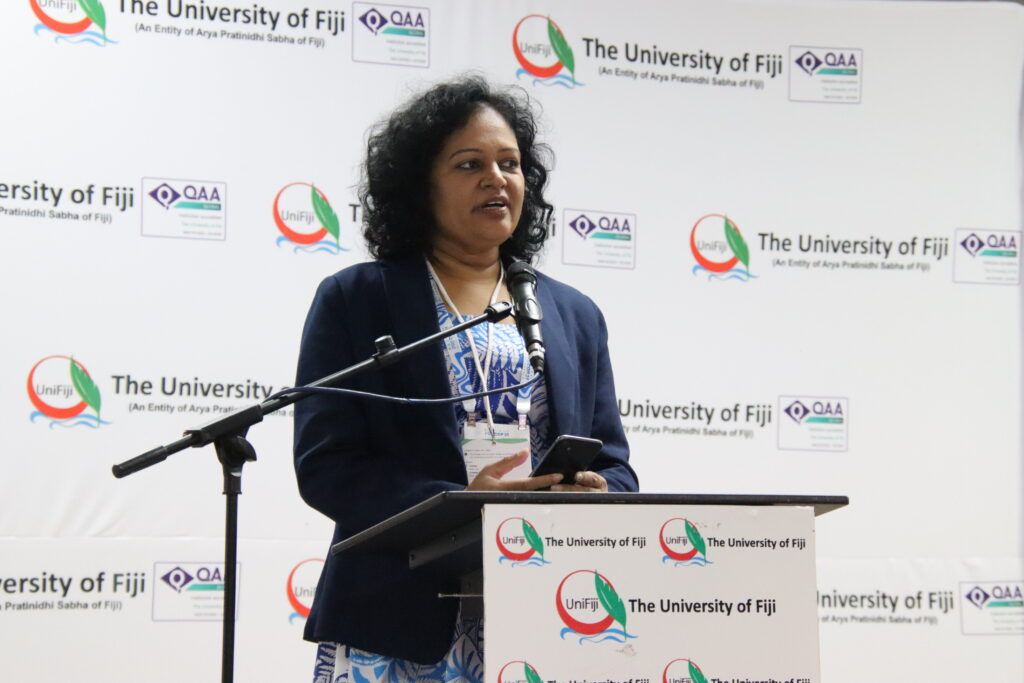
Speaking at the ceremony, Pro-Chancellor Pt. Bhuwan Dutt said the occasion represented far more than the presentation of plaques, describing it as a symbol of friendship, collaboration and mutual understanding between Fiji and China.

“This plaque hand-over event is not only an exchange but signifies more than just a symbol. It embodies the spirit of collaboration, friendship, shared vision and values of understanding between our two institutions,” he said.

He said the Nishan Book House and Beautiful China Series Project would enrich the University’s academic environment by providing students, staff and researchers with greater access to Chinese literature, cultural heritage, history and educational resources.

The Pro-Chancellor said the partnership would also create opportunities for deeper educational cooperation, intercultural dialogue and future collaboration in areas of shared interest.

“As we share folklore and traditions in this sphere, we also hope that it will go beyond geographical boundaries, serving as a bridge to foster friendship between the people of China, Fiji and our neighbouring Pacific Islands,” he said.

The ceremony was attended by Mr. Song Peitao, Vice President of the Liaocheng People’s Association for Friendship with Foreign Countries, accompanying delegates from Liaocheng City, representatives of the Embassy of the People’s Republic of China in Fiji, University leadership, staff and invited guests.

Mr. Song Peitao said the visit reflected the strong friendship between China and Fiji and the importance of continued people-to-people exchanges, educational links and mutual respect.

He noted that the ceremony also formed part of the 2026 China-Pacific Island Countries Climate Action Cooperation Exchange Week, which promotes dialogue and cooperation between China and Pacific Island countries.

Mr. Song said the Nishan Book House was an international cultural initiative aimed at sharing traditional Chinese culture and heritage with overseas communities.

He added that the Beautiful China Series featured publications highlighting Chinese heritage, traditional arts and cultural practices, including examples of intangible cultural heritage, and that additional books would be provided to further enrich the collection at the University.

He thanked the University of Fiji for its warm hospitality and expressed hope for deeper cooperation and enduring friendship in the years ahead.

This partnership of the University of Fiji aligns with its commitment to internationalisation, academic excellence and preparing globally aware graduates through meaningful global engagement.

Loading

University of Fiji Marks International Mother Earth Day with Call for Climate Action

The University of Fiji marks the important occasion of International Mother Earth Day, observed globally on April 22nd each year, as a reminder of the urgent need to protect and preserve the environment. The day highlights the importance of environmental conservation and encourages collective action to safeguard ecosystems and ensure a sustainable future for generations to come.

Vice-Chancellor of the University of Fiji, Shaista Shameen emphasized the importance of collective responsibility in addressing environmental challenges.

‘’For Fijians, the ocean, the sky and the land are deeply connected to identity, culture and future prosperity. Mother Earth sustains the soil that grows food, the reefs that support fisheries and the forests that protect watersheds, making environmental protection essential for both livelihoods and survival,’’ she said.

‘’Fiji and the Pacific Islands are already witnessing the impacts of environmental change. Rising sea levels threaten coastal communities, while increasingly powerful cyclones test the resilience of island nations. These challenges highlight the need for urgent climate action and sustainable environmental management’’, she said.

The day was officially recognized by the United Nations in 2009, highlighting the growing urgency of environmental issues worldwide. From climate change and deforestation to pollution and biodiversity loss, the global community continues to face significant environmental challenges that require immediate and coordinated action.

The University encourages youths, communities, government agencies, schools and universities to work together to reduce carbon footprints, preserve natural resources and promote sustainability in all aspects of life. With natural disasters becoming more frequent and severe, the call to end humanity’s conflict with nature has never been more critical.

The University also continues to promote awareness through research and storytelling. In 2021, it produced the documentary Drua, which captured multidisciplinary research demonstrating how traditional Indigenous knowledge helps communities mitigate and adapt to climate crises in the villages of Veiseisei, Lauwaki and Namoli.

This year’s theme for International Mother Earth Day, “Our Power, Our Planet,” calls for tripling global clean electricity generation by 2030, emphasizing the role of renewable energy in combating climate change.

The University of Fiji reminds citizens that the right to a clean and safe environment is protected under the Constitution of Fiji 2013, and with that right comes a responsibility to protect the planet. As there is no second Earth, the University calls on everyone to act now to safeguard the environment and ensure a sustainable future for all.

Loading

The University of Fiji Mourns the Passing of Former Chancellor, Ratu Epeli Nailatikau

The University of Fiji joins the people of Fiji and the wider Pacific region in mourning the passing of former President of the Republic of Fiji and former Chancellor of the University, Ratu Epeli Nailatikau, a revered statesman whose life was dedicated to service, leadership and the betterment of the nation.

Vice-Chancellor Professor Shaista Shameem said the University was deeply saddened by the passing of a leader who served the institution with grace, wisdom and honour.

“Ratu Epeli Nailatikau was a man of immense dignity, humility and strength of character. He carried the respect of the nation and the affection of all who had the privilege of working with him.

“As Chancellor of the University of Fiji, he gave this institution prestige, encouragement and principled leadership. He believed strongly in the power of education to uplift lives and create a better future for our people.

“I remember him as a gracious and thoughtful leader who treated everyone with kindness and respect. His presence at our graduations and official ceremonies inspired confidence, pride and hope in our students.

“His passing is a great national loss, and the University of Fiji honours his legacy of service to Fiji and commitment to future generations,” Professor Shameem said.

A high chief of Kubuna, Ratu Epeli served Fiji with distinction across military, diplomatic and constitutional leadership roles over many decades. His contribution to national life leaves a lasting legacy of unity, service and patriotism.

During his tenure as Chancellor, he remained a strong supporter of higher education and the important role universities play in nation-building, leadership development and social progress.

The University community fondly remembers his attendance at graduation ceremonies and official events, where he was admired for his humility, wisdom and genuine warmth towards students, staff and guests.

One of his enduring messages to graduands, delivered at the University of Fiji Graduation Ceremony in 2013, continues to resonate today:

“I urge the graduands to lead by example and be good ambassadors of the University of Fiji. To all of you parents gathered here and to those listening from outside, I implore you to invest in the education of your children for the future.”

The University of Fiji extends its deepest condolences to the Nailatikau family, the Vanua, and all those in Fiji and across the Pacific mourning his passing.

May he rest in eternal peace.

Loading

University of Fiji and Tuvalu Government Sign Historic Memorandum of Understanding

The University of Fiji has entered into a historic partnership with the Ministry of Education and Human Resource Development of the Tuvalu Government following the signing of a Memorandum of Understanding (MoU), marking a significant milestone in regional academic collaboration.

The agreement establishes a formal framework for cooperation aimed at enhancing Tuvalu’s human capital through access to quality tertiary education, training, and research collaboration aligned with national development priorities.

Vice-Chancellor, Professor Shaista Shameem, described the signing as a landmark achievement for the University and the region.

Leading into her remarks, Professor Shameem said the partnership represents a new model of collaboration at the national level.

“This will be recorded in the chronicles of the University of Fiji as a milestone achievement, indeed one that illustrates the endless possibilities of collaboration, mutual purpose in significant areas of academic endeavour and intellectual cooperation,” she said.

Professor Shameem highlighted that the agreement is unprecedented.

“This is the first time that I know where a university is forging an MOU and partnership with a country, with a nation state. It is a great honour,” she added.

Under the agreement, a minimum of five Tuvaluan students will be placed annually in University of Fiji programmes, including nursing, MBBS, and the Bachelor of Medical and Health Sciences, with further opportunities across disciplines such as law, business, humanities, international relations, and information technology.

The MoU also promotes collaboration in research, policy dialogue, and capacity building, particularly in addressing climate change and other development challenges faced by Small Island Developing States (SIDS).

In addition, the partnership will support clinical training placements, cultural and academic exchanges, and the use of University platforms to promote awareness on national and global issues.

Professor Shameem further emphasized the University’s commitment to student welfare.

“We undertake to ensure that the students placed in our care are well looked after as our own,” she said.

She also acknowledged the trust placed in the University by the Government of Tuvalu.

“We are acutely aware of the incredible expression of trust that this agreement represents between your Government and the University of Fiji,” she said.

Minister for Education and Human Resource Development of Tuvalu, Uluaipouomalō Honourable Hamoa Holona, described the signing as a historic and forward-looking partnership.

“This momentous occasion marks a significant milestone in our collective journey towards fostering a brighter future for the people of Tuvalu,” he said.

He noted that the agreement, developed within a short timeframe, reflects the strong commitment of both parties.

“The fact that this partnership has been forged in a record time of three to four weeks is a testament to the commitment and dedication of both parties to the principles of quality education,” he said.

Hon. Holona added that the partnership would create new opportunities for Tuvaluan students and strengthen national development efforts.

“This MOU is a beacon of hope, symbolizing the boundless opportunities that lie ahead for our children,” he said.

“As we sign this MOU today, we do so with a deep sense of purpose and responsibility, knowing that our collective efforts will have a profound impact on the lives of our children and the future of our nation.”

Pro-Chancellor and Chair of Council, Pandit Bhuwan Dutt, also welcomed the partnership, describing it as mutually beneficial and forward-looking.

“This MOU is going to be very helpful to both of us, it goes two ways, we need you,” he said.

He emphasized the role of education in addressing future challenges, particularly for small island nations.

“When you see a problem coming, you have to find a solution, climate change is a challenge, and education is a way forward,” he said.

Highlighting the importance of education in nation-building, he added that “every child is important to us if a child is developed well, the family and the nation develop well.”

The Memorandum of Understanding will remain in effect for an initial period of three years, with the possibility of renewal upon mutual agreement.

The University of Fiji continues to strengthen its regional engagement, positioning itself as a key partner in education, research, and sustainable development across the Pacific.


Loading

University of Fiji Launches Book on Bollywood’s Golden Age

The University of Fiji has launched “Sentimental Songs, Melodrama and Filmic Narrative in Bollywood’s Golden Age (1951–1963)” by Jasmine Sofia Jannif, a scholarly work that explores the cultural, emotional and narrative power of film music in one of the most influential periods of Indian cinema.

The book was officially launched by Vice-Chancellor, Professor Shaista Shameem, at an event attended by academics, students and members of the public, marking a significant contribution to both cultural studies and film scholarship.

The publication examines how songs in Bollywood’s Golden Age were not merely elements of entertainment, but central to storytelling, shaping narrative progression while reflecting themes of love, loss, identity and social change.

Speaking at the launch, Professor Shameem described the book as a powerful and academically significant work that should be recognised within film and media studies.

She said while the subject may appear non-academic, the depth of analysis presented in the book establishes it as a serious scholarly contribution.

Professor Shameem noted that the book demonstrates how songs in Indian cinema extend and deepen the narrative, rather than simply accompanying it.

She said, “If you even suggested for a moment that the songs would not be there, nobody would go to Indian cinema. The music extends the entire story and gives meaning to the narrative in ways we often overlook.”

She further highlighted the importance of Indian cinema within the diaspora, particularly for Indo-Fijians, describing it as more than entertainment but a reflection of cultural identity and heritage.

Professor Shameem said the book captures how film and music serve as a link to cultural origins, reinforcing identity across generations despite geographical distance.

Author Jasmine Sofia Jannif, in her remarks, reflected on the personal journey that shaped the book, drawing from her upbringing in a music-loving family and her early fascination with film songs.

She explained that her research revealed songs as a primary medium of storytelling and emotional expression, particularly during the Golden Age of Bollywood, where they gave voice to themes of displacement, longing and social realities.

Ms Jannif noted that songs from this era not only advanced film narratives but also preserved cultural memory, connecting audiences to deeper emotional and historical experiences.

The launch forms part of the University’s broader commitment to promoting literature, arts and interdisciplinary scholarship, particularly during its 21st anniversary celebrations, which highlight the diverse talents of its academic and creative community.

Loading