The University of Fiji has strengthened its international research engagement by contributing Pacific and Small Island Developing States perspectives to discussions on the future of global energy access, climate research and equitable academic partnerships at the University of Oxford.
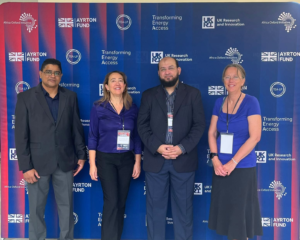
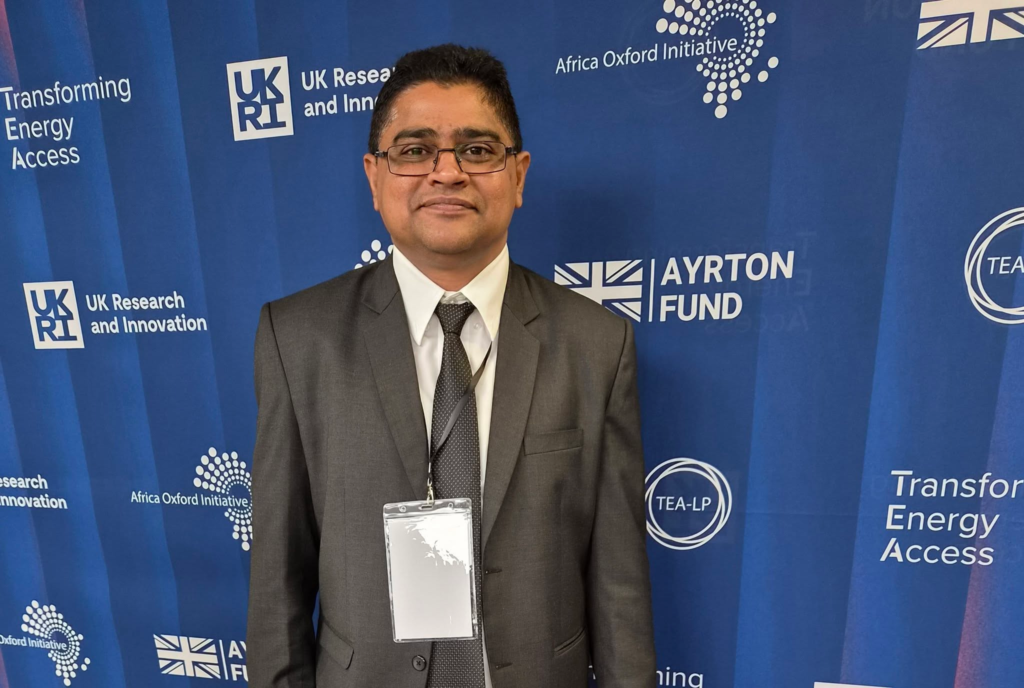
Dr Ramendra Prasad, Associate Professor and Head of Science in the School of Science and Technology, represented UniFiji at the Africa Oxford Initiative and Transforming Energy Access Academic Symposium 2026, held at the University of Oxford in the United Kingdom on 7–8 September. He attended in his capacity as UniFiji Project Lead for the Transforming Energy Access–Learning Partnership project.
Vice-Chancellor Professor Shaista Shameem said the University’s participation reflected the importance of ensuring Pacific institutions are part of international conversations on energy transition, climate action and research collaboration.
“It is very satisfying to see that senior academics of the University are invited to provide insights at prestigious universities abroad especially in research methodologies and SIDS priorities. We expect that our unique experiences will add value to international conversations and roundtables such as these and create impact where it’s needed most.”
The two-day symposium brought together more than 150 academics, practitioners and innovators from the United Kingdom and the Global South to help shape future research and academic partnerships in energy and climate. The programme placed particular emphasis on equitable Global South–North collaboration and ensuring that future research priorities reflect the needs of Global South institutions, communities and energy systems.
The symposium was supported by UK Aid, the Africa Oxford Initiative, the Carbon Trust, the Transforming Energy Access–Learning Partnership and UK Research and Innovation.
Rather than being limited to presentations, the programme was built around facilitated discussions and collaborative sessions. Participants examined the principles of effective and mutually beneficial research partnerships, what should be built, funded or connected next in energy access, and how international research collaborations can move from discussion to implementation.
Dr Prasad participated throughout the two-day programme, contributing perspectives from Fiji, the Pacific and Small Island Developing States to discussions on energy access, research priorities, partnership models and future collaboration.
For UniFiji’s School of Science and Technology, the engagement is closely linked to research and teaching in renewable energy, climate change, environmental science, data-driven modelling and sustainable development. The symposium also provided a framework for connecting scientific research more directly with policy, innovation, implementation and skills development.
The engagement has also created opportunities for UniFiji to strengthen relationships with universities, research networks, practitioners and international organisations, while exploring possible joint research, postgraduate supervision, academic exchanges and future research and funding collaborations.
The University’s participation supports its wider efforts to contribute locally grounded Pacific knowledge to international energy and climate-transition discussions and to strengthen research capability that responds to the needs of Fiji and other Small Island Developing States.