News & Blog

University of Fiji Unveils Leonidas Memorial During Girmit Day Commemoration

The University of Fiji today unveiled a replica of the historic Leonidas during its Girmit Day commemoration, honouring the sacrifices and resilience of the Girmitiyas whose legacy continues to shape modern Fiji.

The memorial was unveiled by Chief Guest Ravneel Singh, a University of Fiji Council member. The replica ship, measuring approximately two meters in length, about 700 to 800 centimeters in width and 1.3 meters in height, symbolizes the historic journey of the 498 indentured labourers who departed from Calcutta on 3 March 1879 and arrived in Levuka on 14 May 1879.

Vice-Chancellor Professor Shaista Shameem said the unveiling of the memorial served as an important reminder of the courage, perseverance and sacrifices of the Girmitiyas whose contributions continue to shape Fiji today.

“For every Fijian the day means different things. For us at Saweni Campus it reflected a voyage to a new educational experience. The symbol of Leonidas in our front yard at UniFiji is a symbol of the journey to Fiji, like that of Homer’s Odyssey. Leonidas was full of brave men and women embarking on a journey of surprise. And, indeed, it was a pretty big surprise’ Professor Shameem said.

Executive Director Human Resources Ashneel Singh said the theme of the 147th Girmit Day, “From Roots to Wings, Carrying the Girmit Flame Forward,” reminds Fijians of the extraordinary sacrifices and resilience of the Girmitiyas who arrived in Fiji with hope, courage and determination.

He said despite facing exploitation, displacement and hardship, the Girmitiyas laid the foundations for future generations through perseverance, unity and their belief in the transformative power of education and hard work.

Singh added that today’s youth represent the “wings” of those roots and must carry forward the Girmit flame with wisdom, humanity and purpose in a world shaped by artificial intelligence, digital transformation and global challenges.

He emphasised the role of universities in preserving history while empowering future generations with knowledge, innovation, leadership and social responsibility.

Chief Guest Mr Ravneel Singh reflected on the difficult journey faced by the Girmitiyas and acknowledged their contribution towards the social, cultural and economic development of Fiji.

“Despite the hardships they endured, the Girmitiyas showed remarkable resilience, building temples, mosques, schools and communities that laid the foundation for future generations,’’ he said.

Mr Singh added the legacy of the Girmitiyas continued to live on through the values of perseverance, cultural diversity and hard work that remain deeply embedded within Fiji’s society.

“Girmit Day is more than a remembrance of history, it is a powerful moment in our national journey to reflect on the sacrifices and resilience of the Girmitiyas who helped shape the Fiji we know today,’’ he said.

Acting President of the University of Fiji Students Association, Rodney Vakaloloma acknowledged the audience and expressed appreciation for everyone present at the event, noting the significance of the cultural celebration and the student-led initiative.

Rodney further emphasised that the exhibition and launch formed part of a wider effort to encourage students to engage with history in meaningful and creative ways. He encouraged participants to reflect on the stories behind the artworks and appreciate the deeper message of resilience and remembrance, particularly in relation to the legacy of the Girmitiyas.

The replica of the Leonidas was constructed by University of Fiji staff member Krishna Naidu, whose creativity and craftsmanship brought the historic vessel to life. Working quietly behind the scenes, Naidu transformed recycled and discarded materials into a detailed model that stands as a powerful symbol of endurance and remembrance. His contribution reflects both innovation and a deep respect for history, showing how meaningful storytelling can emerge through creativity and resourcefulness.

Speaking on the project, Krishna said the model was completed in about a day and a half, with each piece of discarded material coming together to form a symbol of endurance and struggle. He said the work was not just about building a structure, but about honouring the resilience of the Girmitiyas and ensuring their story is remembered through tangible creative expression.

The University of Fiji reaffirmed its commitment to preserving and promoting Fiji’s history and cultural heritage through education, awareness and community engagement while encouraging students to continue honouring the legacy and sacrifices of the Girmitiyas.

Loading

Emerging from the Shadows: Hefrani Barnes’ First Solo Exhibition ‘Emergent’ Brings Pacific Art into the Light

SUVA, Fiji – On the evening of 14 May 2026, the University of Fiji’s Suva Central Campus hosted Emergent, the first solo exhibition of young local Fijian artist Hefrani Barnes. The event served as both a cultural milestone and a platform for urgent social commentary, expressed through black sand, tapa, and vivid colour. The exhibition’s title, derived from the Latin emergere-to bring forth, to bring to light-reflects Barnes’ personal and artistic journey.

Living with epilepsy, the artist has produced twenty works that address climate disasters, fuel crises, bodily autonomy, and regional conflict. “Her storytelling stood out to me,” said Letila Mitchell, former director of the Fiji Arts Council, founder of the Pacific Arts Alliance, and chief guest of the evening. “It wasn’t just art meant to pretty up someone’s wall. Each of her pieces was a conversation about a real issue.” Mitchell noted the significance of the moment for a young artist from Fiji, where few practitioners exist in the contemporary arts space. “It’s a very hard career to undertake,” she added. “But we carry knowledge and stories from one generation to the next.” Barnes’ mother, Maureen Penjueli, spoke of the personal cost behind the collection. “She suffers from epilepsy, and she has delivered this entire twenty-plus collection through blood, sweat and tears,” Penjueli said. “This is a very important moment for her and her career.” She also called on parents to support children pursuing creative paths. “The arts doesn’t get much support in Fiji through our schooling system. People tend to look down at arts as not a pathway for a career.

But for children with deep love and passion, parents must be there to journey with them.” Ilana Burness, Campus Coordinator for the University of Fiji’s Suva Central Campus, explained the institution’s role in hosting the exhibition. “Art allows people to question, to reimagine, and to create meaning beyond traditional academic frameworks,” she said. “University art spaces can become cultural incubators. They create visibility for local artists outside of commercial galleries and build a professional arts ecosystem.” Artist-in-residence Mason Lee also acknowledged the University’s support for local artists and said creative talent in Fiji often goes unrecognised. “University of Fiji has changed that,” Lee said. “The support and belief they have given me has created a space where artists can lead and showcase their work.” Lee added that art remains deeply connected to culture, identity and storytelling. “Culture, tradition and identity are influenced by art,” he said. “Creation is art and it mirrors society in various forms.” The exhibition was funded by the Pacific Island Feminists Alliance for Climate Justice (PIFa4CJ) in partnership with the University of Fiji. Barnes’ work deliberately juxtaposes everyday materials-black sand from Wailoaloa Beach in Nadi, coconut husk, bark-with culturally significant items such as tapa, kuta, and ‘apei mats. The exhibition notes ask: “What is of common value to all? Justice, hope, love, and a duty of care for the living and non-living.” Hon. Lynda Tabuya, Minister for Information, Environment and Climate Change, attended the exhibition and described a personal connection to the artist. “I’ve known Hefrani since she was born,” Tabuya said. “For UniFiji to bring her into the space of academia shows that academia is not just limited to books and articles. It is also the expression of art-non-verbal, pictorial, and vital.” Tabuya was particularly struck by the thematic range of the works. “She covered the fuel crisis, evacuations during climate disasters, her own ethnicity, and how to recycle our own fabric, natural sinews, tapa, and mats,” she said. “And the colours capture who we Fijians are. We are happy people, and we need to reflect that.” The Minister further challenged the arts to reclaim digital spaces. “There is so much darkness on social media-cyberbullying, negativity. We need to bring beauty and colour back into that dark space.” Barnes, though unable to attend in person, shared her perspective through the program.

When asked about her inspirations, she stated: “Faith, nature, human emotions, awareness, culture and tradition. These guide my path as an artist.” On the challenges facing young Fijian artists, she responded simply: “Lack of support to be recognised.” Her advice to students was direct: “Think twice. Or if you’re bold enough, take up the role and make it count.” The evening’s program, led by Master of Ceremonies Lawrence Singh, included a welcome address, keynote remarks by Ilana Burness, and a tribute from Letila Mitchell on female perspectives in radical and experimental art forms. As Mitchell concluded: “Art carries our identity. It’s a positive way of showing who we are without discriminating against others. It connects cultures together.” On a warm evening in Suva, Hefrani Barnes’ Emergent did exactly that-bringing forth, into the light, what had long been submerged.

Loading

University of Fiji marks World Press Freedom Day with screening and discussion on journalism in conflict

The University of Fiji commemorated World Press Freedom Day on Thursday evening with a special screening of the 2024 film Civil War followed by an engaging public discussion on the role of journalism during times of conflict and crisis.

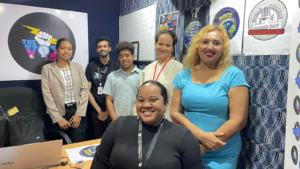
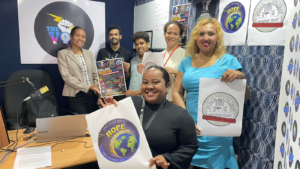
The event, organised by the University’s Journalism and Media Studies students and staff under the UniFiji Press Club, was held at the Lyceum, UniFiji Central Campus in Suva and attracted students, academics, journalists and representatives from media organisations.

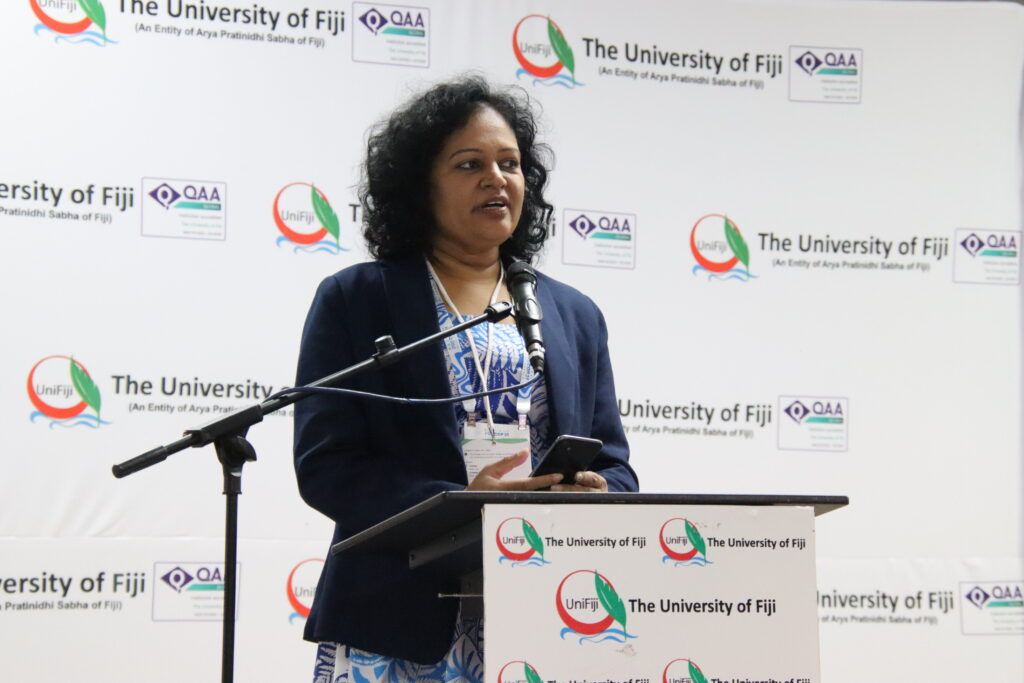
Vice Chancellor Professor Shaista Shameem shared her reflections on the importance of press freedom and responsible journalism in democratic societies, drawing from her own experiences working within media, legal and public institutions.

She spoke about the role of the journalist as witness during times of conflict and crisis, and the increasing need for ethical, courageous and independent reporting in an era shaped by misinformation, political polarisation and technological change.

Professor Shameem said journalism remained one of the most important pillars of accountability and public awareness. She encouraged Journalism and Media Studies students to appreciate the responsibilities that come with reporting truthfully and fairly, particularly during times of social unrest and uncertainty.

The screening of Civil War generated lively discussion among attendees, with participants exploring themes of war reporting, journalist safety, media ethics, propaganda, censorship and the emotional toll experienced by frontline reporters.

Representatives from several media organisations also participated in the discussions, including Vijay Narayan from CFL, who shared valuable industry insights and perspectives on the realities of modern journalism and the importance of maintaining public trust in the media.

Students actively engaged in the question and answer session, raising critical questions about media neutrality, misinformation, press freedom and the responsibilities journalists carry when covering conflict and humanitarian crises.

The University event reflected continued commitment to fostering critical thinking, ethical journalism and meaningful public dialogue through its Journalism and Media Studies programme.

World Press Freedom Day is observed annually on May 3 to recognise the importance of a free and independent press and to honour journalists around the world who continue to risk their lives in pursuit of truth and accountability.

IMG_0206
IMG_0186

Loading

World Media Freedom Day

Journalists should know the difference between reporting the story and becoming the story.

This was the message sent to the University of Fiji’s Journalism and Media Studies students by the Vice Chancellor Professor Shaista Shameem to commemorate Press Freedom Day, celebrated internationally on May 3rd.

To examine the essential high bar qualities of reporting, the University’s Journalism and Media Studies staff and students will host Fijian journalists to the film ‘Civil War’ on Thursday 7th May at 7 pm at the UniFiji Central Campus Lyceum in Suva.

Professor Shameem said the 2024 dystopian film depicts veteran and rookie journalists trying to cover a war-torn America and a government in crisis. The plot follows a group of war journalists travelling from New York to Washington DC to interview the President of the United States before rebels take the capital city, she said.

There is no better film to highlight the role of journalists as professionals occupying the highest moral ground, which is often slippery and unclear, she said.

“The University’s JMS Programme is focused on teaching journalism beyond sound bites or picking stories out of social media. We need our students and graduates to understand the duty of a reporter, and that is to report. Personal beliefs, politics and prejudices should be left at the door when you, as students, arrive in the classroom on the very first day in the JMS Programme”, Professor Shameem told the students.

Journalists should also know that their job is a dangerous one. Despite best efforts at protection, no one can guarantee safe passage for journalists. They must enter the profession, not as any job, but as a vocation.

They must aim to uphold the highest standards and derive strength from that principle. “Journalists are like soldiers, knowing that they do the job at their peril, but doing it anyway. Those are the journalists that history will remember”, Professor Shameem said.

She said the film ‘Civil War’ depicted the joys and pitfalls of press freedom in stark reality unmatched by any lecture notes that the JMS course could provide and would also serve as a refresher for established journalists in Fiji.


Loading

UniFiji Highlights Tuna Industry’s Importance to Fiji on World Tuna Day

The University of Fiji has called for stronger action to protect tuna stocks and sustain the livelihoods of Pacific communities, as the world marks World Tuna Day.

Vice-Chancellor, Professor Shaista Shameem, said tuna remains vital to Fiji’s economy, food security, and future development, but is increasingly under threat from climate change and overfishing.

“Tuna is not just a resource for Fiji, it is a lifeline for our people, our economy, and our future,” Professor Shameem said.

“As ocean temperatures rise due to climate change, tuna stocks are shifting to cooler waters, reducing availability in our region. Combined with overfishing and illegal fishing, this poses a serious threat to sustainability.”

Professor Shameem said Fiji’s commitment to international frameworks such as the Biological Diversity Beyond National Jurisdiction (BBNJ) Agreement, which came into force in January 2026, is a critical step towards protecting marine biodiversity and ensuring sustainable fisheries.

She warned that small Pacific Island nations, including Tuvalu, Kiribati and the Marshall Islands, are expected to experience significant declines in tuna stocks by 2050, with wider impacts likely across the region.

“These changes will not only affect food supply but also national revenues and livelihoods across the Pacific,” she said.

Professor Shameem highlighted the direct impact of the tuna industry on local communities, particularly in Levuka.

“The Pacific Fishing Company (PAFCO), located near our Levuka Campus, supports thousands of Fijians through employment in fishing and processing. These opportunities have enabled many families to access education, including sending their children to the University of Fiji.”

She noted that student numbers at the University’s Levuka Campus have doubled in 2026, reflecting the growing link between industry, community, and education.

Marking this year’s theme, “Sustaining Tuna, Sustaining Nations,” Professor Shameem said the message is clear.

“If we do not protect our tuna resources, we cannot sustain our nations. We must adopt responsible fishing practices, strengthen enforcement against illegal fishing, and protect our oceans for future generations.”

She also called on young people to play an active role in safeguarding marine resources.

“We encourage our youth to take leadership in protecting our oceans,  from reducing plastic waste to advocating for sustainable fishing practices. The future of our oceans is in their hands.”


Loading