
Beyond Medicine: University of Fiji Calls for a Modern Public Health Act

The University of Fiji has called on Parliament to strengthen the Public Health (Amendment) Bill 2026 to make it more relevant for the times.

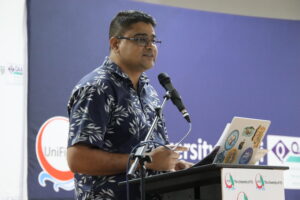
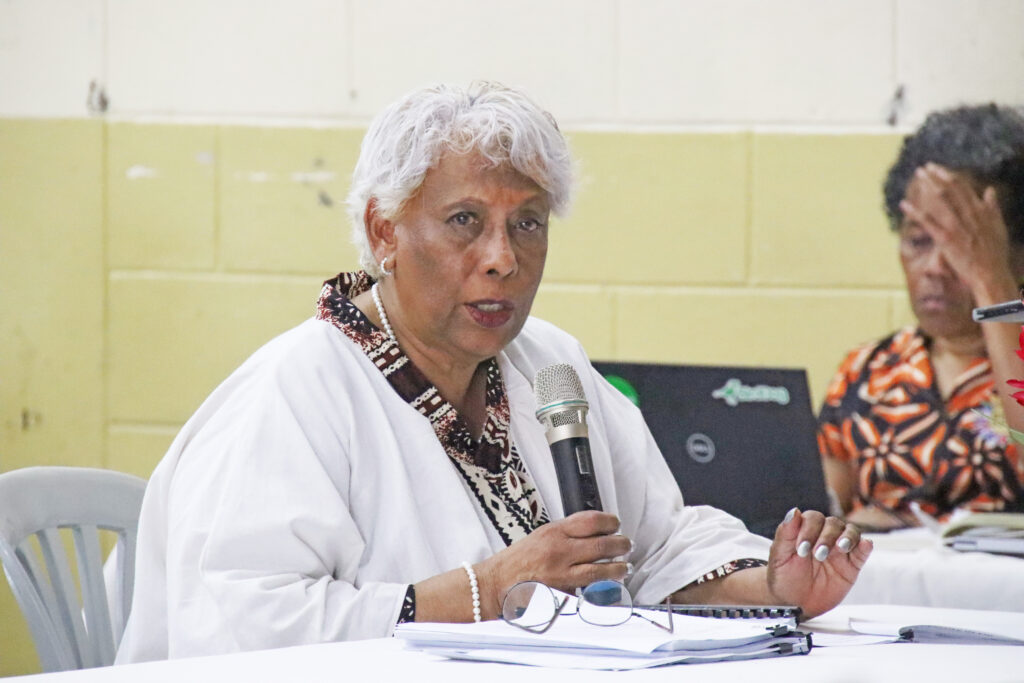
In making its submission to the Social Affairs Committee of Parliament, the University urged Committee members to seize the opportunity and establish a sustainable and effective public health legislative framework that will confront, head on, the challenges and realities affecting the physical and mental well-being of all the communities in Fiji.

For that reason, the Bill must contain a Purpose clause, currently missing, the Vice Chancellor of the University, Professor Shaista Shameem told the Committee. The draft Bill presented to the public for consultation did not explain its purpose. “What is the aim of this Bill?”

“Any public health law must be located in the social fabric of society and provide safeguards for future generations; at the same time, parliament, as representatives of the people, can now consider restructuring the public health system to ensure delivery is devolved to the communities to make everyone feel equally responsible for it, and not just central government”.

The Bill should do more than amend outdated legislation. It should redefine public health for the twenty-first century and include mental as well as physical health protections for all, particularly for those disadvantaged and vulnerable in all the communities, she said.

“Cultural nuances in responses to health issues and crises cannot be under-emphasized in the authorities’ responses to achieving well-being of the nation as a whole”.

Professor Shameem said that a modern public health structure should go beyond hospitals, doctors and the treatment of disease.

“Public health is much broader than medicine; a relevant legislative framework should create conditions in which people can live healthy lives, physically and mentally. Safe drinking water, sanitation, food safety, environmental protection, healthy housing, disease prevention, child protection and wellbeing, protection from domestic violence, and building climate resilience are all matters of public health. A modern Public Health Act should reflect this broader understanding.”

Professor Shameem said one of the University’s principal recommendations is the inclusion of a purpose clause. The Public Health Act contains no statement of purpose. That omission should be addressed. Every modern statute should clearly state its objectives and the principles that guide its implementation. A purpose clause provides direction for decision-makers, assists the courts in interpreting legislation and promotes consistency, accountability and transparency in the exercise of public powers.

She said the University has also recommended that Fiji devolve and de-centralize public health resourcing and services throughout the country so that prevention, protection, especially of women and children, environmental health services, disease surveillance and emergency response are delivered directly to the communities.

“Public health is most effective when decisions and made and services are delivered at community level. Devolving public health services throughout Fiji will strengthen prevention, improve access to services, build local capacity and ensure that rural and maritime communities receive the same level of protection as urban centres.”

Professor Shameem said environmental health must be recognized as one of the foundations of public health delivery and adequately provided for in the legislation.

“Clean water, effective sanitation, food safety, waste management, pollution control and healthy living environments prevent disease before it occurs. The University has therefore recommended stronger environmental health leadership, clearer institutional responsibilities and effective coordination to ensure that environmental health remains central to public health policy.”

She said climate change is now one of the greatest public health challenges facing Fiji. Climate change is not simply an environmental issue. It is a public health issue. It affects the quality of our water, our food security, our environment, the spread of disease and the resilience of our communities. Public health legislation must recognize these realities and provide a framework that strengthens prevention, preparedness and coordinated responses.”

Professor Shameem said effective public health laws also require sensible and effective governance structures. The Bill in its current form creates significant public powers. Those powers are essential for protecting public health, but they must be exercised within a framework of transparency, accountability and appropriate legal safeguards. Good governance strengthens public confidence and ensures that public authorities exercise their powers fairly, lawfully and proportionately.

The University has also recommended that the proposed Central Board of Health include representatives from universities offering medical and nursing qualifications. Professor Shameem said that public health decisions should be informed by science, research and professional expertise.

“Universities make an important contribution through research, innovation and evidence-based advice. Their active participation in the proposed governance and oversight model will strengthen national public health policy and decision-making. Such research may not be accorded the importance it should be, but with adequate funding the Universities can do more in the public health interest”

Professor Shameem said the new law should also reflect contemporary medical knowledge and promote dignity.

“The continued use of the term ‘venereal disease’ in the draft Bill is outdated and carries unnecessary stigma. Modern legislation should adopt respectful and scientifically accurate terminology such as ‘sexually transmitted infections’. The law should never reinforce stigma or discourage people from seeking treatment”.

Professor Shameem said she strongly recommends that domestic violence be recognized as a public health issue.

“Domestic violence is a public health issue, not just about criminal justice. Its consequences extend far beyond the immediate victim, affecting physical and mental health, family wellbeing and community resilience. A modern Public Health Act should recognize this reality by supporting prevention, early intervention, referral pathways and coordinated responses across the health, justice and social sectors.”

Professor Shameem said the protection of children must become a central objective of public health policy.

“The health of our children is one of the strongest indicators of the health of our nation. Children are particularly vulnerable to disease, unsafe environments, poor sanitation, effects of climate crisis and other preventable risks. A modern Public Health Act should expressly recognize children as a priority for protection and promote healthy environments in which every child can grow, learn and thrive.”

The University has also recommended modernizing outdated terminology throughout the legislation, strengthening institutional arrangements for environmental health, improving coordination between public authorities to avoid unnecessary overlap with existing legislation, and adopting a proportionate penalty framework that effectively deters conduct that places public health at risk.

Professor Shameem said Fiji now has an opportunity to enact legislation that looks to the future rather than the past.

“This Bill should do more than amend legislation enacted almost a century ago. It should establish a new vision of public health for Fiji—one that recognizes that protecting health means protecting our environment, supporting our communities, safeguarding children, addressing domestic violence fully, responding to climate crisis and ensuring that public institutions are guided by science, accountability and public good governance. The decisions Parliament makes today will shape the health, safety and wellbeing of generations of Fijians. This is an opportunity that should not be missed.”

The University of Fiji has submitted its recommendations to Parliament Standing Committee to assist in the development of a Public Health Act that is contemporary, evidence-based, inclusive and capable of responding to Fiji’s evolving public health challenges.

Loading

UNIFIJI Celebrates World Chess Day with Exciting Blitz Competition

The University of Fiji celebrated World Chess Day with an exciting Blitz Chess Competition held on 24 July 2026 at the UNIFIJI Hall. Organised by the UNIFIJI Chess Club, the event brought together students and chess enthusiasts in celebration of a game renowned for promoting strategic thinking, intellectual development, and healthy competition.

Although World Chess Day is officially observed on 20 July, the University community gathered a few days later to commemorate the occasion through a seven-round 5+3 Blitz tournament that attracted 15 participants. Throughout the competition, players demonstrated impressive tactical ability, creativity, concentration, and outstanding sportsmanship.

One of the highlights of the tournament was the closely contested match between brothers Lavesh Sharma and Nitish Sharma, which drew considerable attention from spectators. Another memorable encounter featured Lavesh Sharma against Nishita Sinha, with both players later emerging as the University’s 2026 Male and Female Blitz Champions. Their game showcased exceptional precision, confidence, and competitive spirit.

The tournament also produced one of its most dramatic moments when Lavesh Sharma defeated 2025 Male Champion Erick Auto following an illegal move during their blitz match. The victory marked the tournament’s biggest upset and highlighted Sharma’s outstanding performance throughout the competition.

The event commenced with opening remarks by Dr. Ricardo Gregorio C. Corpuz, who spoke on the value of chess in developing critical thinking, discipline, resilience, and sound decision-making. He encouraged students to view chess not only as a competitive sport but also as a powerful educational tool that supports academic excellence and lifelong learning.

After seven competitive rounds, Lavesh Sharma finished with a perfect score of 7.0 points to claim the 2026 Male Champion title, while Nishita Sinha secured the 2026 Female Champion title with 4.5 points.

The competition reflected the University of Fiji’s commitment to holistic student development by providing opportunities that extend beyond the classroom. Chess enhances memory, concentration, analytical thinking, and problem-solving skills while promoting patience, resilience, and social interaction among students from different faculties and backgrounds. The event also supports UNESCO’s recognition of chess as a valuable instrument for education, peace, and cultural exchange.

Loading

CALL FOR APPLICATION: COMPLETION OF PROGRAMME – DECEMBER GRADUATION

Dear Students

Greetings from the Office of the Registrar!

Kindly note that the Application for Completion of Programme is now open for December, 2026 Graduation.

Students eligible to apply for Completion of Programme are those who have completed their programme of study in:

  • Semester 1, 2026
  • Trimester 1 & 2, 2026

Students who have already applied, need not re-apply.

Please find the attached Advertisement and Application for Completion of Programme.

DECEMBER 2026 AD – CALL FOR APPLICATION – COMPLETION OF PROGRAMME

APPLICATION-FOR-COMPLETION-OF-PROGRAMME-FORM

Loading

Youth Must Lead Fiji’s Climate Action, Says Minister Lynda Tabuya

Young people must take the lead in protecting Fiji’s environment and addressing the growing impacts of climate change, according to Minister for Information, Climate Change and Environment, Hon. Lynda Tabuya.

Speaking during an interview on the University of Fiji’s Vox Populi programme, Minister Tabuya outlined the government’s key priorities for environmental protection over the next 12 months while calling on young Fijians to become active champions of climate action.

She emphasized that youth engagement remains central to the government’s environmental agenda.

“Mobilising our youth in environmental protection and climate change advocacy is most important for government,” Minister Tabuya said.

The Minister highlighted that approximately 65 to 70 per cent of Fiji’s population consists of young people, making them essential partners in building a climate-resilient future.

She noted that environmental protection is closely linked to the everyday wellbeing of families, affecting health, employment, food security and livelihoods.

One of the government’s major achievements, she revealed, is securing FJ$52 million from the Green Climate Fund to support the Ridge to Reef Forest Landscape Restoration Project.

The initiative aims to restore 80,000 hectares of forest and agricultural land while protecting more than 90,000 hectares of coastal ecosystems, benefiting around 200,000 people across Fiji.

Minister Tabuya also encouraged young people to embrace renewable energy by adopting solar technology and electric vehicles, describing them as environmentally friendly and cost-effective alternatives.

Addressing Fiji’s climate resilience efforts, the Minister praised Pacific youth for their leadership in the International Court of Justice Advisory Opinion on climate change.

“It was Pacific-led, it was Pacific youth-led, and it resulted in an advisory opinion that said countries need to take climate action seriously,” she said.

She also announced that Fiji will host the Pacific Pre-COP meeting ahead of the global COP31 climate conference, providing young people with opportunities to showcase climate projects and participate in youth dialogues supported by international partners.

Minister Tabuya urged students to pursue careers in climate change, environmental protection and marine conservation, noting that the growing sector will create employment opportunities across government ministries.

She stressed that protecting forests, biodiversity and marine ecosystems requires collective responsibility, warning that poor waste management and deforestation continue to worsen flooding and coastal degradation.

“Please, young people, become stewards of ensuring that rubbish is not dumped in our rivers and our drains,” she urged.

The Minister also encouraged citizens to become advocates for environmental conservation by reducing plastic pollution and supporting sustainable practices.

“Become a plastic-free champion. Become a nuclear-free champion. Become a sustainable and greener Fiji champion,” she said.

Highlighting government initiatives to promote sustainability, Minister Tabuya pointed to the successful Return and Earn Fiji programme, which rewards communities for collecting recyclable plastic bottles and aluminium cans.

She said the initiative is not only reducing waste but also providing young people with opportunities to earn extra income.

The government is also offering tax incentives for businesses importing biodegradable packaging and recognising companies investing in environmentally friendly operations.

Minister Tabuya encouraged university students to participate in internship programmes within the Ministry, community clean-up campaigns and environmental advocacy projects.

“Bring your innovative policy ideas, your advocacy, your skills, your passion and your awareness. We need to work together,” she said.

In her closing message, the Minister reminded young people that they are already leaders capable of shaping Fiji’s future.

“You’re not the future leaders. You’re the leaders now,” she said. “We need you to be the voice and the change that protects our environment, our ocean and our future generations.”

The interview forms part of the University of Fiji’s ongoing Vox Populi programme, which provides a platform for national leaders to engage directly with students and the wider community on issues of national importance.

Loading

Professor Shameem Calls for Stronger Laws Rather Than Another Supreme and Entrenched Constitution

The Vice Chancellor of the University of Fiji and constitutional lawyer, Professor Shaista Shameem questioned the need for a supreme and entrenched Constitution in Fiji when ordinary laws can be made sufficiently robust to cover all relevant legal rights adequately.

Professor Shameem told the Constitutional Law Review Commission that she had asked her law students to justify the need for a higher law when international law as applied to the Fijian context was a more efficient way to ensure everyone could enjoy the same rights as everyone else and equality would be the cornerstone of all state services including the legislature, the executive and the judiciary.

She said that the Constitutions of independent Fiji, from 1970 to 2013 had brought nothing but instability in Fiji because there was no uniform agreement on what a Constitution should contain. Such political instability had thwarted economic growth which could have alleviated poverty. Instead, much public expenditure had been utilized to establish review commissions which drafted new constitutions only to see them being moved aside for yet another one. The longest lasting Constitution was the 2013 Constitution which had survived for 13 years so far, she said.

Professor Shameem said that rather than arguing over provisions of another new Constitution, it would be more fruitful and sustainable to ensure that all ordinary legislation in Fiji complied with international human rights and humanitarian laws applied correctly. She said she was concerned that a number of bills brought to Parliament recently or under public consultation did not comply with international non-derogatory principles. These included the Marine Areas Bill, Indigenous Rights Bill and the Mining Bill. Many of these bills have the effect of causing inequities contrary to international law, she said.

Professor Shameem said that countries such as New Zealand, Australia and even the United Kingdom did not have supreme constitutions but were able to maintain stability due to robust laws.

Professor Shameem also said that some of the presenters before the Commission had advocated the return of policy that resembled the 1990 Constitutional provisions. Had the Rome Statute been in existence in 1990, those drafting it could have been reported to the International Criminal Court for promoting discrimination, for example in Chapter III and sections 31, 41 and 83(2), she said. Fiji signed the Rome Statute in 1999, however, while the Rome Statute contains the rule against retrospectivity, this rule can be set aside for continuing conduct or if the offence committed would be prosecuted domestically had it not been for state immunity granted to the perpetrator. Professor Shameem said that any person who advocated discrimination of any form by law would be subject to the full brunt of international law. She said the Constitutional Review Commissioners should not adopt any of the provisions of the 1990 Constitution even by implication.

Professor Shameem said that should the Commissioners decide that a new Constitution is required, a number of principles had to be incorporated in it to ensure legitimacy. The first was recognition that a Constitution represented the social contract between a state and the people and any breaches of that contract would result in lack of confidence in government and government institutions. Government was seen as the Trustee of people’s will constitutionally.

The second principle was that of equality of all the people and the right to be free from discrimination in access to government and resources. That meant no special privileges for anyone, she said.

The third principle was the right to equal representation whatever the mechanics of election or selection. She said it was important to realise that democracy was a spectrum and people could easily be dragged into totalitarian democracy if the wrong leader was chosen.

The fourth constitutional principle was that of separation of powers which meant that the legislature, executive and the judiciary had separate functions. The courts could not legislate, even impliedly, as that was the role of the legislature, Professor Shameem said.

The fifth principle was taxation for the public good. Taxation was pegged to a sustainable, circular economy and included taxing those who benefitted from access to natural resources, wherever or whatever they were, she said. Professor Shameem said she agreed with the Fiji Institute of Chartered Accountants’ submissions that finance and fiscal policies were a constitutional responsibility.

Professor Shameem also noted that section 173 of the 2013 Constitution, which contains the Constitution’s immunity clauses, is presently the subject of proceedings before the Supreme Court of Fiji, in which the University of Fiji is the petitioner. The issues concerning its interpretation, scope and constitutional effect are therefore sub judice. In those circumstances, she said it would be inappropriate for the Constitutional Review Commission, or for those appearing before it, to express views on the legal merits of section 173. Any consideration of whether section 173 should ultimately be retained, amended or repealed should properly await the Supreme Court’s determination. Accordingly, and out of respect for the independence of the judiciary and the judicial process, the University of Fiji does not propose to comment on section 173 while the matter remains before the Court.

Professor Shameem further said that offences committed against the Constitution or the people were already penalized under the Crimes Act 2009 Parts 10–12. A number of relevant offences had been included in the former Penal Code, for example Chapters VII and VIII, but these had been consolidated under the Crimes Act 2009.

She said that amendment of the Constitution as the highest law required the highest possible majorities and that a 10-year interval was sufficient for constitutional reviews.

Professor Shameem said that the constitutional role of the Disciplined Services, including the RFMF, Police and Corrections, was to look after the welfare of all the people of Fiji.

In conclusion, Professor Shameem said that a human values perspective on constitutionalism would be the best basis for a new Constitution. However, if that was not possible then it would be advisable to do away with the idea of a supreme and entrenched Constitution and instead make ordinary laws more robust and compliant with international law.

Loading