UniFiji and Fijian Media Association Partnership to Strengthen Journalism Training and Industry Engagement
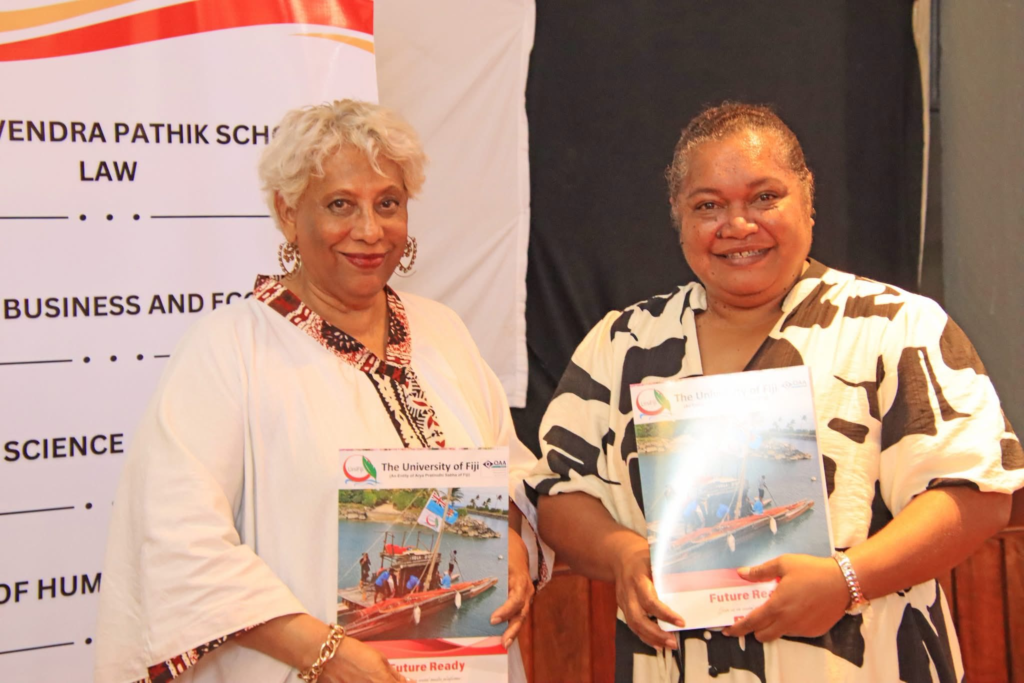
The University of Fiji and the Fijian Media Association (FMA) have entered into a new partnership aimed at strengthening journalism education, practical newsroom experience and professional development for the next generation of media practitioners in Fiji.

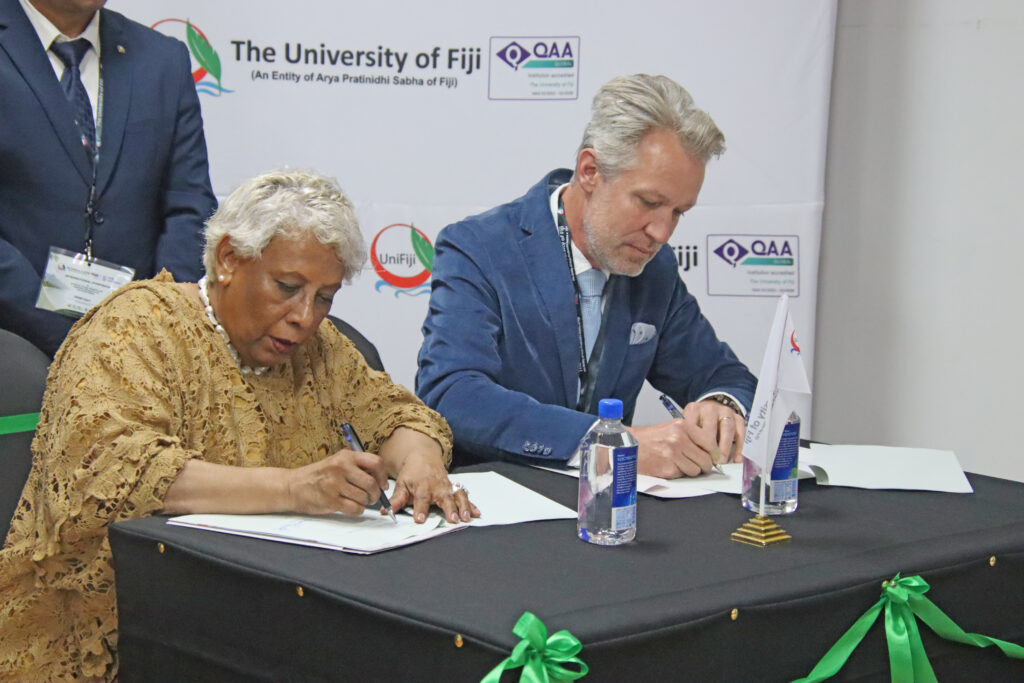
The two organisations signed a Memorandum of Understanding (MOU) on Friday, 28 August, establishing a three-year framework for collaboration between the FMA and UniFiji’s Journalism and Media Studies (JMS) Programme.

The partnership will provide JMS students with opportunities for industry placements, internships, attachments, mentorship, workshops and direct engagement with working media professionals.

It will also support collaboration on public forums, media literacy initiatives, ethical journalism programmes and other activities aimed at strengthening links between journalism education and the media industry.

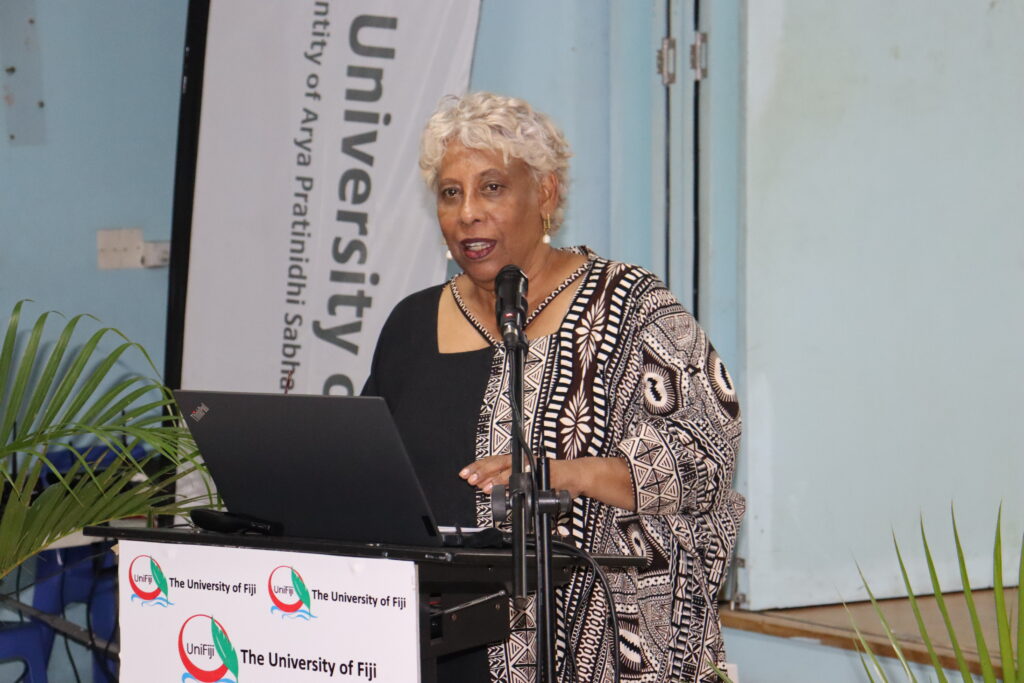
UniFiji Vice-Chancellor Professor Shaista Shameem said the agreement represented an important milestone for the University and would take the JMS Programme into a new phase of direct engagement with Fiji’s mainstream media.

“The MOU will open doors for our aspiring and serving journalists to excel, network, and keep up with emerging trends,” Professor Shameem said.

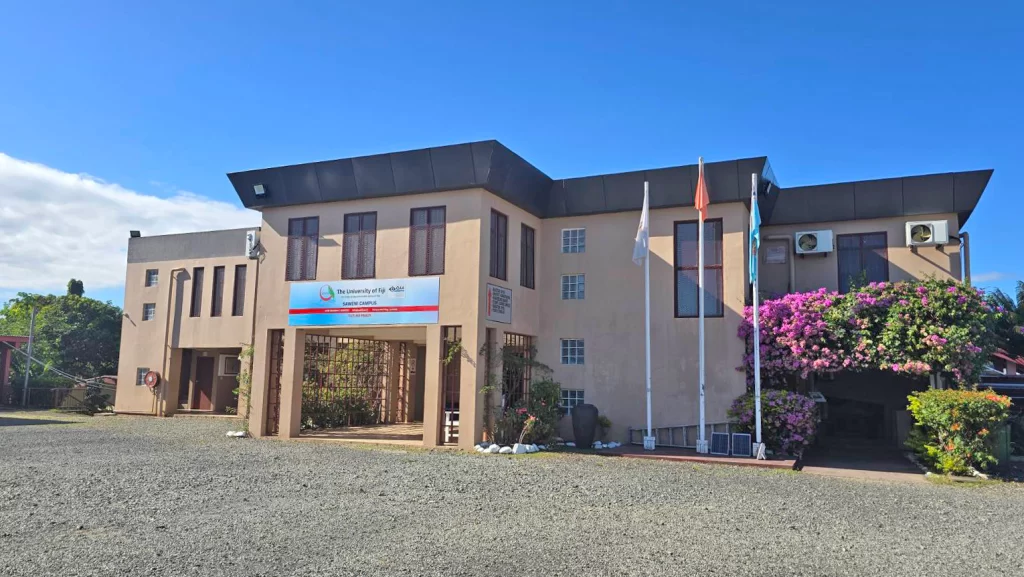
She said the JMS Programme had grown considerably from its beginnings with three students at the Saweni Campus, with its graduates now working within Fiji’s mainstream media industry.

Professor Shameem, herself a former journalist with The Fiji Times, said the partnership reflected UniFiji’s Future Ready approach, particularly as journalism and communications continue to change in response to emerging technologies.

The JMS Programme now extends beyond traditional journalism and includes public relations, web design, coding, film and documentary production, with discussions also taking place on how the programme can further evolve to reflect the broader multimedia environment.

Fijian Media Association Communications Coordinator Elenoa Masi Baselala welcomed the partnership, saying stronger links between universities and the media industry were increasingly important as news organisations adapt to major changes in technology and the way journalism is practised.

Ms Baselala, a former journalist and former Deputy Editor-in-Chief of The Fiji Times, said structured journalism training had historically played an important role within newsrooms.

She said the industry had undergone significant changes over the years and there was now a need to strengthen some of the core skills associated with journalism, including direct questioning, reporting and writing.

“One of the important reasons for having this training is because of AI. As journalists, we have to think about what the future looks like for us in the media industry as AI develops,” Ms Baselala said.

She said this was particularly important in an environment where journalists were also having to respond to the growing challenges of misinformation and disinformation.

Ms Baselala said the FMA welcomed UniFiji’s commitment to journalism education and regarded the MOU as an opportunity to develop graduates whose training reflected the current needs of the industry.

She also highlighted the FMA’s work in creating spaces for greater public engagement through its Town Hall meetings, which bring members of the public together with national leaders for direct question-and-answer discussions.

The Association has been taking the initiative beyond the Suva area to communities where regular media coverage can sometimes be limited because of the costs associated with travelling and reporting from outside major urban centres.

Ms Baselala said the media industry itself continued to rebuild and adapt following years of operating within a restrictive media environment, while at the same time responding to financial pressures and rapid changes in technology.

She said partnerships such as the one with UniFiji could contribute towards strengthening professional skills and preparing young journalists for the realities of modern newsrooms.

Professor Shameem also highlighted opportunities already emerging through the partnership, including the participation of JMS students in an upcoming gathering of regional media professionals in Savusavu.

She thanked the Fijian Media Association for supporting the University’s efforts to expose students to the profession and acknowledged the Association’s leadership for responding positively to the proposed collaboration.

The agreement complements a number of initiatives already being undertaken through UniFiji’s JMS Programme.

These include the UniFiji Press Club, which provides a platform for discussion on issues of national importance, with students expected to take a greater role in organising future sessions.

The University is also progressing plans for radio announcer training and student on-air programming through its in-house Vox Populi station, which has secured its own FM frequency.

Under the MOU, UniFiji and FMA will also collaborate on initiatives promoting responsible media practice, ethical journalism and media literacy in Fiji and, where mutually agreed, across the wider Pacific.

The agreement will remain in effect for three years.

 Public Relations Office

Loading

UniFiji, Nukulaelae Kaupule film draws emotional response at Tuvalu premiere

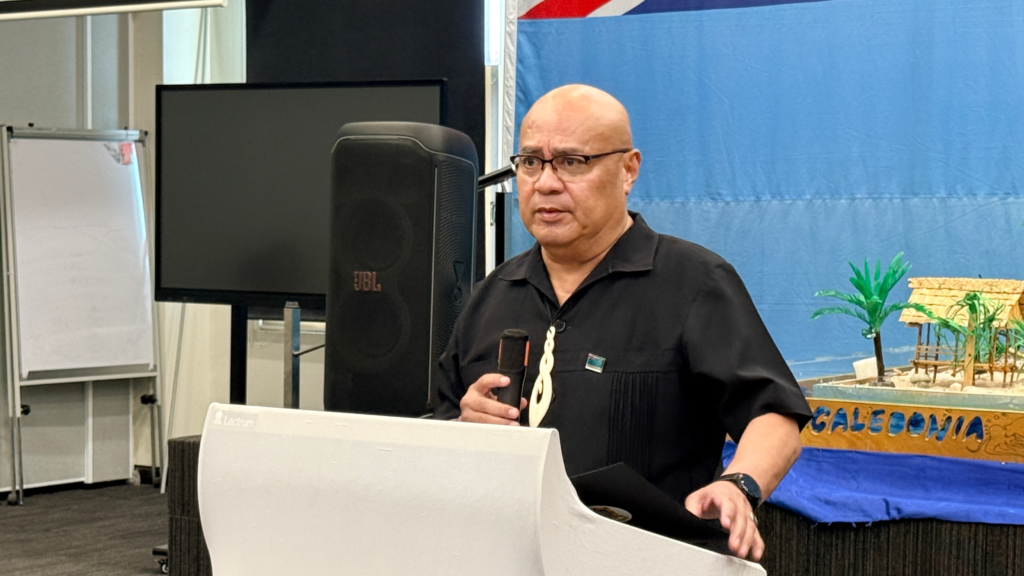
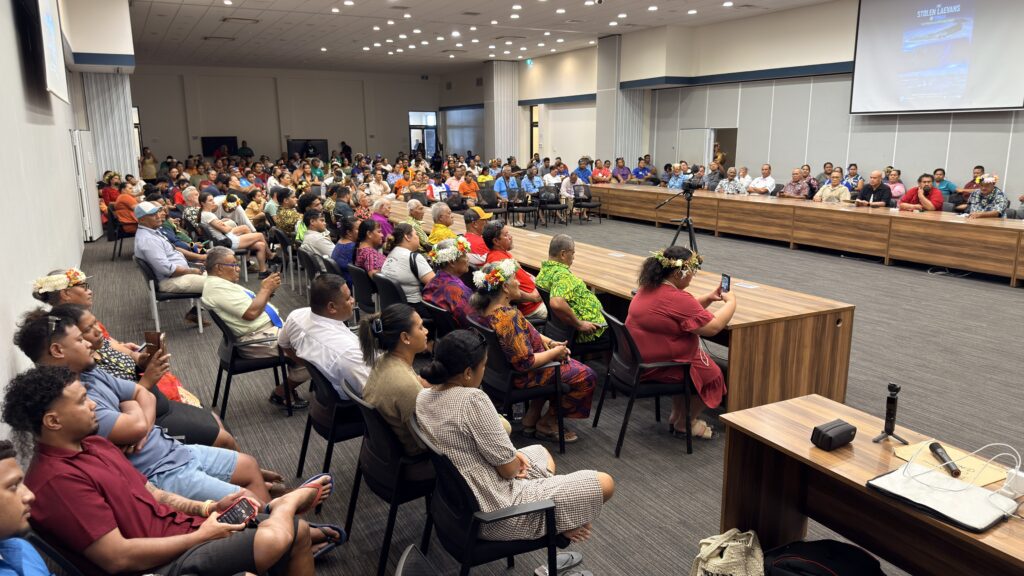
The University of Fiji, in collaboration with the Kaupule of Nukulaelae, premiered The Stolen Laevans of Tuvalu: The Peruvian Slavery Nightmare in Tuvalu earlier this week, drawing a large and emotional audience.

The film, co-produced by The University of Fiji and the Kaupule of Nukulaelae, premiered as part of the Fakaapo – Tuvalu Arts Festival.

It revisits the blackbirding of Nukulaelae in 1863, when about 80 per cent of the island’s population was taken by slave vessels to work as forced labourers in the guano mines and plantations of Peru.

The film tells not only of the tragedy experienced by the people of Nukulaelae, but also of the resilience that developed among the generations that followed.

It also links this history with the challenges facing Tuvalu today, particularly climate change, rising sea levels and the possibility of displacement of an entire small island culture.

The University of Fiji Vice-Chancellor Professor Shaista Shameem said the film reflected the University’s commitment to preserving Pacific history and creating greater awareness of experiences that continue to shape Pacific communities today.

“The film was made as part of our Journalism and Media Studies Documentary course. The two lecturers teaching the course decided to take a story they had been told about the slave trade in Tuvalu, undertake further research with the help of their students, and develop it into a film for a wider audience internationally. The film had its World Premiere at Tuvalu’s first Arts Festival and will have its Fiji Premier in September before being taken to international film festivals.”

Prime Minister of Tuvalu Hon. Feleti P. Teo described the film as a powerful reminder of the injustices endured by the people of Nukulaelae.

“The film is a powerful reminder of the injustices and inequities that our people were subjected to in those darkest and unforgettable years. And, I congratulate the island of Nukulaelae and the University of Fiji for the production of the film.

“I would venture further to suggest some form of reparation or compensation should be in order. My Government stands ready and willing to support the efforts to promote the key messages delivered by the film.”

The University of Fiji’s Head of Corporate Services, Mr Seve Paeniu, said the response from those who attended the premiere demonstrated the impact the story had on Tuvaluans.

“The premiere attracted a huge audience, and many expressed shock and horror of what had occurred to the Stolen Laevans, with some visibly shaken and with tears of heartbreak.

“This powerful film resonates really well with Tuvaluans, and our Laevan ancestors will never be forgotten.”

The film is also in line with the Memorandum of Understanding partnership between The University of Fiji and the Government of Tuvalu, which promotes cultural exchanges between the University and Tuvalu, including participation in educational, cultural and community events.

Through the collaboration, The University of Fiji and the Kaupule of Nukulaelae hope the film will preserve an important chapter of Tuvalu and Pacific history, while raising awareness of the blackbirding trade, the resilience of the Nukulaelae people and wider discussions on restorative justice.

Public Relations Office

Loading

UniFiji and HAW Hamburg Sign MoU to Strengthen Climate Change Research and Academic Collaboration

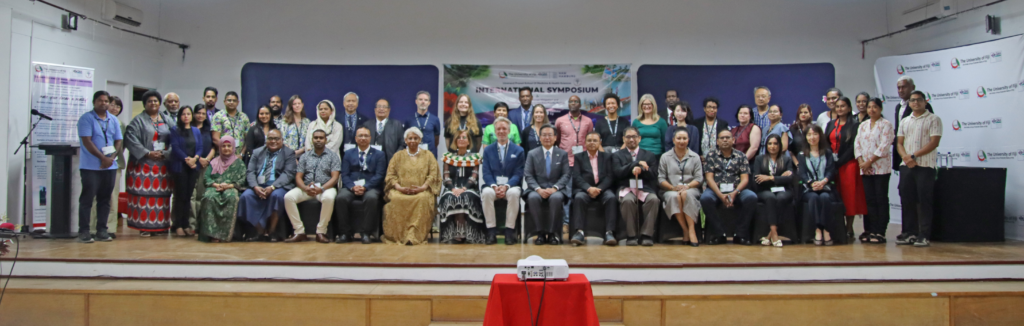
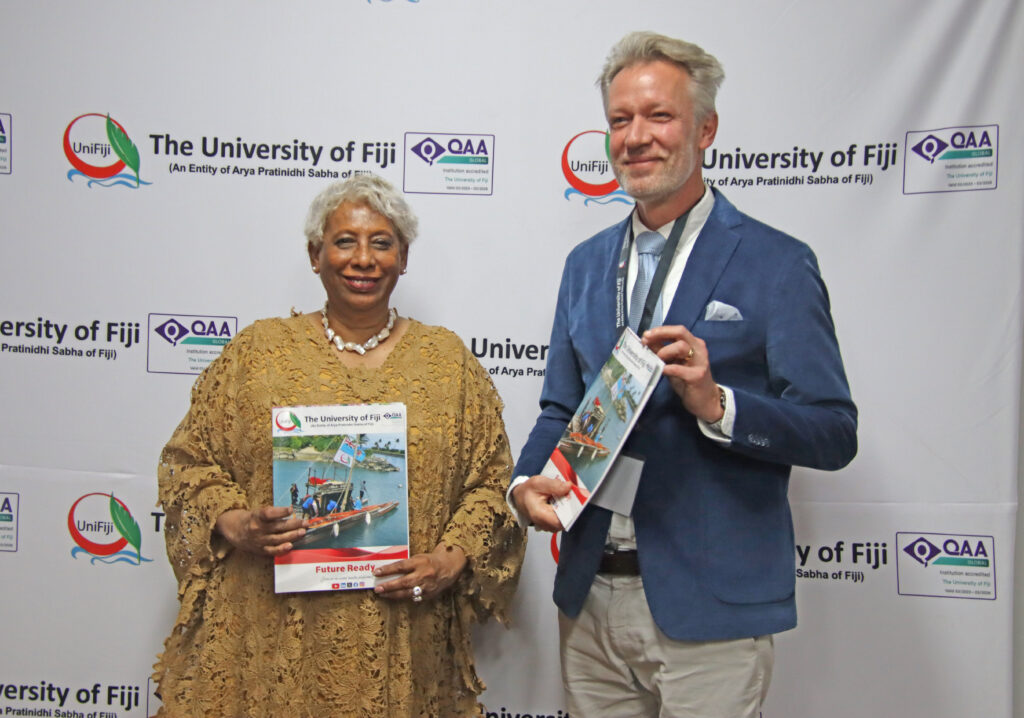
The University of Fiji and the Hamburg University of Applied Sciences (HAW Hamburg), Germany, have strengthened their commitment to international academic and research collaboration through the signing of a Memorandum of Understanding (MoU), held alongside the International Symposium on Climate Change Mitigation and Adaptation Strategies in the Asia-Pacific Region.

The Vice Chancellor of the University of Fiji, Professor Shaista Shameem said the newly formalised partnership with HAW Hamburg will create opportunities to advance collaboration in education, research, innovation and institutional capacity building, with a strong focus on climate change and sustainable development.

“For small island nations across the Pacific, climate change is not an abstract or distant issue. It is something that affects our communities, our environment, our economies, our health and our future,” Professor Shameem said.

She said the Asia-Pacific region, particularly the Pacific Island nations, remains among the most vulnerable to climate change, facing rising sea levels, extreme weather events, ecosystem degradation and increasing risks to communities.

Professor Shameem emphasised that addressing climate change requires collaboration across disciplines and sectors, bringing together scientists, policymakers, universities, industry, communities and traditional knowledge holders.

She said the symposium provides an important platform to bridge the gap between research, policy and action, while encouraging participants to move beyond discussing what has been learned and consider how knowledge can be translated into practical solutions for climate resilience.

Speaking at the symposium, Professor Walter Leal, Chair of Climate Change Management and Chair of Environmental and Technology at HAW Hamburg and Manchester Metropolitan University, highlighted the importance of strengthening regional cooperation to address the growing climate challenges facing Pacific Island countries.

“The Pacific region is very rich in cultural heritage and traditions, and this can also be used to support efforts to adapt to and mitigate climate change,” Professor Leal said.

Professor Leal said the symposium was particularly important as Pacific Island countries continue to experience the impacts of rising sea levels, extreme weather events and other climate-related pressures affecting economies and the wellbeing of communities.

He also emphasized the importance of creating platforms for information exchange, sharing good practices and documenting work being undertaken across the region. He noted that the symposium would contribute to this through the development of a publication focused on climate change, education and adaptation strategies, providing an opportunity for researchers and practitioners to share experiences and strengthen international collaboration.

The newly signed MoU establishes a framework for cooperation between UniFiji and HAW Hamburg in areas including climate change adaptation and mitigation, sustainable development, public and global health, environmental sciences, disaster risk reduction and renewable energy.

The partnership also provides opportunities for joint and multidisciplinary research, academic and researcher exchanges, joint publications, conferences, training programmes, postgraduate supervision, curriculum development and collaborative funding initiatives.

The MoU signing took place during the opening of the International Symposium on Climate Change Mitigation and Adaptation Strategies in the Asia-Pacific Region, jointly organized by UniFiji and HAW Hamburg.

The symposium brings together academics, researchers, policymakers, development practitioners, industry representatives and community leaders from across the Asia-Pacific region to explore practical and innovative responses to climate change.

Acting Dean and Associate Professor of the Umanand Prasad School of Medicine and Health Sciences, Dr Abhijit Gogoi, welcomed the international collaboration and highlighted the significance of bringing together regional and international expertise to address issues that directly affect Pacific communities.

“The symposium focuses on bridging the gap between scientific research, policy development, and community-based action, while promoting dialogue on climate mitigation, adaptation, sustainable development, public health, disaster risk reduction, and environmental resilience. Fiji and other Pacific Island nations remain at the forefront of climate change impacts, making regional and international collaboration increasingly important,” he said.

The MoU further strengthens UniFiji’s commitment to expanding international partnerships that create opportunities for knowledge exchange, research collaboration and capacity building while contributing to solutions for challenges affecting Fiji and the wider Pacific.

The collaboration between UniFiji and HAW Hamburg is expected to provide a platform for future joint initiatives and strengthen connections between researchers, academics and institutions working towards a more resilient and sustainable Pacific.

Public Relations Office

Loading

The University of Fiji Supports Reintroduction of Scaling in National Examinations

The University of Fiji has voiced its support for the Government’s decision to reintroduce the scaling of marks across all national examination levels from 2026, as long as it is an equitable and evidence-based reform that promotes fairness, consistency, and comparability in student assessment outcomes.

The University believes that, normally, scaling, if applied transparently and scientifically, enhances the credibility of national examinations and ensures that all students, regardless of their school location or resources, are assessed on a common and equitable basis.

The University of Fiji Vice-Chancellor, Professor Shaista Shameem, said that while the topic of scaling in education remains a complex and often debated issue, it is important to approach it with both academic integrity and compassion for students’ diverse learning abilities.

“I have myself always personally opposed scaling as a learning methodology because I have felt that scaling merely hides the fact that there are no universally agreed concepts of academic success and academic failure,’ she said.

Professor Shameem said she does not believe that there is anything such as ‘failure’ especially when it comes to young minds. ‘Everyone is worthwhile in my books and if schooling does not suit some people, as long as they receive an education, I support responsible choices in learning,’ she said.

Nevertheless, Professor Shameem said her academic staff at the University had convinced her that the University should support the Education Ministry’s scaling policy as long as it was carried out with checks and balances in place, and by providing the University’s own guidelines to the Ministry, she said.

Elaborating on the academic and technical principles behind scaling, Associate Professor and the Head of the Science Department in the School of Science and Technology, Dr. Ramendra Prasad, explained that scaling is a statistical process used to transform raw marks from different examinations or subjects onto a common metric.

“Scaling is not about inflating or reducing marks,” Dr. Prasad said. “It compensates for inherent differences in exam difficulty, teacher instruction, and marking approaches, ensuring that all student performances are assessed fairly across subjects, schools, and years.”

He said that national examinations involve large cohorts of students and multiple markers across Fiji, which inevitably introduces small variations that scaling helps to correct. This process allows tertiary institutions and employers to make more equitable decisions about admissions, scholarships, and placements.

He also highlighted that transparency and consistency are essential to maintaining public confidence in the system.

“The integrity of the scaling process lies in its transparency and technical accuracy,” he said. “Student rankings must remain intact, high achievers should not be penalised, and low achievers should not be unduly advantaged. A zero should remain zero, and a perfect score should remain perfect.”

He added that well-designed scaling systems use standardised statistical models, such as the normal distribution, to ensure that exam results can be compared objectively across different subjects and years.

The University further noted that scaling supports Fiji’s long-term educational goals by encouraging students to take up challenging subjects such as science, technology, engineering, mathematics (STEM), computer studies, and commerce fields critical for national development and economic competitiveness.

While acknowledging ongoing public discussion, The University of Fiji maintains that scaling, when implemented with rigour, transparency, and consistency, strengthens the credibility of Fiji’s education system and promotes equal opportunity for all learners.

The University of Fiji remains committed to supporting education policies that are grounded in research, fairness, and international best practice.

Public Relations Office

Loading

The University of Fiji Joins the World in Commemorating United Nations Day 2025

The University of Fiji proudly joins the global community in marking the 80th anniversary of the United Nations (UN), an institution that continues to shape a world founded on peace, human rights, and sustainable development.

United Nations Day, observed annually on 24 October, celebrates the entry into force of the UN Charter in 1945, a milestone that reaffirmed humanity’s collective commitment to preventing war and promoting global cooperation.

As a higher education institution deeply rooted in the Pacific, The University of Fiji recognizes the United Nations as an enduring pillar of international solidarity.

The University of Fiji Vice-Chancellor, Professor Shaista Shameem notes that Fiji’s contributions to UN peacekeeping operations, climate diplomacy, disaster relief, gender equality, and human rights protection underscore its strong alignment with the UN’s mission.

‘In a world where the moral compass is sadly and hopelessly askew, the UN can show us the light at the end of the tunnel’, she said. ‘At times even that light appears dim but nations can stand together, at least on UN Day, and protect it from ever going out’. The University of Fiji stands at the forefront to ensure that the international legal standard at the base of the UN system retains its integrity over time and geographic space much as it’s so hard to do, Professor Shameem said.

She said that UniFiji further commends the Fijian Government’s initiative to establish a centralized UN House to host all UN agencies in the country. This development is expected to strengthen Fiji’s role as a regional hub for the Pacific, enabling more efficient coordination and collaboration among UN agencies working across diverse development priorities.

The University of Fiji also draws inspiration from the UN Secretary-General, Antonio Guterres, whose message for this year’s UN Day captures the enduring spirit of the organization.

“The United Nations is more than an institution. It is a living promise spanning borders, bridging continents, inspiring generations. For eighty years, we have worked to forge peace, tackle poverty and hunger, advance human rights, and build a more sustainable world together.”

Reflecting on this milestone, UniFiji reiterates its own commitment to advancing education, peace, equality, and sustainability, values that stand at the heart of both the United Nations and The University of Fiji’s mission to create a more just and resilient world.

Public Relations Office

Loading