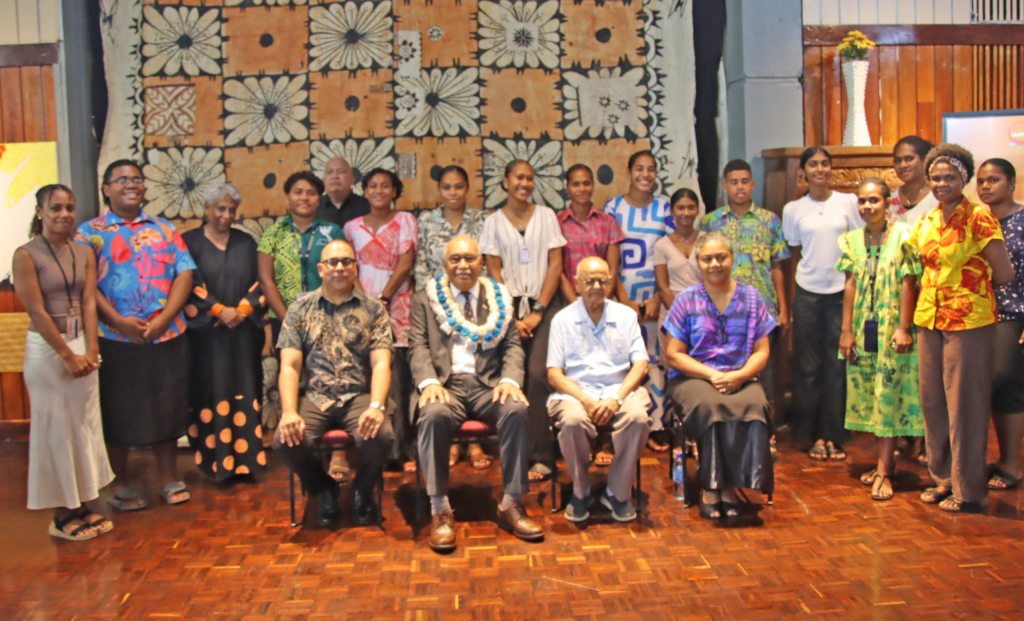
The University of Fiji has marked a major milestone in journalism and media development with the launch of its Press Club, officiated by the Speaker of Parliament, Ratu Filimoni Jitoko.
In officiating the launch, the Speaker, who is also the Chancellor of UniFiji, noted that the launch of the Press Club was to mark the University’s week-long 21st birthday, highlighted the critical role of journalism in strengthening democracy.
“Access to information and ethical communication are not mere ideals, they are the daily practices of a journalist. In today’s digital era, the responsibility of journalists to inform the public and hold institutions accountable has never been more important’’, he said.
“Your commitment will shape the future of Fiji’s democracy and the media landscape”. He urged the media profession to be fearless in advocating for media freedom to inform the public.
Hon. Jitoko said the establishment of the Press Club reflected a strong commitment to empowering future journalists while fostering dialogue, critical thinking and responsible media practices.
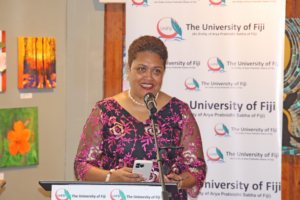
Vice-Chancellor Professor Shaista Shameem described the launch as a proud moment for the University, highlighting its importance to both academic freedom and freedom of expression with access to information held by public bodies to be a cornerstone of that freedom.
She said that the panel of senior journalists who commented on the Hon. Speaker’s address afterwards highlighted the difficult road for journalists as they struggled with providing the facts to the public when these were not easily accessible due to secrecy and mis-information.
The high-level panellists were CFL Manager News Vijay Narayan, also a lecturer in the Journalism and Media Programme, Fiji Sun CEO and Publisher Rosi Doviverata, and Islands Business editor and veteran journalists, Netani Rika.
“The event was a great milestone not only for journalism but also for academia as the Press Club initiative reflects the University’s commitment to training journalists who are skilled, ethical and grounded in the realities of society. It showed the University’s commitment to nurturing a new generation of journalists who are at the top of their game, not just in writing and reporting, but in being able to deeply understand the world in all its humanity, complexities and diversity”
Professor Shameem said that the University’s Journalism and Media Studies Programme was located in the University’s new campus, UniFiji Central in the heart of Suva, which made the journalists in training acutely aware of the importance of the capital to strengthen collaboration between academia and industry.
“The Press Club concept allows our students to learn directly from some of the most experienced and top-notch media professionals in the country.”
Professor Shameem also highlighted the broader role of journalism in society. Through the Press Club the University will empower its students to actively participate in shaping national conversations she said.
“At UniFiji, we believe skilled journalism is central to encourage mature public discourse and good training allows news to be distinguished from social media chatter”.
The panel discussion provided practical insights into the evolving media landscape in Fiji, including responsible reporting, the influence of digital platforms and the importance of maintaining credibility in journalism. The University of Fiji journalism students actively engaged with the panel, posing questions and contributing to discussions, reflecting the strong integration of academic learning and industry practice promoted by the Press Club. The panel session highlighted the value of direct industry engagement in the academic media programme, giving students first-hand exposure to
professional journalism while reinforcing the University’s commitment to producing work-ready graduates.
The panel discussion also set the tone for the Press Club as an active platform for ongoing dialogue between academia and media professionals. Professor Shameem said the Press Club would provide keynote speakers on a monthly basis to give students practice in asking the hard questions.
“The Press Club will serve as a hub for dialogue, debate and innovation in media, aligning with the University’s broader vision of academic excellence and community impact.”