News & Blog

UniFiji calls for a radical transformation of the Education Act in the interests of modernization, child protection and comprehensive education

The University of Fiji’s Review of the Education Act 1966- Aspirational to Action, Transforming Education through Legislative Reform: Submissions to the Law Reform Commission and the Ministry of Education.

The University of Fiji is pleased to announce the completion of its comprehensive review of the Education Act 1966. The final submission was made to the Fiji Reform Commission and the Ministry of Education today.

In its submissions the University of Fiji Vice Chancellor Professor Shaista Shameem thanked the Ministry of Education and Fiji Law Reform Commission for initiating the review and prioritizing the future education in Fiji.

“As a significant higher education institution, with campuses in Saweni, Ba and Samabula, and an office in Levuka, the University hopes that its recommendations, reached after a significant period of consultations with its stakeholders, will be helpful to the Ministry as it moves towards enacting a 21st century modern educational service for the development of the nation, especially focused on young people”, she said.

The submission aligns Fiji’s international commitments to the right to education as well as to the 2013 Constitution and national development goals. The submission recommends adopting a policy so that no child is excluded or left behind due to a flawed or ineffective system. The University said that all children deserved an education system that empowers, protects, supports and uplifts and are not hampered by system failures or outmoded legislation.

Professor Shameem said that the authorities needed to ensure that the Education Ministry was properly resourced to provide a holistic and human values-based education for Fiji’s young people as they were the future of the nation.

Significant recommendations from UniFiji include:

a) Compulsory Schooling from age 5 – 18 or year 12/13 equivalent.

• Mandate compulsory schooling from age 5 until completion of Year 12 or 18 years, whichever comes first;
• Impose a statutory duty on parents and legal guardians to ensure that their children are enrolled in school and regularly attend classes;
• Include all geographical areas of Fiji under compulsory free education, without exclusions.

b) National Curriculum- Mandate a robust and relevant national curriculum and ensure that key learning areas, starting from primary schools, are prescribed and that the curriculum is age appropriate, inclusive, culturally sensitive and responsive, and have integrated critical thinking, digital literacy, financial literacy, climate education, civic responsibilities and basic legal education. The national curriculum must be monitored regularly and reviewed every 2 years by an independent and permanent Education Commission established for the purpose.

c) Truancy Prevention & Enforcement- Ministry to appoint & empower “Attendance Watch Officers” to actively monitor public spaces during school hours daily to identify school age children who are not in class without lawful reason and escort them back to school or home. This will also significantly reduce drug & sexual related offences involving children and young people in Fiji, which is a growing concern. Work closely with schools and legal guardians to ensure the children are closely monitored throughout the hours of school.

d) Integration of Education Act 1966 & Higher Education Act 2008- proposed to be replaced by a single combined overall legislation, “Education Act”. This overall legislation should cover the entire education system of Fiji from Early Childhood to Tertiary. Also, re-designate the Higher Education Commission as a dedicated Department under the Ministry of Education with appropriately qualified and experienced educators at all levels. This will ensure that there is proper governance, policy consistency, oversight and legal alignment across all levels of education in Fiji.

e) Health, Safety & Well-being – Place a legal obligation on schools to provide a safe and supportive learning environment, mental & wellbeing support (including access to free trained counsellors or psychologists in each school), and an emergency preparedness unit. Also mandate provision of free school meals (breakfast and/or lunch) to ensure all children have access to at least one nutritious meal a day.

f) School Retention & Performance- Mandate early intervention and catch-up programs to identify and support students at risk, improve performance and reduce drop-out rates through early tailored learning & support programmes.

g) Teacher Quality & Development- review standards for teacher qualifications, registration performance development and evaluation. Re-introduce school inspectors.

h) Governance & Accountability- Strengthen governance and accountability provisions in the Education Act (including management of schools). The Act must clearly outline a clear reporting and decision-making structure to ensure accountability and operational efficiency and to create a more responsive, accountable, adaptive, impactful, effective and transparent education system in Fiji

i) Rights-based Approach to education- ensure that children’s best interests and right to education are the heart of the new education system. Ensure alignment with constitutional guarantees, international obligations of Fiji and dignity, inclusion and equity as core principles;

j) Attendance Management- Introduce a framework to actively monitor student absenteeism, with mandatory thresholds (e.g. 5–10 consecutive days or excessive absences) that trigger early intervention, parental engagement, referrals to the Ministry and compulsory school attendance responses.

k) Discipline in Schools- Empower the Minister to issue guidelines for fair discipline codes to enhance classroom conduct with fewer disruptions, and promote a respectful learning environment which is crucial for student success. Implement reasonable disciplinary measures which allow students to learn from mistakes.

l) Establish an Independent Authority to evaluate legislative effectiveness- responsible for systematically collecting, analyzing and reporting data on identified key performance indicators such as access, equity, student learning outcomes, absenteeism, infrastructure, teacher effectiveness, retention rates, implementation and impact of prevention and intervention programs, to suggest future reforms, budget planning, resource management and stakeholder accountability. Reports should be made publicity available for transparency and public confidence. The proposed standing Education Commission can be the independent authority.

m) School inspections- to be carried out annually to ensure compliance with safety, health, infrastructure and requirements of the Act. If breaches are identified, to take appropriate enforcement action and impose penalties.

n) Inclusive Education- ensure that every child differently-abled child or with learning/special needs has access to quality education through mainstreaming or designated special schools, based on the individual’s needs after consultation with parents/legal guardians.

o) Offences & Penalties- Clearly outline and prescribe offences under the Act, including but not limited to, parents or legal guardians’ failure to enroll and ensure attendance, operating unregistered schools, vesting of qualified school management, obstruction of authorized officers, failure to comply with corrective plan (post inspections), failure to comply with requirements for student health, safety and well-being or any other breaches under the Act. Prescribe appropriate penalties, such as fines, prosecution, suspension of licences etc which should be proportionate to the nature and severity of each offence.

Professor Shaista Shameem said that the University’s comprehensive review of the education sector had identified critical shortcomings and gaps in the current Education Act. This is due to the evolving needs of Fiji’s future including in leadership, educators and society as a whole. She said that the current legislation no longer reflects the realities of our classroom, rights of our children and ambitions of our nation.
The legislative gaps are not minor- they are systemic which require a transformative reform.
The University’s submissions do not proposed merely a legal update but a bold and necessary re-alignment of Fiji’s education system with the needs of every Fijian learner, modern expectations and Fiji’s international obligations. Each recommendation, from mandating compulsory education, early intervention models, annual school inspections, emergency protocols to embedding mental health & wellbeing, nutrition, sanitation, infrastructure, is aimed to build a system that protects, empowers and supports young people from the age of 5 years to tertiary.
It represents a national investment in Fiji’s future to build a resilient, inclusive, future-ready, knowledge-based, adaptive, rights-based, sustainable quality-focused and learner centered education system. Every child deserves more than access to education, they deserve a system that protects and works for them, Professor Shameem said.

Loading

University of Fiji and University of Goroka Sign MoU to Strengthen Pacific Academic Cooperation

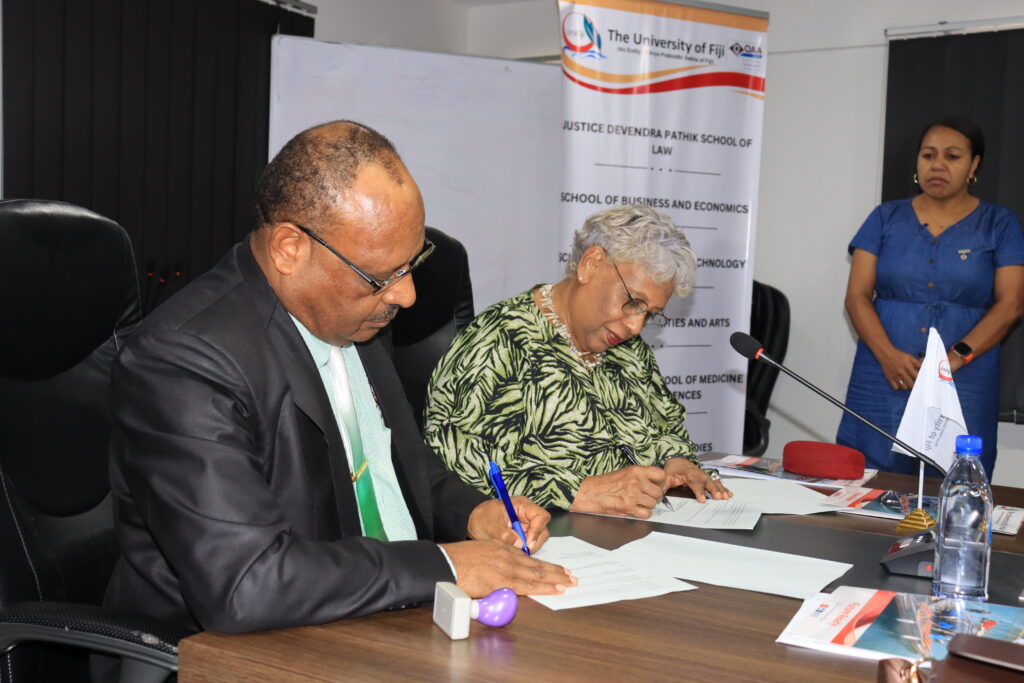
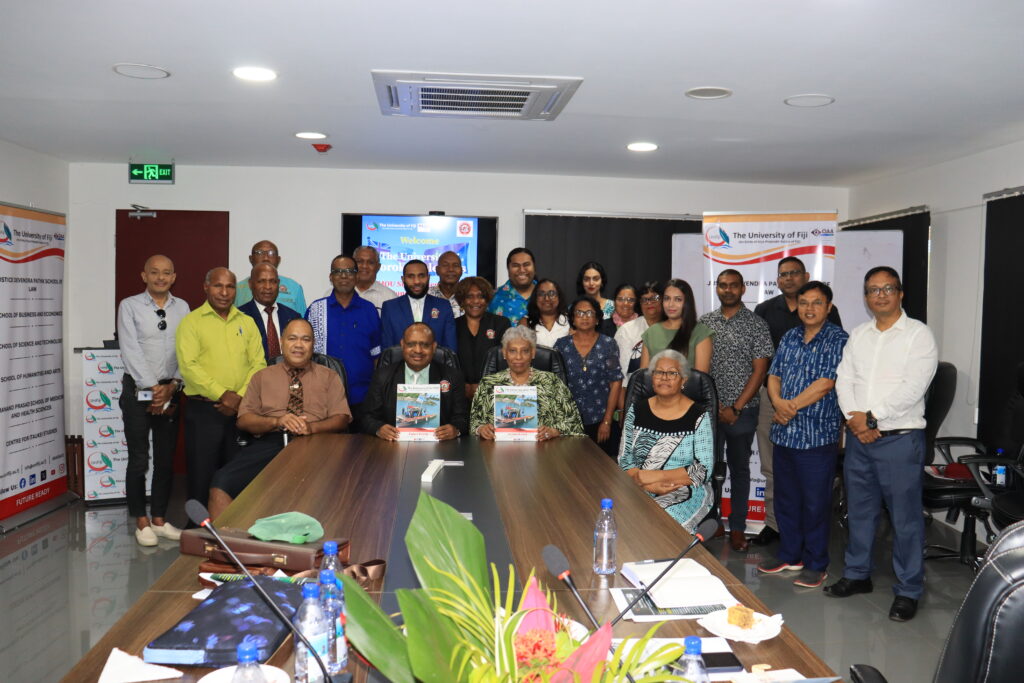
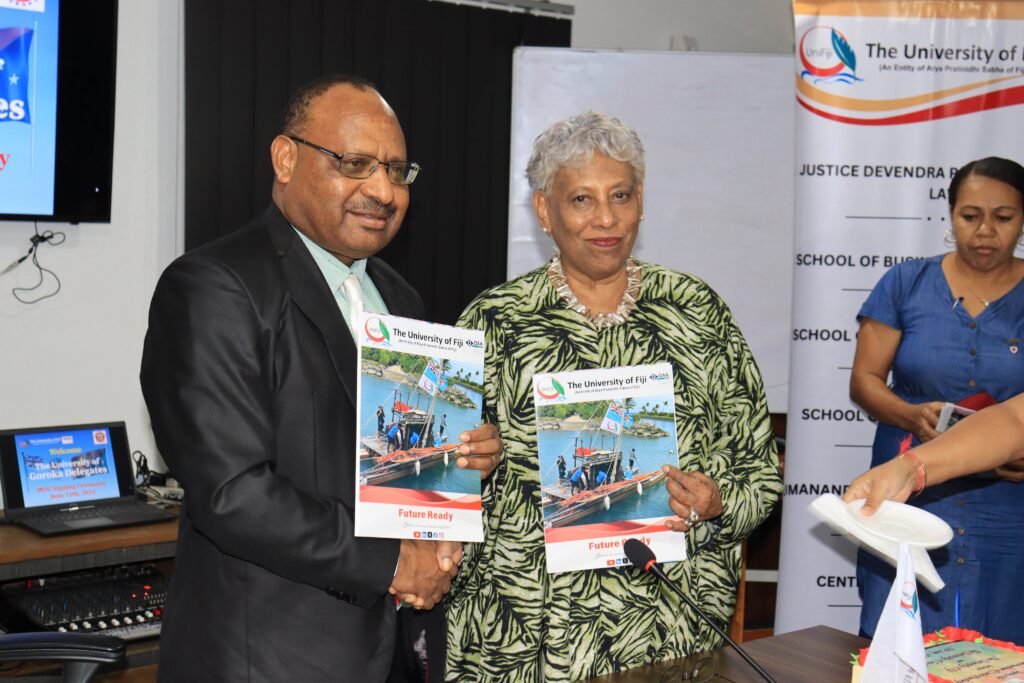
In a significant step towards regional integration and academic collaboration, the University of Fiji and the University of Goroka (Papua New Guinea) have signed a landmark Memorandum of Understanding (MoU) today at a special ceremony held at the University of Fiji’s Saweni campus.

The agreement establishes a formal framework for joint academic initiatives, research collaborations, staff and student exchanges, and the shared promotion of indigenous knowledge, Pacific culture, and inclusive education.

The partnership is set to span three years, with both institutions committing to long-term cooperation and mutual development.

Speaking at the signing ceremony, University of Fiji Vice-Chancellor Professor Shaista Shameem emphasized that the partnership went far beyond formalities.

“This is more than a ceremonial signing. It is a mutual pledge to collaborate, share knowledge, foster innovation, and empower the next generation of scholars and leaders across the Pacific,” she said.

“Yumi one people, yumi one solwara, yumi wan Pacific, we are one people, one ocean, and one Pacific family.”

The MoU outlines areas of collaboration including:

  • Student and faculty mobility programs
  • Joint research, conferences, and symposia
  • Development of joint academic programs and curricula
  • Shared promotion of indigenous education and Pacific arts, crafts, and music
  • Support for underserved and rural student populations

Speaking on behalf of the University of Goroka, Vice-Chancellor Dr. Teng Komhiol Waninga described the occasion as “history in the making” and a long-overdue move to strengthen regional higher education ties.

“This MoU is the start of our long journey together as academics, as Melanesian brothers and sisters, and as people working to improve the lives of our communities,” he said.

“Our dolphins, our whales, our tuna, our birds, they know no borders. Neither should we. This is not just an agreement; it is a marriage of shared vision and enduring commitment.”

Dr. Waninga also highlighted the University of Goroka’s role as Papua New Guinea’s leading teacher training institution and noted areas of synergy in teacher education, curriculum development, and Melanesian studies. He extended an open invitation for further exchanges and visits between the two universities.

Both universities share a strong commitment to educational equity, community upliftment, and the preservation of traditional knowledge systems a commitment that this MoU aims to enhance.

The signing ceremony marks the beginning of a shared academic journey between two Pacific universities rooted in a vision of collaboration, resilience, and unity.

Public Relations Office

Loading

University of Fiji Calls for Stronger Corporate Environmental Leadership on World Environment Day


In celebration of World Environment Day 2025, the University of Fiji joined Airports Fiji Limited (AFL) this morning to support the global call to action under this year’s theme, “Ending Plastic Pollution.”

Mrs. Sainiana Radrodro, Senior Lecturer at the Justice Devendra Pathik School of Law at UniFiji, delivered a compelling keynote address, emphasizing the shared responsibility of corporations, communities, and institutions in promoting sustainable practices.

Mrs. Radrodro commended AFL’s proactive steps toward achieving Fiji’s national target of Net Zero emissions by 2050.

“It is heartwarming to see AFL’s environmental targets promoting green spaces and carbon reduction across its operations,” she stated, applauding AFL’s Carbon Management Policy and environmental initiatives at Fiji’s airports.

Drawing from her experience in law, infrastructure, and international development, Mrs. Radrodro emphasized that legal compliance should be seen as the floor, not the ceiling for environmental responsibility.

“True corporate responsibility demands more,” she stated, urging AFL and other public entities to go beyond legal obligations and lead with bold, moral commitment to sustainability.

She encouraged AFL to consider practical actions such as phasing out single-use plastics in food and retail concessions, adopting eco-friendly procurement policies and using airport signage and digital media for environmental education.

“Airports are not just transport hubs; they are powerful environmental actors,” Mrs. Radrodro said, emphasizing the potential for influence through partnerships with academia, NGOs, and government.

Highlighting the University of Fiji’s own commitment to environmental advocacy, she noted its partnership with the Pacific Recycling Foundation and the launch of the Ecological and Climate Crises Legal Institute (ECCLI), a multidisciplinary hub driving science-law collaboration on sustainability.

“Plastic pollution is not just an environmental issue, it is a threat to ecosystems, marine life, and public health,” she warned, referencing microplastic contamination and the urgent need for global cooperation, including the ongoing UN negotiations for a Global Plastic Pollution Treaty supported by over 200 countries.

She concluded by challenging all sectors to act collectively and be committed to the idea of environmental responsibility.

Public Relations Office

Loading

University of Fiji Marks World Environment Day with Renewed Commitment to Beating Plastic Pollution

The University of Fiji has joined the global community in commemorating World Environment Day today, June 5, reinforcing its commitment to environmental protection and sustainability.

This year’s theme, “Beat Plastic Pollution,” echoes strongly with the University’s ongoing initiatives to address the rising environmental threat posed by plastic waste.

Vice-Chancellor of the University of Fiji, Professor Shaista Shameem stated that as a higher education institution deeply rooted in the Pacific, the University recognizes the environmental vulnerability of island nations like Fiji.

She emphasized that plastic waste continues to increase across land and sea, degrading ecosystems and threatening biodiversity, and in line with UniFiji’s Strategic Plan (2022–2026), the University is committed to advancing environmental consciousness through education, partnerships, and policy advocacy.

Professor Shameem urged the University Community to think about their plastic use in keeping with the theme for World Environment Day 2025.

“It is impossible for us to think about life without plastic, but we have to, if we want the world to address plastic waste seriously” she said.

“Otherwise there are vast islands of plastic waste floating in the ocean, trapping marine life, poisoning our seas and causing havoc to our food sources”.

She further highlighted that the University has established the Ecological and Climate Crises Legal Institute (ECCLI), a pioneering interdisciplinary body that brings together scientific knowledge and legal tools to advocate for long-term environmental resilience.

ECCLI represents UniFiji’s vision of a future-ready academic platform that educates and equips the next generation of Pacific leaders.

Another key initiative implemented by the University is its partnership with the Pacific Recycling Foundation, which supports the collection of recyclables from both Saweni and Samabula Campuses.

The collaboration is an important step towards cultivating a cleaner and healthier learning environment while encouraging responsible behavior among students and staff.

She stated that this partnership with the Pacific Recycling Foundation helps contribute meaningfully to the economy and reduce our environmental footprint.

Professor Shameem said that while many companies undertook to recycle plastic waste, the reality was that there was very little proof that recycling was happening to the extent needed.

She urged staff and students of the University to avoid buying water in plastic bottles unless they could see the evidence of recycling.

The University was looking into ways to eliminate plastics from its campuses if it could, she said.

On and international level, support is growing for the proposed Global Plastic Pollution Treaty, currently being negotiated by the United Nations and backed by more than 200 countries.

The University of Fiji stands in support of such international efforts and pledges to align its local actions with global sustainability goals.

Public Relations Office

Loading

UNIVERSITY OF FIJI IGNITES SCHOLARLY PASSION AT PhD GRADUATE AFTERNOON COFFEE SEMINAR

In a remarkable celebration of academic excellence, the University of Fiji at Saweni Campus hosted a transformative Afternoon Coffee Seminar for PhD and Master’s scholars on Wednesday, 28th May 2025. The Main Hall buzzed with intellectual energy as PhD scholars gathered to draw inspiration and gain valuable insights from distinguished academics and experienced researchers.

Vice Chancellor Professor Shaista Shameem set an inspiring tone, illuminating the path of scholarly inquiry through powerful “why” and “how” questions. Her passionate advocacy for rigorous literature reviews and the profound value of doctoral qualifications resonated deeply with attendees, reinforcing the University’s unwavering commitment to nurturing tomorrow’s thought leaders.

Professor Kishor Meher, Chair of the Post Graduate Committee, captivated the audience with his compelling address on “The Journey to Completion.” He highlighted that this seminar marks the beginning of continuous learning through conducting research seminars with experts. His visionary strategies for navigating research challenges—from structured flexibility to building vibrant research communities—offered a beacon of hope to scholars at every stage. He proudly showcased the University’s cutting-edge research infrastructure, including ProQuest and Wiley databases, and training on referencing managers for speeding up literature review—empowering students to reach new heights of academic achievement.

Distinguished guest Professor Gokulananda Patel from Birla Institute of Management Technology (BIMTECH), India, delivered a thought-provoking presentation on advisor selection, emphasizing this pivotal relationship as a cornerstone of research success. The seminar gained further depth through powerful testimonials from fellow PhD scholars at various stages and a dynamic question-and-answer session where researchers addressed practical challenges: Dr. Amar Singh on data integrity, Mohammed Riaz Azam on overcoming research obstacles, and Sheik Tanzil on the transformative power of mentorship.

As Master of Ceremony, Mohammed Riaz Azam concluded with heartfelt appreciation to the organizers, Registrar’s office, Facilities, IT, and other departments for their seamless support. Attendees continued vibrant discussions over refreshments, with this landmark event kindling a renewed passion for scholarly pursuit at the University of Fiji.

Loading