UniFiji Participates in IUPAP Pasifika Physics Summit to Advance Physics Education and Research in the Pacific
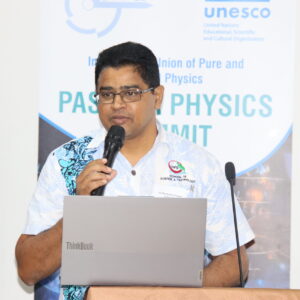
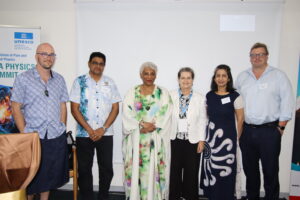
The University of Fiji has joined leading physicists and academic institutions from across the Pacific region to talk about physics education at the International Union for Pure and Applied Physics (IUPAP) Summit held on 18-19 November 2025 at Nalagi Hotel, Nadi.
The Summit brought together distinguished delegates from Fiji, Samoa, Papua New Guinea, New Zealand, Australia, South Africa, and Italy to discuss the future of physics education, research, and innovation in the region.
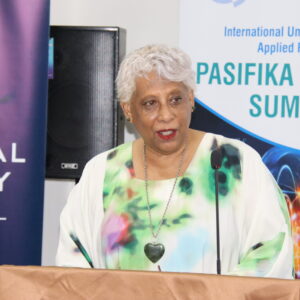
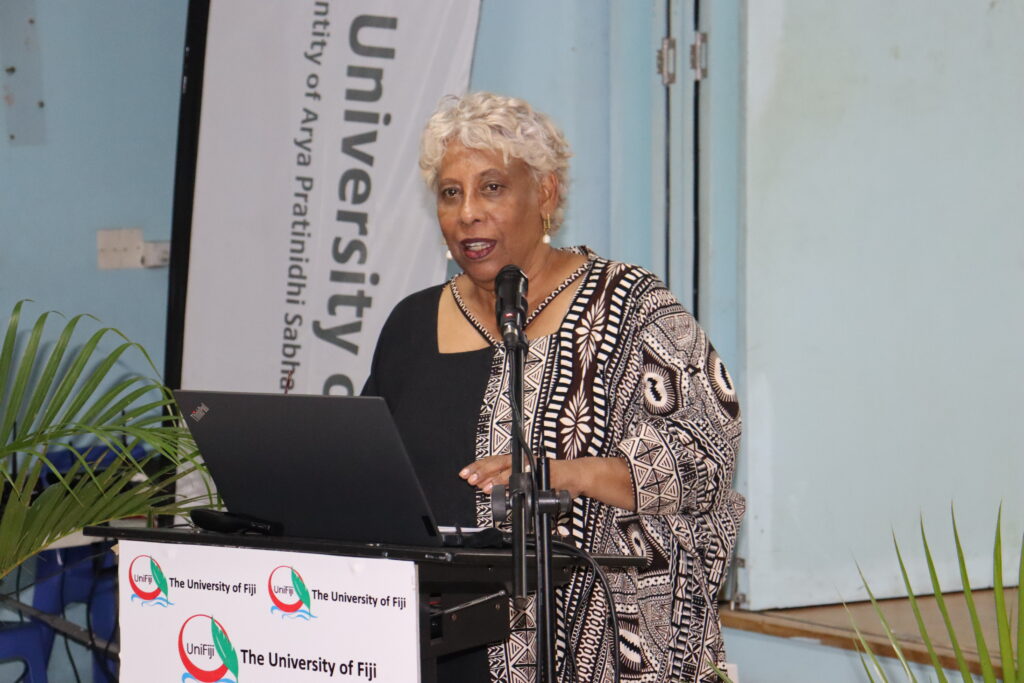
Vice-Chancellor of the University of Fiji, Professor Shaista Shameem, speaking at the Summit, said that there is an urgent need to strengthen interest in physics among young people and address declining enrolments at universities as well as gender imbalances in the Physics professions.
“Somehow we are unable to bridge the gap between the perception of physics as a difficult subject and its reality as a fascinating and wondrous field of study”, Professor Shameem said. If only educators could find the secret to communicating effectively about the significance of physics as a foundational science subject, more and more young people would be drawn to it and become innovators and inventors, she said.
Professor Shameem emphasized that with rapid global technological and environmental change, physics remains central to understanding and solving contemporary challenges, from climate change to renewable energy transitions and advanced technologies for the benefit of humankind. She said that physics allowed forecasting, modelling, and the development of climate adaptation and mitigation solutions, which are critical for Pacific Island nations who face the frontlines of climate impacts.
She also underscored the University’s growing contribution to regional scientific capacity. The University’s researchers, including Associate Professor Ramendra Prasad, are contributing to the IPCC’s 7th Assessment Report, demonstrating the Pacific’s increasing presence in global climate science.
She said that UniFiji continues to expand programmes in Physics, Earth and Planetary Sciences, Renewable Energy, and Environmental Studies, and is fostering student engagement through initiatives such as the South Pacific Astronomers Society of Enthusiasts (SPASE) and the South Pacific Physics Society (SPPS).
In her address, Professor Shameem also focused on several key challenges and opportunities for strengthening the discipline. She discussed the persistent gender imbalance in physics and emphasized the need for more equitable and supportive learning environments that encourage girls and women to pursue careers in the field.
She highlighted the importance of making physics relevant to young people by connecting the subject to issues they care deeply about, such as climate change, renewable energy, and emerging scientific innovations. Professor Shameem further encouraged participants to broaden students’ imagination by looking beyond the Earth to explore planets, black holes, and the expanding frontiers of modern physics, including questions about whether increasing satellite debris around Earth may contribute to heat accumulation and global warming. She also underscored the importance of Pacific-centred knowledge, referring to UniFiji’s work in celestial navigation through traditional voyaging on the University’s drua, which revives ancient physics techniques rooted in reading stars, currents, and ocean patterns.
The two-day IUPAP Pasifika programme created a collaborative platform for educators, researchers, and industry partners to reimagine how physics can be taught, promoted, and applied to address regional priorities.
Participants included the President of the International Union for Pure and Applied Physics (IUPAP), Professor Silvina Ponce Dawson, and representatives from the International Centre for Theoretical Physics (ICTP) who agreed on the need for stronger pathways, greater regional partnerships, and innovative approaches to inspire the next generation of Pacific physicists.
The University of Fiji reaffirmed its commitment to advancing physics education, supporting research excellence, and empowering young people to pursue careers in STEM fields essential to the Pacific’s sustainable future.