
The consultative and good faith approach in employment relations exemplified by the Employment Relations Act of 2007 appears to have completely disappeared in the proposed Employment Relations Bill No 27 of 2025 to the detriment of both labour/workers and capital/industry in Fiji.
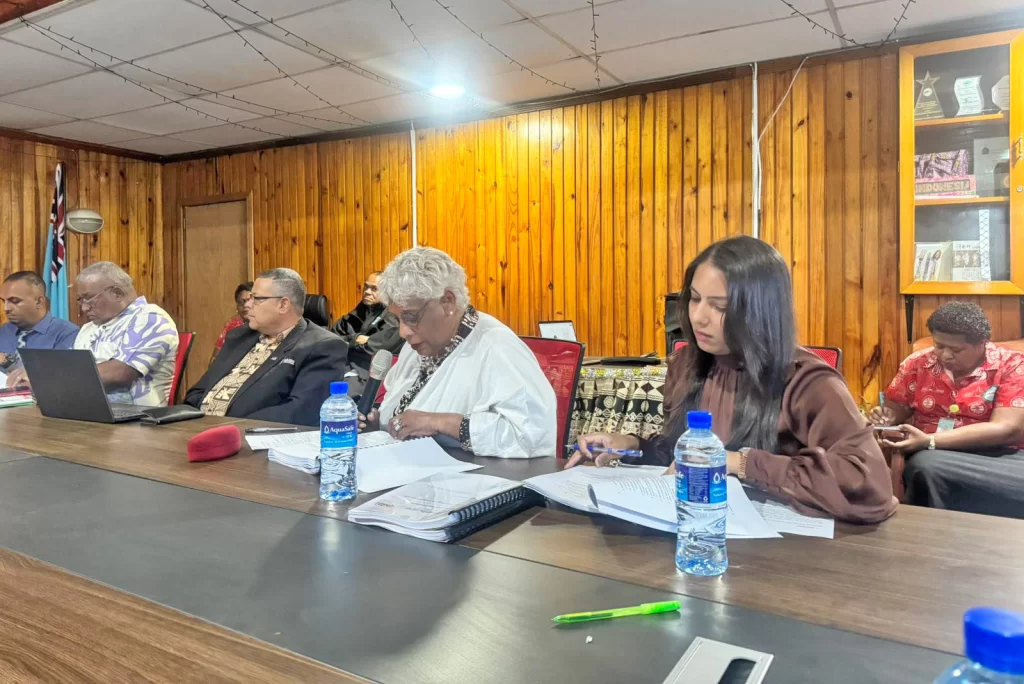
This was stated by the University of Fiji Vice Chancellor, Professor Shaista Shameem, in the University’s submissions to the Parliamentary Standing Committee on Economic Affairs at its public hearing in Suva today.
Professor Shameem said there was a fundamental flaw in the Bill which affected the entire scheme of the proposed legislation; the question of whether compulsory unionism in Fiji was being proposed by the wording of section 6 (5). The new section 6 (5) stated that a ‘worker must voluntarily join a trade union’ which was a contradiction and did not make any sense, since the word ‘must’ was mandatory but the word ‘voluntarily’ gave a choice. She told the Committee that the new section 6 (5), if included in the legislation, would be an oxymoron and meaningless. The resulting confusion as to whether unionism would be compulsory in Fiji would lead to massive labour/capital instability and cause industrial chaos and conflict, she said. “Nothing can be mandatory if voluntary”. The proposed section 6(5) will violate the freedom of association provisions in the International Labour Organization’s legal framework and Fiji’s constitution.
Due to the major flaw in section 6(5), the entire Bill was difficult to understand and would be impossible to apply if it became law, Professor Shameem said. Clauses had become ambiguous and difficult to implement.
“A related problem is that the ERA 2007’s Labour-Management Consultation and Cooperation Committees (LMCC) has also become a casualty of the proposed system because it has been deleted from the draft legislation”. Professor Shameem said that, as a result, the original sentiment of the ERA 2007, namely, fair labour practices, good faith, structure of rights and responsibilities of both worker and employer and consultation between labour and management in the workplace had also been diminished if not disappeared altogether. This was evidenced by the heavy, and somewhat draconian, penalties imposed for breaches of the proposed legislation.
Another problem was the unnecessary extension of time for disputes to be resolved, from 12 months in ERA 2007 to 6 years in the draft, which would encourage enduring conflicts and affect productivity. The super powers given to labour officers to undertake what might normally be judicial responsibilities in issuing search and seizure warrants would prevent any independent scrutiny of public officers’ exercise of authority.
Furthermore, the meaningless allocation of menstruation leave as part of sick leave and not additional leave, when menstruation was a privacy issue for many women and discussion of it culturally taboo in certain contexts, defied common sense, said Professor Shameem.
Another problem with the proposed legislation was the inclusion of police and corrections officers when the RFMF was excluded. Police, prison and military officers were formerly excluded in the ERA 2007 for good reason so that those in these services were readily available in times of national security and public interest. Normally known as the ‘Disciplined Services’, and seen as an essential service for people’s safety, the military, police and prisons had their own internal mechanisms of personnel protection and it was unclear why this had to be changed to allow only two of these services to be included in the proposed legislation. Whether the new provisions on police had been drafted in accordance with the Police Act, which was currently being revised, with the University of Fiji also making submissions on it, was not clear, Professor Shameem said.
Furthermore, the term ‘essential services’ in any proposed legislation had to be defined very carefully as past practice had been to arbitrarily include all sorts of industries in essential services on a whim. Bill No 27 should define essential services as those delivered in the public interest and, thus, responsibilities of workers in these services had to be fully understood if any limitations were to be placed on their rights, Professor Shameem said.
The University emphasized that protecting workers does not require excessively punitive or vague legislation. Instead, Fiji needs clear definitions, proportionate penalties, fair appeal rights, judicial oversight, and compliance models that encourage a labour/capital consultative process. Professor Shameem said that both workers and industry were engaged in a joint enterprise for individual, collective and national productivity and growth and the government was obliged to facilitate harmonious relations between the two as a matter of public interest. A clear purpose for the amendments was needed as legislation affecting everyone’s rights and responsibilities had to be unambiguous, she said.
The fundamental principles contained in ERA 2007 were still relevant and appropriate, however the decrees that came after 2009 should rightly be reviewed with a red pencil, Professor Shameem said. “But throwing the baby out with the bathwater is not good legislative review practice” she told the Committee.
Professor Shameem said that while many of the clauses in the proposed legislation suffered from clumsy drafting despite good intentions, the major flaw was the new section 6 (5) which would cause instability within the ranks of both employer and employee and, therefore, the nation as a whole.
She said the public should be fully aware whether the intention of the government was to inflict compulsory unionism on every worker or whether people had a choice. Professor Shameem said this was a policy matter and the government had to come clean on the exact meaning of section 6 (5) of Bill No 27.