
News & Blog

UniFiji Breaks Ground for the New Centre for iTaukei and Hindi Studies

The University of Fiji today marked a historic milestone with the groundbreaking ceremony for its new Centre for iTaukei and Hindi Studies, a landmark initiative made possible through the Coalition Government’s $1 million capital grant, the first-ever government-funded capital project in the University’s history.

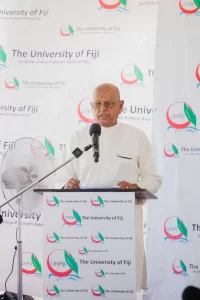
The ceremony, held at the Saweni Campus in Lautoka, was officiated by the Deputy Prime Minister and Minister for Tourism and Civil Aviation, Honourable Viliame Gavoka, who described the occasion as a proud moment for Fiji’s cultural, linguistic, and educational advancement.

In his address, the Deputy Prime Minister highlighted that the Centre represents far more than a physical structure, it signifies a national commitment to preserving the soul of Fiji, its languages, culture, and identity. He noted that the Centre would play a vital role in safeguarding both the iTaukei and Hindi languages, advancing research in culture and history, and training the next generation of teachers, storytellers, and scholars who will carry forward indigenous and Indo-Fijian knowledge systems.

Hon. Gavoka also acknowledged UniFiji’s recent achievements, including strong student retention, innovative teaching through industry-based learning, research breakthroughs in aquaculture and climate policy, strengthened international partnerships, and a significant financial turnaround in 2024. He said today’s event honours the generations who shaped Fiji’s identity and reinforces the promise that Fiji’s cultural heritage “will not fade, it will flourish.”

Pro-Chancellor Pandit Bhuwan Dutt of Arya Ratna described the day as historic not only for UniFiji but for Fiji as a whole. He reflected on the long-standing vision carried forward since 1956 by community leaders who dreamed of a university grounded in cultural identity, academic excellence, and service to the nation.

He said the groundbreaking marks a new chapter in Fiji’s cultural and academic story, noting that it is “not just about buildings, but about honouring our past, elevating our present, and investing in a culturally grounded future for all Fijians.”

He expressed gratitude to the Government for its support, the donors whose early contributions secured the University’s land, and the staff whose dedication transformed decades of aspiration into tangible progress.

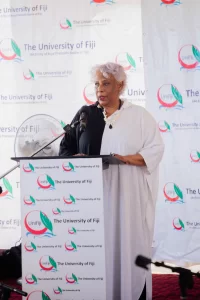
Vice-Chancellor Professor Shaista Shameem delivering her address emphasized the teamwork and shared purpose behind the project. She invited all staff involved in the planning and preparation to stand together, acknowledging them as the “village” that turned a once-distant dream into a real project.

Professor Shameem highlighted that the Centre reflects not only cultural preservation but the collective spirit of the University community. She also unveiled the architectural designs explaining the deep symbolism embedded in the structure.

The Left Wing, housing the Centre for iTaukei Studies, is inspired by the traditional bure and incorporates climate-friendly natural ventilation. The Central Atrium, which will host the Centre for Hindi Studies, is a cosmic-inspired design representing Indo-Fijian heritage and philosophical traditions. The Right Wing, a multipurpose communal space, is envisioned as a gallery-like hub for exhibitions, cultural performances, student events, and public lectures.

Professor Shameem said the architecture reflects Fiji’s identity, noting that “the central space represents Fiji, the world where we meet. We have autonomy in our own cultural spaces, but unity at the heart. This is who we are as a nation.” She reaffirmed that the project belongs to the entire University community and stands as a symbol of unity, shared vision, and the commitment to building a stronger Fiji.

With today’s groundbreaking, UniFiji moves confidently into its next phase of growth, guided by strong leadership, inspired by its mission, and grounded in service to the nation.

_DSC0015 (1)

Loading

University of Fiji Installs New Chancellor with December 2025 Graduation Ceremony

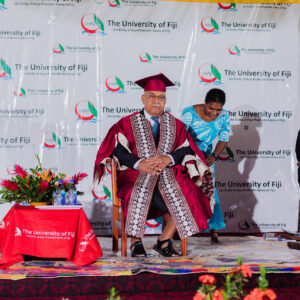
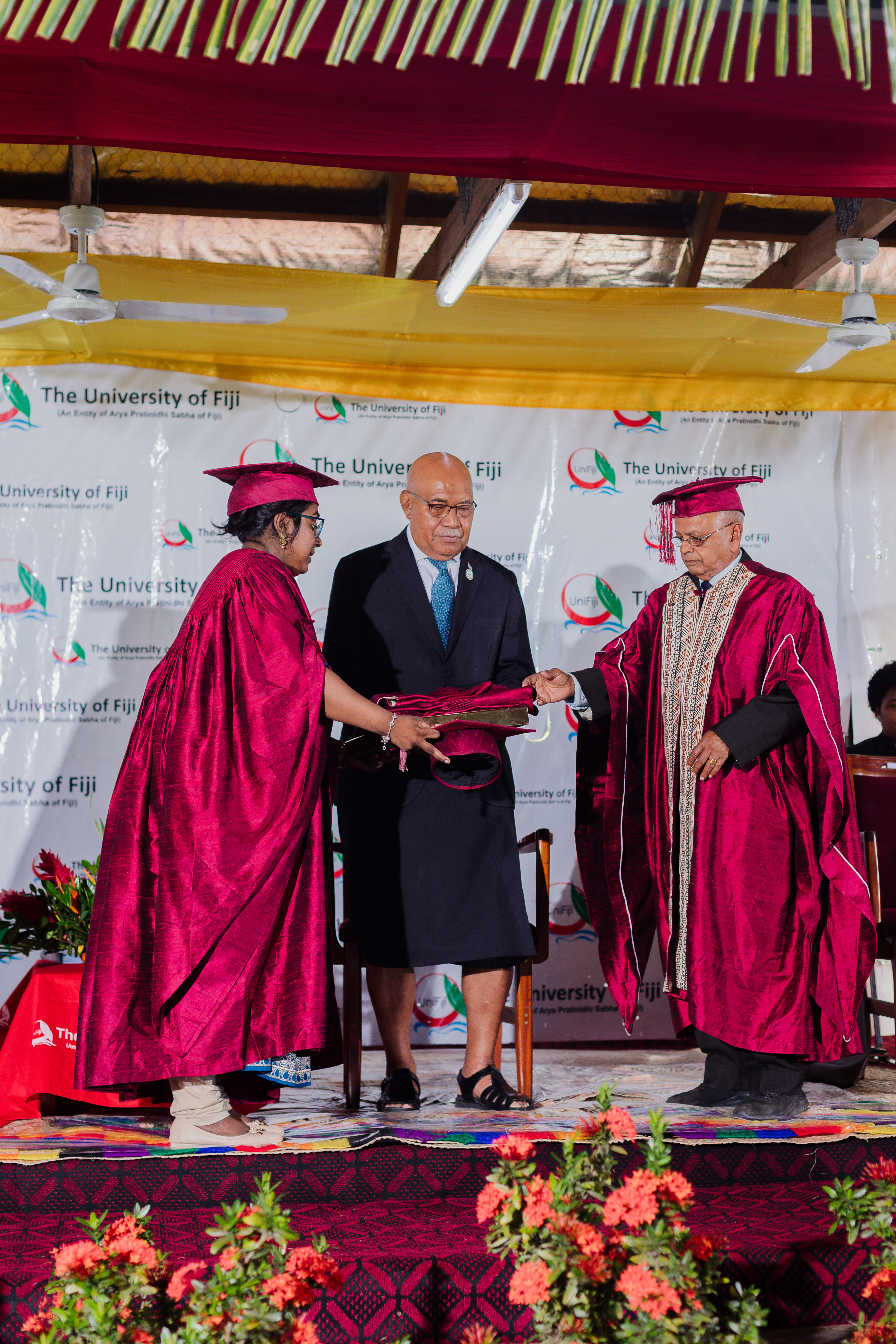
The University of Fiji today marked an important milestone with the formal installation of its new Chancellor, the Hon. Justice Filimoni Jitoko, who also serves as the the Speaker of Parliament. The installation ceremony, which included traditional formalities, including robing, took place during the Graduation ceremony. The University graduated 304 students from across its faculties, with more than half the graduates being female.

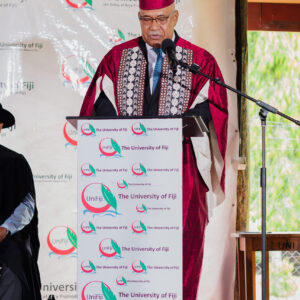
In his inaugural address to students, staff and guests at the Saweni Campus, the newly installed Chancellor, the Hon. Filimoni Jitoko described the graduation as a proud moment for all by acknowledging graduates, their families, and the University for its efforts in ensuring only the best education would be provided to students that attended the University.

“Education is the passport to the future, for tomorrow belongs to those who prepare for it today,” he said, quoting Malcolm X as he urged graduates to see their degrees not as an endpoint but “a blueprint, a roadmap for service to family, community, Fiji, the Pacific, and beyond.”

The Chancellor said that UniFiji graduates had been trained not only to secure jobs, but to solve real problems, from climate change to digital transformation, governance, and economic development.

He also highlighted the exceptional achievements of UniFiji’s academic Schools and Centres including international collaborations, research excellence, regional engagement, recognition in global rankings, strengthened industry partnerships, and growing global mobility opportunities for students.

In her speech the Vice-Chancellor Professor Shaista Shameem welcomed the newly appointed Chancellor, noting that as Speaker of Parliament and a former judge, Justice Jitoko brought immense experience, leadership and dignity to the role.

“The University community is very fortunate indeed to have someone of his calibre as our head,” she said.

Professor Shameem reaffirmed UniFiji’s commitment to innovative higher education, explaining the University’s unique educational philosophy grounded in Drua/Gurukul, Heutagogy, and its strong foundation in human values.

She reminded graduates that their path to the future was to be paved with public duty.

“Privilege entails responsibility. Your qualification must contribute to public duty to think imaginatively, to serve, to be activists for good, and to remain humble,” she said.

Professor Shameem spoke warmly to the graduands, acknowledging the determination, sacrifice and resilience that defined their journeys:

“When I see you lined up in your beautiful clothes, with your families proudly beside you, I feel I am back there with you, in wonder that I finally made it.”

A total of 304 students graduated today comprising 204 females and 100 males, representing programmes across law, medicine, business, science, technology, humanities, education, and iTaukei studies.

The Chancellor noted the significance of the strong female presence, calling it “a reflection of growing leadership of women in higher education and in fields traditionally dominated by men.”

UFSA President Rodney Kolinisau reflected on the deep bonds formed on campus and the significance of this milestone:

“Graduation at the University of Fiji isn’t just an important date on the calendar it’s a special moment for our student community. Today we’re really just saying bon voyage to our brothers and sisters we’ve shared so much with, the laughs, the lunches, the late study hours, the victories and the heavy days.”

He acknowledged the mix of emotions that come with farewells, while reminding graduates that bigger opportunities await:

“It’s kind of bittersweet because you feel the goodbye, but you also know they’re stepping into a future that’s opening wide for them, some will become doctors, nurses, teachers, scientists, entrepreneurs, lawyers, managers, policy makers and so many other things that will make us proud.”

The pro-Chancellor of the University Pundit Bhuwan Dutt described the occasion as a landmark, not only for the University but also for the nation. He mentioned the vision of the Arya Pratinidhi Sabha in establishing a university with the human values foundation as a core philosophy of the University including ethics, integrity, kindness to others and decency in all that the University stood for.

FWE28425
FWE28400
FWE28418

Loading

UniFiji Participates in IUPAP Pasifika Physics Summit to Advance Physics Education and Research in the Pacific

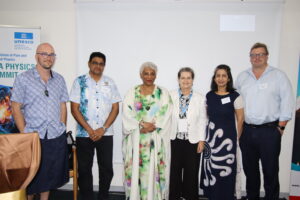
The University of Fiji has joined leading physicists and academic institutions from across the Pacific region to talk about physics education at the International Union for Pure and Applied Physics (IUPAP) Summit held on 18-19 November 2025 at Nalagi Hotel, Nadi.

The Summit brought together distinguished delegates from Fiji, Samoa, Papua New Guinea, New Zealand, Australia, South Africa, and Italy to discuss the future of physics education, research, and innovation in the region.

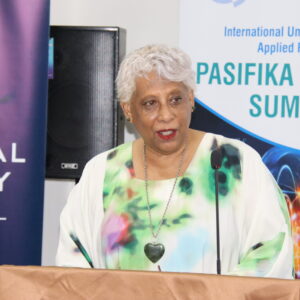
Vice-Chancellor of the University of Fiji, Professor Shaista Shameem, speaking at the Summit, said that there is an urgent need to strengthen interest in physics among young people and address declining enrolments at universities as well as gender imbalances in the Physics professions.

“Somehow we are unable to bridge the gap between the perception of physics as a difficult subject and its reality as a fascinating and wondrous field of study”, Professor Shameem said. If only educators could find the secret to communicating effectively about the significance of physics as a foundational science subject, more and more young people would be drawn to it and become innovators and inventors, she said.


Professor Shameem emphasized that with rapid global technological and environmental change, physics remains central to understanding and solving contemporary challenges, from climate change to renewable energy transitions and advanced technologies for the benefit of humankind. She said that physics allowed forecasting, modelling, and the development of climate adaptation and mitigation solutions, which are critical for Pacific Island nations who face the frontlines of climate impacts.

She also underscored the University’s growing contribution to regional scientific capacity. The University’s researchers, including Associate Professor Ramendra Prasad, are contributing to the IPCC’s 7th Assessment Report, demonstrating the Pacific’s increasing presence in global climate science.

She said that UniFiji continues to expand programmes in Physics, Earth and Planetary Sciences, Renewable Energy, and Environmental Studies, and is fostering student engagement through initiatives such as the South Pacific Astronomers Society of Enthusiasts (SPASE) and the South Pacific Physics Society (SPPS).

In her address, Professor Shameem also focused on several key challenges and opportunities for strengthening the discipline. She discussed the persistent gender imbalance in physics and emphasized the need for more equitable and supportive learning environments that encourage girls and women to pursue careers in the field.

She highlighted the importance of making physics relevant to young people by connecting the subject to issues they care deeply about, such as climate change, renewable energy, and emerging scientific innovations. Professor Shameem further encouraged participants to broaden students’ imagination by looking beyond the Earth to explore planets, black holes, and the expanding frontiers of modern physics, including questions about whether increasing satellite debris around Earth may contribute to heat accumulation and global warming. She also underscored the importance of Pacific-centred knowledge, referring to UniFiji’s work in celestial navigation through traditional voyaging on the University’s drua, which revives ancient physics techniques rooted in reading stars, currents, and ocean patterns.

The two-day IUPAP Pasifika programme created a collaborative platform for educators, researchers, and industry partners to reimagine how physics can be taught, promoted, and applied to address regional priorities.

Participants included the President of the International Union for Pure and Applied Physics (IUPAP), Professor Silvina Ponce Dawson, and representatives from the International Centre for Theoretical Physics (ICTP) who agreed on the need for stronger pathways, greater regional partnerships, and innovative approaches to inspire the next generation of Pacific physicists.

The University of Fiji reaffirmed its commitment to advancing physics education, supporting research excellence, and empowering young people to pursue careers in STEM fields essential to the Pacific’s sustainable future.

Vice Chancellor Professor Shaista Shameem
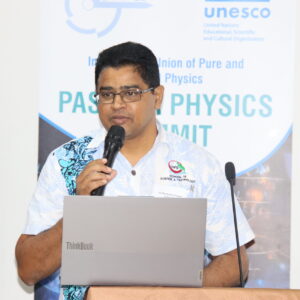
Dr Ramendra Prasad (UniFiji)

Loading

University of Fiji’s Executive Director Human Resources Receives 2025 Global Recognition Award

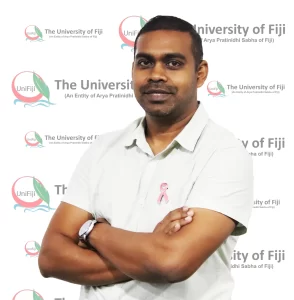
The University of Fiji’s Executive Director of Human Resources, Mr. Ashneel Kumar Singh was this week awarded the 2025 Global Recognition Award for his outstanding leadership in higher education and his significant contributions to human resources discipline across the Pacific region.

Mr. Singh was selected from amongst top international applicants in what was described as the most competitive year since the award’s inception. His nomination received strong endorsements from members of both the Fiji Human Resource Institute (FHRI) and the Australian Human Resources Institute (AHRI), reflecting the confidence placed in Mr Singh’s professional excellence at both national and international levels.

Vice-Chancellor Professor Shaista Shameem congratulated Mr. Singh on this achievement, stating that it exemplified the University of Fiji’s commitment to facilitating leadership excellence and human-centered institutional development.

“The Global Recognition Award presented to one of our critical executive managers for effectively managing employment relations at the University is a remarkable achievement not only for Mr Singh but also for the University of Fiji. It recognizes that the complexities of human resources management at higher educational institutions pose great challenges but that some managers are able to overcome difficulties and use creative strategies to ensure there a balance between employer and employee rights and responsibilities. Mr Singh has consistently used a consultative approach to oversee the University’s human resources and it is a proud moment for all of us at UniFiji to have it acknowledged through this Global Award’ she said.

It recognizes Mr. Singh’s visionary approach to institutional management, particularly his strategic implementation of university policies that have enhanced operational effectiveness and strengthened staff welfare. It is recognized that his leadership has not only set new standards for academic administration but also positioned the University of Fiji as a regional model for ethical, innovative and human-centred sustainable human resource development.

Under Mr. Singh’s direction, the University’s Human Resources Department has introduced transformative frameworks that promote succession planning, staff well-being, and innovation in workforce management. His initiatives, including national workshops on employee burnout and agile leadership, have been recognized by the Association of Commonwealth Universities for advancing modern HR practices across the Pacific.

Mr. Singh’s contributions have made a lasting impact on higher education management, fostering a culture of excellence, collaboration, and continuous improvement. His recognition with the Global Recognition Award is a testament to the University’s growing influence in the region through the dedication and professionalism of its leadership team.

Mr. Singh stated that he was deeply humbled and honored to receive the Global Recognition Award.

“This acknowledgment is not just a personal milestone, but a reflection of the collective effort, trust, and commitment of those around me. I firmly believe that the foundation of such recognition lies in a human values approach, one that places people at the heart of growth, learning, and transformation.”

“Throughout my journey, I have remained guided by the belief that leadership is about giving back to the profession and fostering continuous learning. This award reinforces that philosophy and reminds me of the responsibility we each carry to nurture others along the way.”

“I wish to express my sincere gratitude to the Vice-Chancellor for her guidance, the Senior Management team for their unwavering support, the HR team for their dedication, and most importantly, my family, whose encouragement has been my constant source of strength. Together, they have made this recognition meaningful.”

The University of Fiji extends its warmest congratulations to Mr. Singh on this prestigious recognition and thanks him for his continued contribution to building a stronger, more innovative institution and, by extension, to the nation and the region.

Loading

Submissions on the Employment Relations Bill No 27 of 2025

The consultative and good faith approach in employment relations exemplified by the Employment Relations Act of 2007 appears to have completely disappeared in the proposed Employment Relations Bill No 27 of 2025 to the detriment of both labour/workers and capital/industry in Fiji.

This was stated by the University of Fiji Vice Chancellor, Professor Shaista Shameem, in the University’s submissions to the Parliamentary Standing Committee on Economic Affairs at its public hearing in Suva today.

Professor Shameem said there was a fundamental flaw in the Bill which affected the entire scheme of the proposed legislation; the question of whether compulsory unionism in Fiji was being proposed by the wording of section 6 (5).  The new section 6 (5) stated that a ‘worker must voluntarily join a trade union’ which was a contradiction and did not make any sense, since the word ‘must’ was mandatory but the word ‘voluntarily’ gave a choice. She told the Committee that the new section 6 (5), if included in the legislation, would be an oxymoron and meaningless. The resulting confusion as to whether unionism would be compulsory in Fiji would lead to massive labour/capital instability and cause industrial chaos and conflict, she said. “Nothing can be mandatory if voluntary”. The proposed section 6(5) will violate the freedom of association provisions in the International Labour Organization’s legal framework and Fiji’s constitution.

Due to the major flaw in section 6(5), the entire Bill was difficult to understand and would be impossible to apply if it became law, Professor Shameem said. Clauses had become ambiguous and difficult to implement.

“A related problem is that the ERA 2007’s Labour-Management Consultation and Cooperation Committees (LMCC) has also become a casualty of the proposed system because it has been deleted from the draft legislation”. Professor Shameem said that, as a result, the original sentiment of the ERA 2007, namely, fair labour practices, good faith, structure of rights and responsibilities of both worker and employer and consultation between labour and management in the workplace had also been diminished if not disappeared altogether. This was evidenced by the heavy, and somewhat draconian, penalties imposed for breaches of the proposed legislation.

Another problem was the unnecessary extension of time for disputes to be resolved, from 12 months in ERA 2007 to 6 years in the draft, which would encourage enduring conflicts and affect productivity. The super powers given to labour officers to undertake what might normally be judicial responsibilities in issuing search and seizure warrants would prevent any independent scrutiny of public officers’ exercise of authority.

Furthermore, the meaningless allocation of menstruation leave as part of sick leave and not additional leave, when menstruation was a privacy issue for many women and discussion of it culturally taboo in certain contexts, defied common sense, said Professor Shameem.

Another problem with the proposed legislation was the inclusion of police and corrections officers when the RFMF was excluded. Police, prison and military officers were formerly excluded in the ERA 2007 for good reason so that those in these services were readily available in times of national security and public interest. Normally known as the ‘Disciplined Services’, and seen as an essential service for people’s safety, the military, police and prisons had their own internal mechanisms of personnel protection and it was unclear why this had to be changed to allow only two of these services to be included in the proposed legislation. Whether the new provisions on police had been drafted in accordance with the Police Act, which was currently being revised, with the University of Fiji also making submissions on it, was not clear, Professor Shameem said.

Furthermore, the term ‘essential services’ in any proposed legislation had to be defined very carefully as past practice had been to arbitrarily include all sorts of industries in essential services on a whim. Bill No 27 should define essential services as those delivered in the public interest and, thus, responsibilities of workers in these services had to be fully understood if any limitations were to be placed on their rights, Professor Shameem said.

The University emphasized that protecting workers does not require excessively punitive or vague legislation. Instead, Fiji needs clear definitions, proportionate penalties, fair appeal rights, judicial oversight, and compliance models that encourage a labour/capital consultative process. Professor Shameem said that both workers and industry were engaged in a joint enterprise for individual, collective and national productivity and growth and the government was obliged to facilitate harmonious relations between the two as a matter of public interest. A clear purpose for the amendments was needed as legislation affecting everyone’s rights and responsibilities had to be unambiguous, she said.

The fundamental principles contained in ERA 2007 were still relevant and appropriate, however the decrees that came after 2009 should rightly be reviewed with a red pencil, Professor Shameem said. “But throwing the baby out with the bathwater is not good legislative review practice” she told the Committee.

Professor Shameem said that while many of the clauses in the proposed legislation suffered from clumsy drafting despite good intentions, the major flaw was the new section 6 (5) which would cause instability within the ranks of both employer and employee and, therefore, the nation as a whole.

She said the public should be fully aware whether the intention of the government was to inflict compulsory unionism on every worker or whether people had a choice. Professor Shameem said this was a policy matter and the government had to come clean on the exact meaning of section 6 (5) of Bill No 27.

Loading