University of Fiji Announces Plans for New Master’s in Orthopedics at Launch of Inaugural International Health Conference

The University of Fiji has announced its plans to introduce a Master’s in Orthopedics, as part of its ongoing efforts to expand specialist medical training in the region.

The programme will be launched following necessary approvals from University Senate Committee and Higher Education Commission Fiji (HECF).

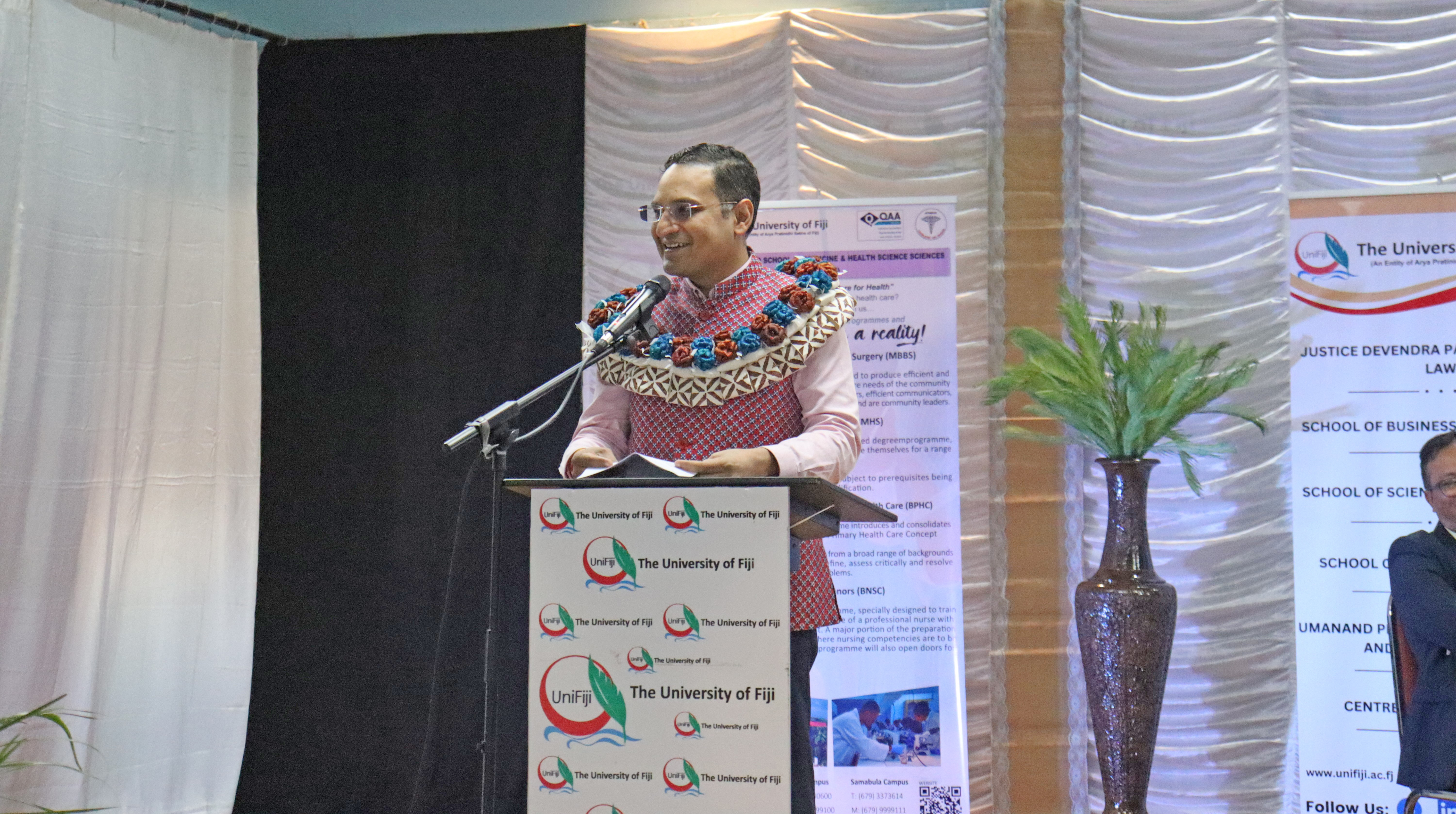
The announcement was made by Pro Chancellor Pundit Bhuwan Dutt Arya Ratna during the official opening of the University’s International Health Conference, hosted by the Umanand Prasad School of Medicine and Health Sciences (UPSM).

“This programme is a significant addition to our academic offerings, reaffirming our commitment to addressing the growing demand for specialist care across Fiji and the Pacific,” said Pundit Bhuwan Dutt.

“It reflects our vision to not only train general practitioners, but also develop expertise in critical medical disciplines.”

The proposed Master’s in Orthopaedics will complement UPSM’s current programme offerings, which include the MBBS, Bachelor of Medical and Health Sciences, Bachelor of Nursing, and Bachelor of Public Health.

Since its establishment in 2007, the school has expanded its footprint beyond its main Saweni campus to Samabula and Ba, with graduates now serving in healthcare facilities across the nation.

The announcement was made during the opening ceremony of the International Health Conference, a milestone event for the University of Fiji and the broader Pacific medical community.

Held at the Saweni campus, the conference brings together researchers, academics, clinicians, and public health professionals from Fiji and overseas.

“This conference is a platform for collaboration and innovation,” said Pundit Bhuwan Dutt.

“It opens the doors to deeper research, stronger partnerships, and transformative health interventions that go beyond academic discussion and into real-world application.”

The two-day conference features a diverse programme of plenaries, technical sessions, and panel discussions, addressing both general and specialized areas of healthcare. Topics include health systems resilience, medical technology, regional disease burdens, and community health delivery.

In his keynote address, Pundit Bhuwan Dutt also reminded attendees of the importance of human values in medicine.

“Technical knowledge must be paired with compassion, fairness, and ethics. True healthcare transformation comes when professionals engage both the mind and the heart.”

He urged participants to engage fully and let the outcomes of the conference extend into policy, practice, and long-term partnerships.

The conference also pays tribute to the resilience of health workers across the Pacific, especially in the wake of the COVID-19 pandemic.

The university envisions the event as the first of many international academic gatherings aimed at shaping the future of health in the region.

Loading

University of Fiji Launches Inaugural International Health Conference Focused on Innovation and Equity in Healthcare

The University of Fiji’s Umanand Prasad School of Medicine and Health Sciences (UPSM) officially opened its inaugural International Health Conference today, marking a significant milestone for the institution and for Fiji’s medical and academic landscape.

The two-day event with the theme “Innovations and Equity in Healthcare,” brings together health professionals, researchers, policymakers, and students from across Fiji and the globe to exchange knowledge, address pressing health challenges, and build pathways for regional and global collaboration.

Delivering the keynote address, His Excellency the High Commissioner of India to Fiji Mr. Suneet Mehta congratulated the University for organizing a “historic and timely” conference, commending the strong participation from both local stakeholders and international delegates.

“The theme of this conference innovation and equity could not be more relevant,” the High Commissioner said.

“Health systems worldwide are under increasing pressure, and while innovation holds great promise, it must be guided by equity to ensure that no one is left behind.”

He emphasized the importance of placing people, not systems at the heart of healthcare reform and urged participants to focus on community-based solutions, early detection, health education, and prevention strategies.

He also encouraged multi-sectoral collaboration, noting that health outcomes are deeply linked to education, food systems, climate policy, and infrastructure.

The High Commissioner praised the University of Fiji for creating a meaningful platform for cross-learning, dialogue, and shared commitment to improving health outcomes, especially in the Pacific region.

“This conference is a powerful opportunity to share best practices, learn from one another, and co-create solutions that are culturally relevant and sustainable,” he noted.

“The University’s leadership in hosting this event reflects a growing commitment to global health dialogue from the Pacific.”

The International Health Conference will continue for the next two days featuring expert panels, research presentations, and workshops on critical topics including non-communicable diseases, health equity, digital health innovations, and primary care delivery.

Loading

World Press Freedom Day 2025: Addressing the Impact of Artificial Intelligence on Media Integrity

In recognition of the World Press Freedom Day, the University of Fiji stands in solidarity with journalists, media institutions, and defenders of free expression around the world to affirm the essential role of a free and independent press in democratic societies.

The global theme for this year, “Reporting in the Brave New World – The Impact of Artificial Intelligence on Press Freedom and the Media,” calls attention to the transformative influence of AI on journalism, newsroom operations, and the very fabric of press freedom. As technology evolves, so too do the challenges facing media professionals around the world including here in Fiji.

Media plays a vital role in holding governments accountable, thereby shaping the quality of governance and the daily lives of citizens. In Fiji, the rise of artificial intelligence has presented both opportunities and challenges. The unchecked spread of hate speech on social media platforms, incidents of cyberbullying, and online harassment remain pressing concerns. There are growing calls to strengthen legislative frameworks governing digital conduct, particularly the mandate of the Online Safety Commission of Fiji.

A free and independent media is essential to nurturing informed public discourse and safeguarding the principles enshrined in both the Universal Declaration of Human Rights and Fiji’s 2013 Constitution. Following the repeal of the Media Act, Fiji’s media landscape is presumed to operate in a more open and democratic space. It is now more important than ever to ensure that news is reported freely, fairly, and without fear or favor. Ethical standards in journalism must be upheld consistently, and media owners and editors bear the responsibility of promoting fair, accurate, and balanced reporting.

Globally, journalists continue to face immense risks. In conflict zones and authoritarian regimes, media professionals endure intimidation, detention, violence and often pay the ultimate price with their lives. The day also stands as a solemn tribute to their courage and sacrifice.

In a proud moment for national media development, the University of Fiji graduated its first cohort of Journalism students in April 2025. Through a balanced curriculum combining theory with practical experience, the University has contributed to strengthening journalism standards in the country. The establishment of Vox Internet Radio Station, an in-house training facility, further equips students with essential radio reporting techniques.

As United Nations Secretary-General H.E. António Guterres aptly stated:

“Press freedom is the backbone of accountability, justice, equality and human rights.”

The University of Fiji reaffirms its commitment to media freedom and responsible journalism, and celebrates the ongoing resilience and role of the media in shaping a just and democratic society.

Loading

Professor Ifereimi Waqainabete Represents Pacific Islands Surgical Association and University of Fiji at Prestigious RACS Conference

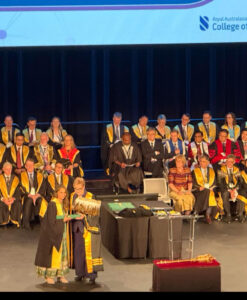
Professor Ifereimi Waqainabete, President of the Pacific Islands Surgical Association (PISA), proudly represented both PISA and the University of Fiji at the recent Royal Australasian College of Surgeons (RACS) Annual Scientific Conference (ASC), one of the most prestigious gatherings in the field of surgery in the region.

PISA, which marks its 25th anniversary this year, was originally established with the support of RACS and comprises members from across the Pacific—many of whom are graduates of the Master of Medicine in Surgery programs offered by the University of Papua New Guinea and the Fiji National University.

For the past three consecutive years, Professor Waqainabete has been a prominent voice for the Pacific at the ASC, where he has delivered invited presentations and participated in expert panels on critical issues related to surgery and global health. His contributions have continuously highlighted the role of the University of Fiji in advancing surgical education and regional health outcomes.

The Pacific Islands Surgical Association is also preparing for its own conference in October this year. This event will bring together surgeons from across the Pacific, Australasia, and beyond—providing a unique platform for academic exchange and professional collaboration. The University of Fiji sees this as a valuable opportunity to further strengthen its engagement with regional medical professionals and promote innovation in surgical care.

The Vice Chancellor of UniFiji Professor Shaista Shameem said that Professor Waqainabete’s contributions to such forums shows the University’s leading role as a think tank and advocacy in the varied medical fields in Fiji and the region, with far reaching influence due to the seniority of its lecturers in medicine and health science.

Loading

Fiji’s Climate Voice at the Global Table: Adjunct Professor Shobha Maharaj Co-Authors Landmark Study on Exceeding 1.5°C Warming

A new international climate study co-authored by the University of Fiji’s Adjunct Professor Shobha Maharaj warns that small island nations like Fiji are dangerously unprepared for a future where global warming exceeds 1.5°C, a scenario that is now more likely than ever.

Published in the Annual Review of Environment and Resources, the paper titled “Overshoot: A Conceptual Review of Exceeding and Returning to Global Warming of 1.5°C” calls for urgent, strategic adaptation planning in regions most at risk.

The research highlights that adaptation plans built around the assumption that the 1.5°C warming cap will be maintained are outdated and inadequate, especially for Small Island Developing States (SIDS).

Adjunct Professor Maharaj, Science Lead at the University of Fiji’s Ecological and Climate Crises Legal Institute (ECCLI), is also a Lead Author of the IPCC’s AR6 Working Group II and a contributor to the International Tribunal for the Law of the Sea (ITLOS) climate ruling, an international legal milestone that validated the scientific realities faced by SIDS.

“Fiji and other Pacific nations cannot afford to plan for a climate scenario that assumes the 1.5°C ceiling will hold,” said Professor Maharaj. “Overshoot is already happening. We need to shift our mindset from planning to doing and we need to do it strategically.”

“The risk is not only that we overshoot 1.5°C, but that we are unprepared when we do. If we continue implementing adaptation plans based on outdated assumptions, we will fall further behind just when we need to act most urgently.”

The study emphasizes that overshooting 1.5°C will increase the frequency and intensity of climate-related disasters. For nations like Fiji, this could mean irreversible damage to coastal ecosystems, widespread disruption to food and water security, and the forced relocation of entire communities. The paper critiques the current global approach to adaptation, noting that most efforts remain reactive, underfunded, and mismatched with the severity of emerging climate realities.

Professor Maharaj stated that adaptation strategies in the Pacific must evolve to become more anticipatory and integrated. This involves moving beyond planning documents to real implementation solutions that are flexible, scalable, and responsive to more extreme warming scenarios.

“Adaptation efforts in the Pacific are mostly reactive, under-resourced, and based on outdated climate assumptions,” she said. “We must begin developing proactive, flexible plans that account for higher levels of warming. Without this shift, even well-intentioned actions will fall short.”

“We must ensure that what we implement today will still be effective tomorrow when warming levels could be well beyond 1.5°C. Fiji has the opportunity to lead the Pacific in this transformation.”

In response to this challenge, the University of Fiji through ECCLI is exploring the establishment of a regional adaptation think tank.

The initiative aims to convene policymakers, researchers, and development partners across the Pacific to co-design strategies that are informed by science, sensitive to local realities, and built for long-term climate resilience.

The Vice Chancellor Professor Shaista Shameem said the establishment of UniFiji’s ECCLI with Adjunct Professor Shobha Maharaj leading the assessment of climate crises in Fiji and the region meant that the University of Fiji was well-placed to provide much needed value to the work being done regionally on climate mitigation and adaptation for the good of future generations of Pacific peoples.

Loading