University of Fiji marks World Press Freedom Day with screening and discussion on journalism in conflict

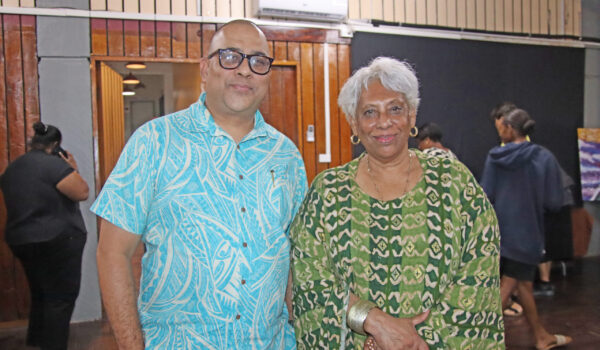
The University of Fiji commemorated World Press Freedom Day on Thursday evening with a special screening of the 2024 film Civil War followed by an engaging public discussion on the role of journalism during times of conflict and crisis.

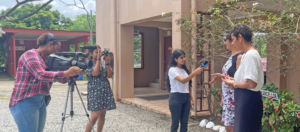
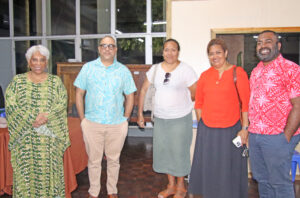
The event, organised by the University’s Journalism and Media Studies students and staff under the UniFiji Press Club, was held at the Lyceum, UniFiji Central Campus in Suva and attracted students, academics, journalists and representatives from media organisations.

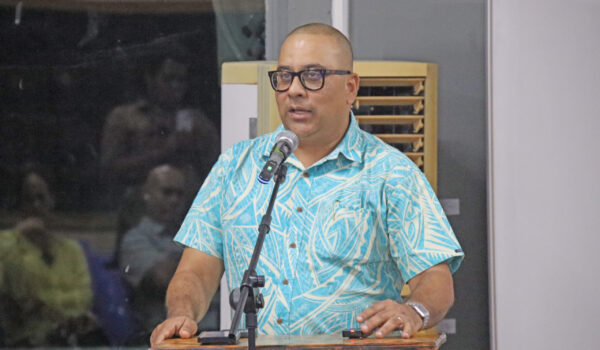
Vice Chancellor Professor Shaista Shameem shared her reflections on the importance of press freedom and responsible journalism in democratic societies, drawing from her own experiences working within media, legal and public institutions.

She spoke about the role of the journalist as witness during times of conflict and crisis, and the increasing need for ethical, courageous and independent reporting in an era shaped by misinformation, political polarisation and technological change.

Professor Shameem said journalism remained one of the most important pillars of accountability and public awareness. She encouraged Journalism and Media Studies students to appreciate the responsibilities that come with reporting truthfully and fairly, particularly during times of social unrest and uncertainty.

The screening of Civil War generated lively discussion among attendees, with participants exploring themes of war reporting, journalist safety, media ethics, propaganda, censorship and the emotional toll experienced by frontline reporters.

Representatives from several media organisations also participated in the discussions, including Vijay Narayan from CFL, who shared valuable industry insights and perspectives on the realities of modern journalism and the importance of maintaining public trust in the media.

Students actively engaged in the question and answer session, raising critical questions about media neutrality, misinformation, press freedom and the responsibilities journalists carry when covering conflict and humanitarian crises.

The University event reflected continued commitment to fostering critical thinking, ethical journalism and meaningful public dialogue through its Journalism and Media Studies programme.

World Press Freedom Day is observed annually on May 3 to recognise the importance of a free and independent press and to honour journalists around the world who continue to risk their lives in pursuit of truth and accountability.
IMG_0206
IMG_0186

Loading

World Media Freedom Day

Journalists should know the difference between reporting the story and becoming the story.

This was the message sent to the University of Fiji’s Journalism and Media Studies students by the Vice Chancellor Professor Shaista Shameem to commemorate Press Freedom Day, celebrated internationally on May 3rd.

To examine the essential high bar qualities of reporting, the University’s Journalism and Media Studies staff and students will host Fijian journalists to the film ‘Civil War’ on Thursday 7th May at 7 pm at the UniFiji Central Campus Lyceum in Suva.

Professor Shameem said the 2024 dystopian film depicts veteran and rookie journalists trying to cover a war-torn America and a government in crisis. The plot follows a group of war journalists travelling from New York to Washington DC to interview the President of the United States before rebels take the capital city, she said.

There is no better film to highlight the role of journalists as professionals occupying the highest moral ground, which is often slippery and unclear, she said.

“The University’s JMS Programme is focused on teaching journalism beyond sound bites or picking stories out of social media. We need our students and graduates to understand the duty of a reporter, and that is to report. Personal beliefs, politics and prejudices should be left at the door when you, as students, arrive in the classroom on the very first day in the JMS Programme”, Professor Shameem told the students.

Journalists should also know that their job is a dangerous one. Despite best efforts at protection, no one can guarantee safe passage for journalists. They must enter the profession, not as any job, but as a vocation.

They must aim to uphold the highest standards and derive strength from that principle. “Journalists are like soldiers, knowing that they do the job at their peril, but doing it anyway. Those are the journalists that history will remember”, Professor Shameem said.

She said the film ‘Civil War’ depicted the joys and pitfalls of press freedom in stark reality unmatched by any lecture notes that the JMS course could provide and would also serve as a refresher for established journalists in Fiji.


Loading

UniFiji Highlights Tuna Industry’s Importance to Fiji on World Tuna Day

The University of Fiji has called for stronger action to protect tuna stocks and sustain the livelihoods of Pacific communities, as the world marks World Tuna Day.

Vice-Chancellor, Professor Shaista Shameem, said tuna remains vital to Fiji’s economy, food security, and future development, but is increasingly under threat from climate change and overfishing.

“Tuna is not just a resource for Fiji, it is a lifeline for our people, our economy, and our future,” Professor Shameem said.

“As ocean temperatures rise due to climate change, tuna stocks are shifting to cooler waters, reducing availability in our region. Combined with overfishing and illegal fishing, this poses a serious threat to sustainability.”

Professor Shameem said Fiji’s commitment to international frameworks such as the Biological Diversity Beyond National Jurisdiction (BBNJ) Agreement, which came into force in January 2026, is a critical step towards protecting marine biodiversity and ensuring sustainable fisheries.

She warned that small Pacific Island nations, including Tuvalu, Kiribati and the Marshall Islands, are expected to experience significant declines in tuna stocks by 2050, with wider impacts likely across the region.

“These changes will not only affect food supply but also national revenues and livelihoods across the Pacific,” she said.

Professor Shameem highlighted the direct impact of the tuna industry on local communities, particularly in Levuka.

“The Pacific Fishing Company (PAFCO), located near our Levuka Campus, supports thousands of Fijians through employment in fishing and processing. These opportunities have enabled many families to access education, including sending their children to the University of Fiji.”

She noted that student numbers at the University’s Levuka Campus have doubled in 2026, reflecting the growing link between industry, community, and education.

Marking this year’s theme, “Sustaining Tuna, Sustaining Nations,” Professor Shameem said the message is clear.

“If we do not protect our tuna resources, we cannot sustain our nations. We must adopt responsible fishing practices, strengthen enforcement against illegal fishing, and protect our oceans for future generations.”

She also called on young people to play an active role in safeguarding marine resources.

“We encourage our youth to take leadership in protecting our oceans,  from reducing plastic waste to advocating for sustainable fishing practices. The future of our oceans is in their hands.”


Loading

University of Fiji Celebrates World Jazz Day with 24-Hour Vox Radio Marathon

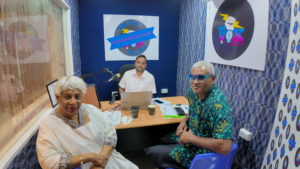
The University of Fiji started its International Jazz Day celebration at 8 am today with the classic ‘Fly Me To The Moon’ by Frank Sinatra and then continued with other jazz classics for 24 hours jazzathon. The jazzathon was hosted by the University’s Vox Radio with Station Manager Lawrence Singh leading the studio team. Live hosts were Professor Shaista Shameem and the University’s Music Director Sailasa Tora, formerly of Fiji’s well known band Black Rose.

Interspersed with the music were interviews with prominent Fijian musicians, such as Laisa Vulakoro, Ken Janson, Tom Mawi, and Eni Kumar, our music national icons and treasures. All said their music life began with and was heavily influenced by the jazz greats.

Vice Chancellor Professor Shaista Shameem said that the UNESCO Director General had sent the University an encouraging message of support since International Jazz Day was designated by UNESCO as a vehicle of education overcoming boundaries across the world.

The Vox Radio station had dedicated the day to international jazz since jazz music was universal and all music traditions had adapted it for their own audiences. Thus musicians in India, Arabia, Japan, Latin America, and just about every country had jazz musicians who improvised with jazz to suit their own audiences, Professor Shameem said. The Vox Studio played the entire repertoire of jazz sounds over the 24 hour period with the hosts addressing the history of jazz.

She said that jazz is important for Fiji too as local musicians had taken the opportunity to incorporate jazz rhythms into our own unique music style, she said.

Loading

The University of Fiji will celebrate International Jazz Day with 24-Hour Vox Populi Radio Marathon

The University of Fiji will join the global celebration of World Jazz Day on 30 April 2026 with a special 24-hour jazz marathon on its campus radio station, Vox Populi, highlighting the unifying power of music and the importance of cultural expression in education.

Fiji’s well-known musicians appearing during the 24 hour event are Laisa Vulakoro, Ken Jensen, Tom Mawi, Eni Kumar and Sailasa Tora, among other jazz artists. The musicians will discuss the importance of jazz music to their own careers.

International Jazz Day was designated by UNESCO in 2011 to recognize jazz as a force for peace, intercultural dialogue and cooperation among people across the world. On 30th April every year, jazz musicians celebrate the role of jazz in promoting mutual understanding, diversity, respect for human rights and freedom of expression.

Vice-Chancellor Professor Shaista Shameem will host the 24-hour marathon event with the University’s Music Director Sailasa Tora and Vox Station Manager, Lawrence Singh, both established artists and music producers in their own right.

“Jazz music arose on the slave plantations, emerging from the musical traditions of enslaved Africans in the American South, fusing African rhythms, work songs, and spirituals with European harmonic structures. Developed as a means of survival and expression under oppression, these forms evolved into blues and ragtime, ultimately merging in New Orleans to create jazz”, she said. “Jazz is more

than music, it is about protest in a way that kept the scrutiny of rebellion under cover, at the same time sending the stark message of painful experiences but also hope and a renaissance”.

Professor Shameem said that UNESCO’s International Jazz Day shows the strong link between the message of jazz music and education. The University felt that this link should encourage all educational institutions in Fiji to use jazz music as a vehicle for positive change in the national interest. Hence the University had invited leading musicians in Fiji to help celebrate the day in honour of jazz musicians past and present and to encourage young musicians to appreciate jazz for its capacity to influence societal transformation for the good of all, she said.

Professor Shameem noted that the University had recently launched its own music album as part of its 21st anniversary celebrations, reaffirming the institution’s commitment to the arts, creativity and cultural development as part of holistic education offered at the University of Fiji. The album was released through Vox Radio and Global Digital platforms.

To mark International Jazz Day, Vox Radio will feature a full 24 hours of jazz programming, starting 8 am Thursday 30th April, alongside live interviews with Professor Shameem, Sailasa Tora and prominent Fiji musicians, showcasing local talent and celebrating the influence of jazz in Fiji.

Listeners can tune in and listen live on:
https://onlineradiobox.com/fj/thevoxpopuliunifijicampus/

Loading