
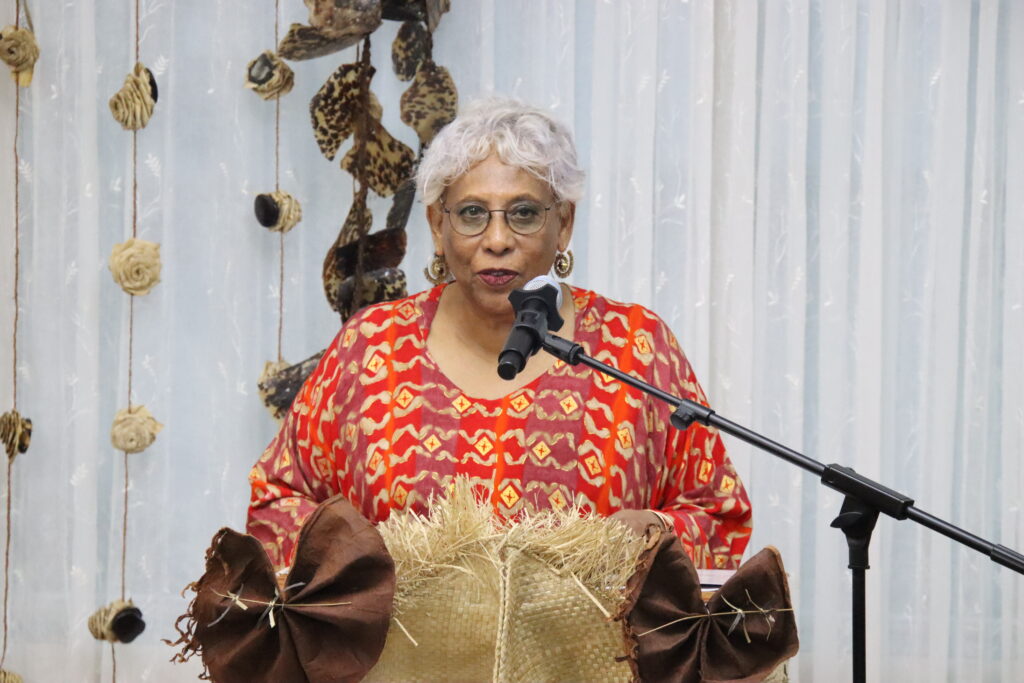
The University of Fiji marked United Nations Day on 24 October by recalling the reasons why the UN was established after the devastation of World War II. It is urging the Government of Fiji to commemorate the date in recognition of its governing obligations to restore trust, to deliver uniformly for everyone in Fiji and to actively promote peace.
In expressing this message Professor Shameem said the Government should look at two countries, Kenya and India, as leaders fostering the aims of the United Nations for diverse populations where tensions were mitigated by master-stroke transformation of national policy on inclusivity. ‘Kenya has declared the Kenyan-Asian population, the ‘Muindi’, as its 44th Tribe, and India defines its entire population at the time of independence and their successors as indigenous’, she said.
Professor Shameem said that for Kenya, the 44th Tribe designation aims to integrate the Muindi community more fully into public life, encourage political and government participation, and formally acknowledge their historical contributions to Kenya’s economy, education, and healthcare sectors.
India has declared that the Western-centric definition of ‘indigenous peoples’ is often tied strictly to pre-colonial populations or groups marginalized by later-arriving conquerors and this does not fit India’s long, complex civilizational history where vast portions of the population share common histories and roots.
Both Kenya and India are examples of how visionary leaders creatively initiated policies that promoted inclusivity and, therefore, peace, dispensing with any need for silos in multi-ethnic populations, she said. ‘These are not assimilation strategies where minority groups are forced to be absorbed into the dominant majority populations but a declaration of true partnership in the national stake with resources equitably allocated among ethnic and linguistic groups’.
Professor Shameem said that assimilation would be contrary to the UN prohibition on discrimination. ‘Linguistic and cultural minority groups are protected by international law; the importance of language as the window into culture cannot be under-rated. No one can be prevented by their government from maintaining and championing one’s own language and, therefore, culture’.
She noted that the Preamble of the United Nations Charter set out some fundamental principles that should be stated in any Fijian Constitution, namely the determination, as peoples of the United Nations, ‘to reaffirm faith in fundamental human rights, in the dignity and worth of the human person, in the equal rights of men and women and of nations large and small, and to establish conditions under which justice and respect for the obligations arising from treaties and other sources of international law can be maintained, and to promote social progress and better standards of life in larger freedom; and for these ends, to practice tolerance and live together in peace with one another as good neighbours, and to unite our strength to maintain international peace and security, and to ensure, by the acceptance of principles and the institution of methods, that armed force shall not be used, save in the common interest, and to employ international machinery for the promotion of the economic and social advancement of all peoples’.
She said the theme for the 2026 UN Day was to ‘restore trust, manage transformation and deliver for all’. Given Fiji’s close relationship with the United Nations through peacekeeping over decades, it was timely to consider what the theme meant for the present circumstances, when seriously dissenting voices were being heard daily by way of public submissions to the Special Constitution Committee.
‘Freedom of opinion is very important, though, at some point soon, the Government will inevitably have to face the fact that it will not be able to incorporate everyone’s views in the next draft of Bill No 32 given time limitations and even policy mismatch within the Coalition partners’. Yet, every single voice in the country is significant, she said. The inability to meaningfully amend the current draft of the Bill will leave most people dissatisfied with the process and its implications for trust.
Professor Shameem said that the Government can pay respectful heed to the message expressed by the Secretary General of the United Nations, Antonio Guterres to commemorate UN day 2026:
“Our world is shaken by conflict. Battered by the climate crisis. Scarred by rising inequalities. And transformed by technologies speeding faster than our ability to govern them. Now is the time to reaffirm the values that gave birth to the United Nations: Dialogue over division. Cooperation over confrontation. Solidarity over fear. On United Nations Day, I call on all countries to renew their commitment to these shared values and the obligations that underpin them. Now more than ever, let us stand firm in our resolve to uphold the United Nations Charter and international law.”
Professor Shameem said that, in her view, there was no better time for the Fijian Government to listen very carefully to the UN Secretary General’s message and also to the clear voices of the people of Fiji, especially young people, at the Special Constitution Committee hearings chaired by the Hon. Prime Minister, magnified by the leading examples of two United Nations states, Kenya and India.

