The University of Fiji is contributing community-level evidence to strengthen understanding of climate displacement, mobility and adaptation across Fiji and the wider Pacific through research undertaken in collaboration with the International Organization for Migration (IOM).
The research is being carried out under an existing Memorandum of Understanding between the University and IOM and brings together expertise from the University’s Department of Science and Centre for iTaukei Studies.
Vice-Chancellor Professor Shaista Shameem said the research would help deepen understanding of climate displacement as a social issue and explore possible responses for populations affected by the climate crisis.
“The international predicament of IDPs, or Internally Displaced Peoples, has recently expanded with the climate crisis. Many populations have been made vulnerable by global warming due to industrial activity in countries that can adopt a duty of care policy to mitigate their effects.
“Our research will throw more light on the climate crisis as a social issue and find possible solutions by considering a variety of options for IDPs,” Professor Shameem said.
The University of Fiji research team is led by Dr Priyatma Singh and includes Ms Nunia Bari from the Department of Science, together with Mr Mosese Baiseisei and Mr Usaia Gaunavou from the Centre for iTaukei Studies.
Through the collaboration, the team has been working with climate-vulnerable communities as part of the Risk Index for Climate Displacement (RICD) initiative.
The RICD is a decision-support initiative developed by IOM’s Climate Mobility Innovation Lab in collaboration with the University of the Philippines Resilience Institute, the Asian Institute of Technology, and a wider network of government, scientific and academic partners.
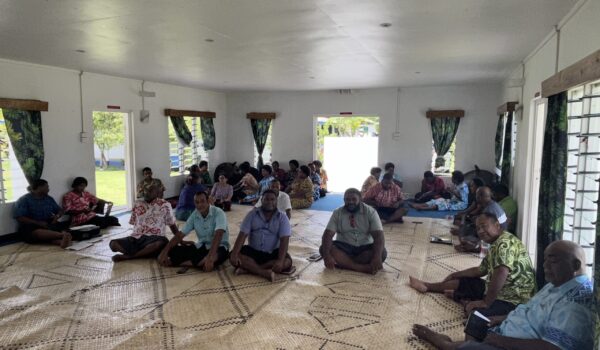
The UniFiji team has worked across 10 communities in Ba and Macuata provinces to understand how people experience and respond to climate-related risks.
The research examines not only exposure to hazards but also how these pressures interact with livelihoods, infrastructure, land, culture, kinship and access to services to shape decisions about staying, moving temporarily or considering relocation.
The Fiji community and provincial reports have now been completed and are expected to be published through IOM, making the findings available to a wider audience.
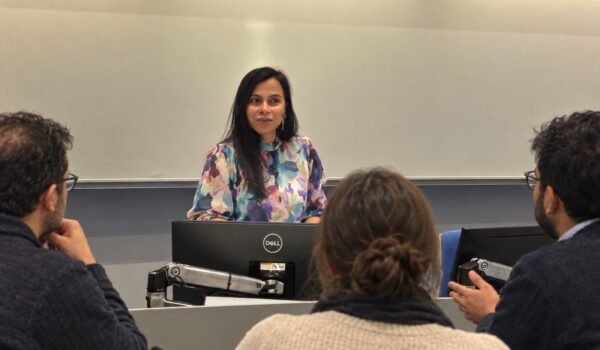
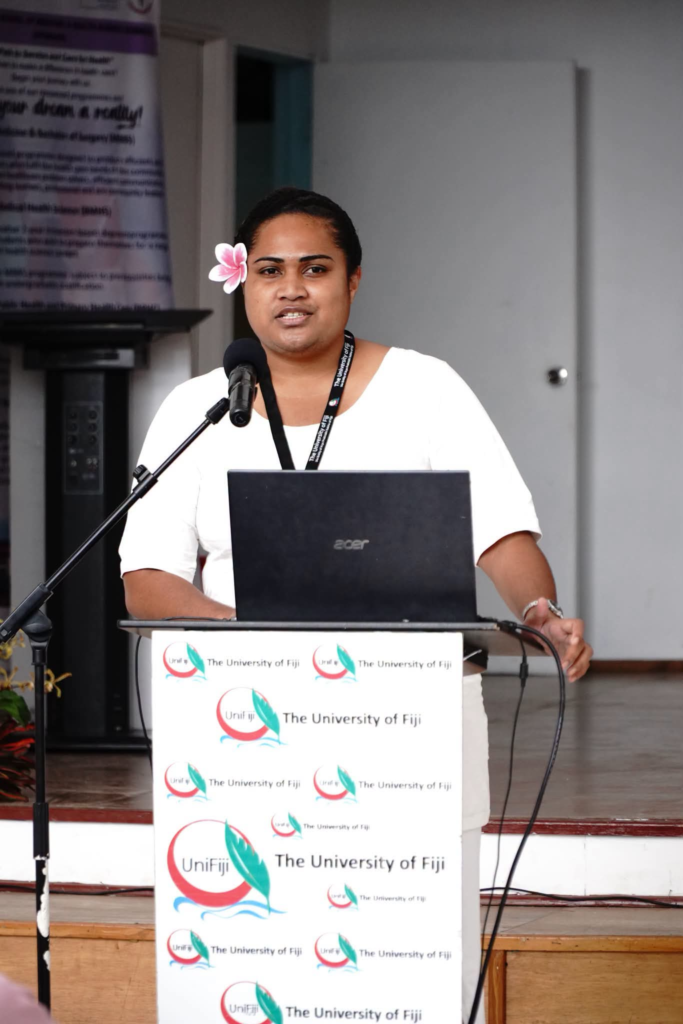
Dissemination is already underway, with emerging findings presented at the International Symposium on Climate Change Mitigation and Adaptation Strategies in the Asia-Pacific Region, hosted by the University of Fiji on 27–28 August 2026, and at the Climate Mobility Dialogue in Melbourne on 9–10 September 2026.
The research is now entering its next phase, with the University of Fiji team working with IOM to analyse data from Vanuatu.
This will provide an opportunity to examine climate mobility experiences across different Pacific contexts and identify both shared and context-specific challenges.
Community engagement remains central to the research. Further activities are planned in Fiji and Vanuatu to share and validate findings with participating communities and engage policymakers and other stakeholders, ensuring that community experiences and perspectives are accurately represented and can inform wider discussions on climate mobility and adaptation.
For the University of Fiji team, the project is also building locally grounded expertise in climate mobility research and strengthening the contribution of Pacific researchers and communities to regional and international discussions on climate displacement and adaptation.