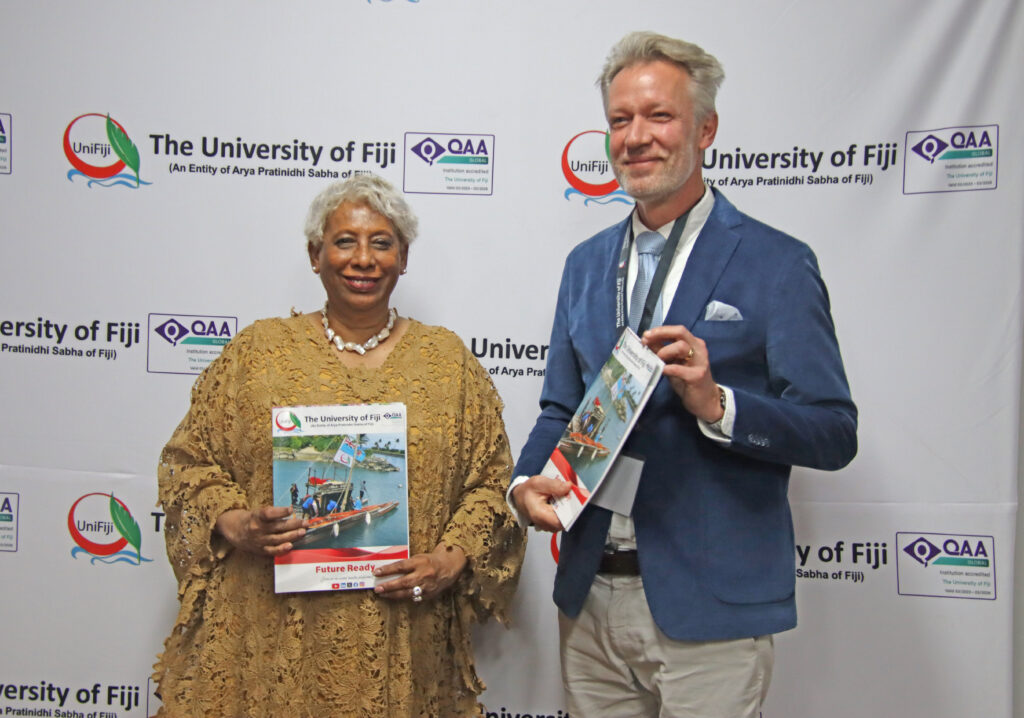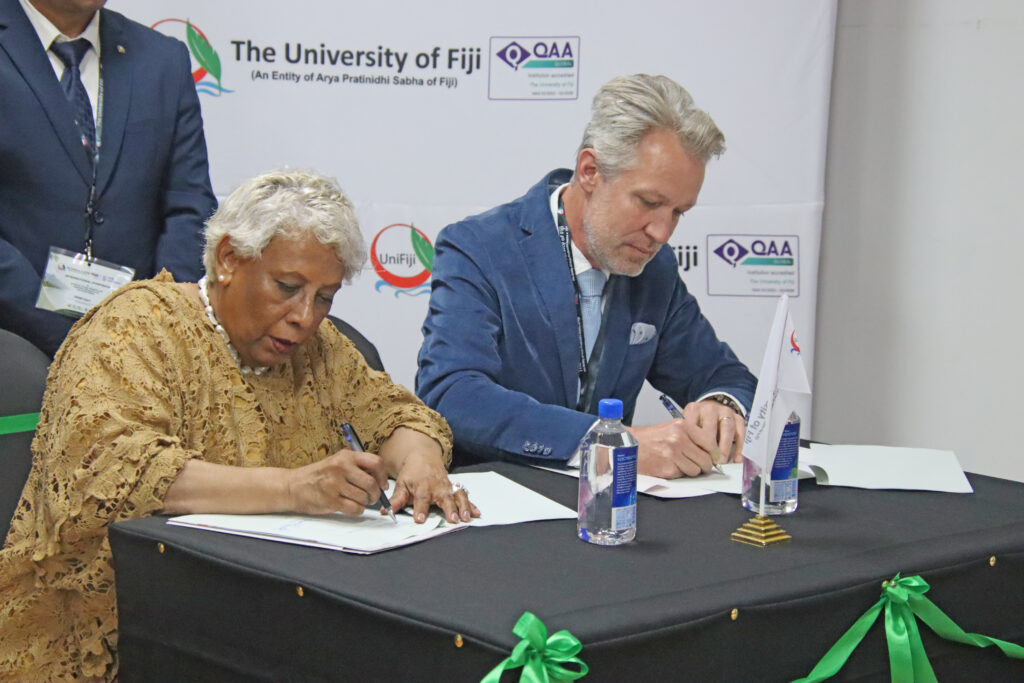
The University of Fiji and the Hamburg University of Applied Sciences (HAW Hamburg), Germany, have strengthened their commitment to international academic and research collaboration through the signing of a Memorandum of Understanding (MoU), held alongside the International Symposium on Climate Change Mitigation and Adaptation Strategies in the Asia-Pacific Region.
The Vice Chancellor of the University of Fiji, Professor Shaista Shameem said the newly formalised partnership with HAW Hamburg will create opportunities to advance collaboration in education, research, innovation and institutional capacity building, with a strong focus on climate change and sustainable development.
“For small island nations across the Pacific, climate change is not an abstract or distant issue. It is something that affects our communities, our environment, our economies, our health and our future,” Professor Shameem said.
She said the Asia-Pacific region, particularly the Pacific Island nations, remains among the most vulnerable to climate change, facing rising sea levels, extreme weather events, ecosystem degradation and increasing risks to communities.
Professor Shameem emphasised that addressing climate change requires collaboration across disciplines and sectors, bringing together scientists, policymakers, universities, industry, communities and traditional knowledge holders.
She said the symposium provides an important platform to bridge the gap between research, policy and action, while encouraging participants to move beyond discussing what has been learned and consider how knowledge can be translated into practical solutions for climate resilience.
Speaking at the symposium, Professor Walter Leal, Chair of Climate Change Management and Chair of Environmental and Technology at HAW Hamburg and Manchester Metropolitan University, highlighted the importance of strengthening regional cooperation to address the growing climate challenges facing Pacific Island countries.
“The Pacific region is very rich in cultural heritage and traditions, and this can also be used to support efforts to adapt to and mitigate climate change,” Professor Leal said.
Professor Leal said the symposium was particularly important as Pacific Island countries continue to experience the impacts of rising sea levels, extreme weather events and other climate-related pressures affecting economies and the wellbeing of communities.
He also emphasized the importance of creating platforms for information exchange, sharing good practices and documenting work being undertaken across the region. He noted that the symposium would contribute to this through the development of a publication focused on climate change, education and adaptation strategies, providing an opportunity for researchers and practitioners to share experiences and strengthen international collaboration.
The newly signed MoU establishes a framework for cooperation between UniFiji and HAW Hamburg in areas including climate change adaptation and mitigation, sustainable development, public and global health, environmental sciences, disaster risk reduction and renewable energy.
The partnership also provides opportunities for joint and multidisciplinary research, academic and researcher exchanges, joint publications, conferences, training programmes, postgraduate supervision, curriculum development and collaborative funding initiatives.
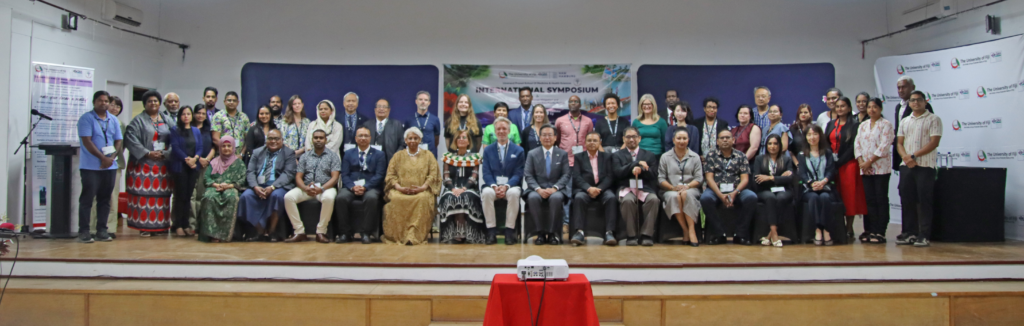
The MoU signing took place during the opening of the International Symposium on Climate Change Mitigation and Adaptation Strategies in the Asia-Pacific Region, jointly organized by UniFiji and HAW Hamburg.
The symposium brings together academics, researchers, policymakers, development practitioners, industry representatives and community leaders from across the Asia-Pacific region to explore practical and innovative responses to climate change.
Acting Dean and Associate Professor of the Umanand Prasad School of Medicine and Health Sciences, Dr Abhijit Gogoi, welcomed the international collaboration and highlighted the significance of bringing together regional and international expertise to address issues that directly affect Pacific communities.
“The symposium focuses on bridging the gap between scientific research, policy development, and community-based action, while promoting dialogue on climate mitigation, adaptation, sustainable development, public health, disaster risk reduction, and environmental resilience. Fiji and other Pacific Island nations remain at the forefront of climate change impacts, making regional and international collaboration increasingly important,” he said.
The MoU further strengthens UniFiji’s commitment to expanding international partnerships that create opportunities for knowledge exchange, research collaboration and capacity building while contributing to solutions for challenges affecting Fiji and the wider Pacific.
The collaboration between UniFiji and HAW Hamburg is expected to provide a platform for future joint initiatives and strengthen connections between researchers, academics and institutions working towards a more resilient and sustainable Pacific.
Public Relations Office