By Avitesh Ram (16/6/2026)
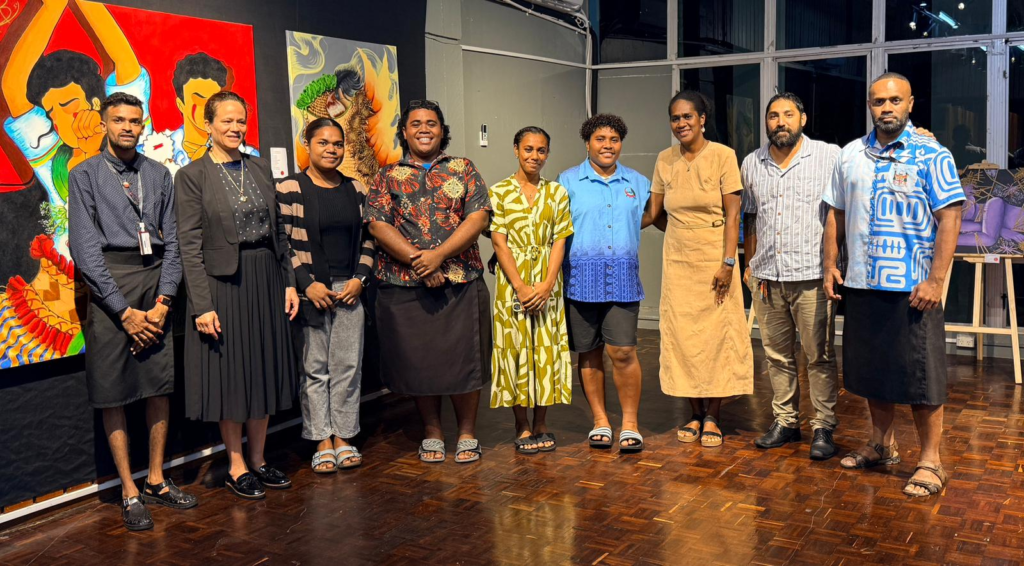
SUVA, Fiji – Creativity, storytelling and community voices took centre stage at the University of Fiji’s Suva Central Campus on Tuesday evening as second-year Journalism and
Media Studies (JMS) students premiered their documentary productions as part of their major
course assessment.
The documentary screening, held at 6pm, featured six original productions created by JMS201 Documentary students. The documentaries formed a significant component of the students’ final assessment, accounting for 60 percent of their course grade. The event provided students with an opportunity to present months of research, filming and editing work before lecturers, university staff, industry stakeholders, family members and fellow students. Throughout the production process, students received guidance and mentorship from lecturer Josefa Mainavolau and Mr Hurstel Yee. The documentaries screened included A Life of a Florist by Milika Rabulu, Petals of Perseverance by Sereima Adi, Our Modern Tongue by Joseph Balolo, Disconnect to
Reconnect by Eseta Yavuvata, Life Made from Scratch by Ramisese Saunivalu and A
Fading Craft by Kelera Verenasau.
Speaking during the event, JMS Documentary Lecturer Josefa Mainavolau said the project was designed to provide students with practical experience in visual storytelling while exploring issues of social, cultural and community significance. “This documentary project was designed to give students practical experience in storytelling through visual media. The objective was to allow students to identify issues of social, cultural, environmental or community significance and present them in an engaging and informative manner,” he said. Mr Mainavolau said documentary filmmaking was a vital part of journalism and media education because it combines research, interviewing, scriptwriting, camera work, editing and ethical reporting.
“We wanted students to develop strong research skills, critical thinking, teamwork, communication abilities and technical production skills. Most importantly, we wanted them to understand how powerful storytelling can be in raising awareness and inspiring social change,” he said.
University of Fiji Vice-Chancellor Professor Shaista Shameem highlighted the importance of filmmaking skills in modern media education. “All media students need to know how to make films. This course teaches them the techniques,” Professor Shameem said. She encouraged future students to embrace creativity and innovation in their storytelling. “Use your imagination and creativity,” she advised. University of Fiji Suva Central Campus Coordinator Ilana Burness said the screening allowed students to demonstrate their documentary-making abilities while engaging with media professionals and stakeholders. “These events give students a chance to display their documentary-making skills while presenting to lecturers, university staff and industry stakeholders. It allows them to interact with people in the media industry and receive constructive feedback,” Ms Burness said. She urged students to be courageous in delivering important messages through their work.
“Be bold in your messages. Ask the relevant questions and do not be afraid to take risks when presenting key messages through your filming,” she said.
Among the student filmmakers, Milika Rabulu’s documentary A Life of a Florist explored the lives and struggles of flower vendors often overlooked in everyday society. “People walk past florists in the market every day, but after doing this documentary, I discovered the stories and struggles behind the flower arrangements they create and sell,” Rabulu said. Sereima Adi’s documentary Petals of Perseverance focused on a flower seller’s journey and determination to support her family. “The message I learned from doing my documentary is to keep pushing whatever you believe in and never give up,” she said. Meanwhile, Joseph Balolo’s documentary Our Modern Tongue highlighted the importance of preserving the iTaukei language and cultural identity amid social change. “As Fiji becomes more modernised, some traditional words used by our elders are no longer common among young people. I wanted to encourage the younger generation to preserve our culture and identity,” Balolo said.
The screening concluded with positive feedback from attendees, who praised the students’ dedication, creativity and commitment to telling meaningful stories from their communities. Mr Mainavolau said he was proud of the quality of work presented and hoped the documentaries would inspire audiences to think critically about the issues explored. “Documentary filmmaking has the ability to spark discussion, promote understanding and motivate positive action within communities,” he said. The documentary evening marked another milestone in the University of Fiji’s commitment to developing future journalists, filmmakers and media professionals through hands-on learning experiences that give voice to stories that matter.

